Sunday, October 30, 2011

October '11 Digital Week V

Blu-rays of the Week
Alice’s Adventures in Wonderland
and Peter and the Wolf (Opus Arte)

These delightful ballets will enrapt viewers young and old. Alice beautifully pairs Joby Talbot’s effervescent score and Christopher Wheeldon’s invigorating choreography to imaginatively present Lewis Carroll’s surreal tale, including the most adorable Cheshire Cat anyone will ever see. Prokofiev’s enchanting Peter stars Royal Ballet School dancers taking the parts: with that gloriously witty music and enthusiastic children enacting the fairy tale, it’s 35 minutes of musical heaven. Both discs look sharp in hi-def, and both include a making-of featurette.

Anna Nicole (Opus Arte)
For this new opera based on the short life and tragic death of Playboy Playmate Anna Nicole Smith, composer Marc-Anthony Turnage and librettist Richard Thomas transform her story--from white trash Texas to celebrity and death at age 39--into a sometimes entertaining, sometimes infuriating, often inconsequential but always watchable and listenable stage work. Thomas’ libretto is clever but vulgar and Turnage’s music smartly moves from jazzy blues to thumpy dullness. The ace in the hole is Swedish soprano Eva-Maria Westbroek, gorgeous to watch and hear as the heroine. The Royal Opera’s world premiere production glistens on Blu-ray; lone extra is a making-of featurette.

Attack on Leningrad (e one)
The 900-day Nazi siege of Leningrad, one of history’s biggest tragedies, is grippingly fictionalized by writer-director Alexander Burasky. At 110 minutes, it abridges the horrors of the millions who lived and died during the siege, instead showing its effect on a female British journalist stuck behind the lines. Too bad the story’s jumping around among the Germans, Russians and British waters down the effectiveness of showing how harrowing this ordeal was. Blu-ray’s film-like quality makes the movie look like a documentary at times. Extras include a Burasky interview and making-of featurette.

Baaria (Image)
Giuseppe Tornatore, who won a 1990 Best Foreign Film Oscar for Cinema Paradiso, returns with another overwrought, overlong and ultimately underwhelming canvas of Italian life. We follow a Sicilian protagonist for several decades through love and death, tragedy and triumph, Communist politics and disillusionment. Immaculately shot, edited and scored (the last by veteran composer Ennio Morricone), Baaria is a gorgeous-looking 2-½ hours of sentimentality that looks especially striking on Blu-ray. Extras comprise Tornatore’s commentary, behind-the-scenes featurette, interviews and deleted scenes.

Father of Invention (Anchor Bay)
Kevin Spacey’s innate hamminess centers a tone-deaf comic drama about an inventor just out of prison for an invention gone awry that injured thousands who tries patching up his non-existent relationship with his grown daughter. Moments of clarity and humor in this study of redemption are helped by attractive cast led by Virginia Madsen (ex-wife) and Camille Belle (daughter), but ham-fisted subplots include a bug-eyed Heather Graham as a militant lesbian and an equally overdone Johnny Knoxville as Spacey’s unwilling partner. The Blu-ray image is good; the lone extra is a making-of featurette.

Island of Lost Souls (Criterion)
The first sound-era adaptation of H.G. Wells’ cautionary sci-fi tale The Island of Doctor Moreau stars Charles Laughton as the mad doctor: although Laughton minimizes his usual hamminess, this 1932 horror movie is at a near-hysterical pitch throughout, so by the time Moreau’s experiments have been discovered, there’s nowhere to go but down. Still, if schlocky scary movies are your thing, this is a must-see. The Criterion Collection comes up aces with a new digital restoration that makes the film look as good as it ever will; extras include commentary, interviews and a short piece on Devo, which named its first album after the classic line: “Are we not men?”

The Last Circus (Magnet/Magnolia)
Spanish director Alex de la Iglesia’s over-the-top movies throw big emotions and bigger melodramatic stories in your face, but even by that standard, The Last Circus is absurd and wearying. It follows a sad clown who turns psychotic, with violence galore, crazed characterizations, plot twists and a finale that must be seen to be disbelieved. I’ve enjoyed his movies in the past, but this is just too grotesque and unsatisfying. The magnificent visuals, however, are transferred brilliantly to Blu-ray; extras include making-of featurettes and interviews.

Rare Exports: A Christmas Tale (Oscilloscope)
A bizarre comic “anti-holiday” thriller by Finn Jalmari Helander begins with the gruesome killing of a herd of reindeer, followed by the disappearance of the village‘s children. Can an enterprising dad and his son avenge them and “save” Christmas? Stunningly shot in the land of the midnight sun, the movie has a certain gruesome humor, but it’s too flimsy to work at feature length. It does look great on Blu-ray; extras include two short films that preceded the feature, all the better for their brevity. Also included is the 1964 disaster Santa Claus Conquers the Martians, if you really want to subject yourself to it.

A Serbian Film (Invincible)
According to director Srdan Spasojevic, this lurid attempt to shock complacent audiences by watching a porn actor appear in a snuff film (with actual killings of people) is a metaphor for the country of Serbia since Yugoslavian dictator Tito died and its citizens were subjected to the Balkan war under Milosevic and minions. That’s laudable in theory, but the movie exists for its shock value, even if its most outrageous bits (a newborn and small child are raped) have been almost entirely excised. It’s all done to a glossy sheen, but it’s so patently full of “serious” intent that it fails as an allegory about the justification of violence. The Blu-ray image is probably more crystal clear than most viewers would want; no extras are a shame, because this is a movie demanding some kind of context.

Winnie the Pooh (Disney)
Everyone’s favorite yellow bear returns in this throwback to the classic animations starring A.A. Milne’s immortal characters. The smartest move the new Pooh’s creators made is to not computerize or digitize the animation; the hand-drawn style is the only way to make Pooh, Tigger, Eeyore, Piglet, Kanga, Roo and Christopher Robin come to vivid, funny life; so what if the movie’s barely an hour long? On Blu-ray, everything is crisp-looking; extras include deleted scenes, two short films, and a movie sing-along (but why is Zooey Deschanel mucking up classic Pooh tunes?).

DVDs of the Week
Anti-Nazi Classics, Volume 2 and The Art of Filmmaking (First Run)
The second Anti-Nazi Classics volume features a quartet of estimable East German films that deal unflinchingly with the nation’s Nazi past: Joachim Kunert’s epic The Adventures of Werner Holt, Wolfgang Staudte’s taut Rotation, Falk Harnack’s bitter The Ax of Wandsbek and Kurt Maetzig’s unsettling Council of the Gods. The Art of Filmmaking boxes together five excellent moviemaking documentaries: the wonderful portrait of cinematographer Sven Nykvist, Light Keeps Me Company; two-disc set of interviews, Directors: Life Behind the Camera; the screenwriting tutorial, Tales from the Script; Lavender Limelight: Lesbians in Film; and Capturing Reality: The Art of Documentary.

Eclipse 29: Aki Kaurismaki’s Leningrad Cowboys (Criterion)
Aki Kaurismaki’s awful fictional music group was amusing in 1989’s ramshackle spoof Leningrad Cowboys Go America. But as usual, Kaurismaki beats his jokes into the ground, following up with the 1994 insufferable sequel, Leningrad Cowboys Meet Moses. He also took the success of his “musicians” seriously and had them go “legit,” playing a dull stew of pop-rock to thousands in a Helsinki concert filmed for 1994’s Total Balalaika Show. All three films are included in this Eclipse set, which is for Cowboys completists, I guess. Also included are five music videos, funnier than anything in the features.

Goya (Arthaus Musik)
Gian Carlo Menotti (best known for his popular 1950 TV opera Amahl and the Night Visitors) penned this tuneful if inconsequential 1986 opera on the life of the great Spanish painter for Placido Domingo who, in this 2004 Vienna staging, reprises the heroic role with a strong vocal presence, even if his English is too heavily-accented to always be understandable. Menotti’s pleasant opera reduces a complex character to a tortured artist in love with an unattainable woman--but at least we’re getting a chance to see and hear an opera by one of America’s most successful opera composers.

Nora’s Will (Menemsha)
Mexican writer-director Mariana Cenillo made this gentle comedy about a middle-aged Jewish man whose former wife’s death right before Passover forces him to reconsider their relationship along with their son and her family. Happily, with Cennillo smartly avoiding caricatures and stereotypes through her low-key sense of humor, and with her excellent actors breathing warm life into these credible people, this sympathetic character study is likeable and involving throughout.

CDs of the Week
Britten, Winter Words (Avie)
Young American tenor Nicholas Phan tackles two Benjamin Britten song cycles and a selection of his folksong arrangements. Phan’s emotive voice and lyrical style are perfect for Winter Words, an illuminating setting of Hardy poems. Although Britten was best at setting English poetry, he also composed the formidable Seven Sonnets of Michelangelo; these spiky Italian songs are securely in Phan’s wheelhouse, as do the half-dozen folksong arrangements. Myra Huang is the sensitive piano accompanist.

Susanna Phillips, Paysages (Bridge)
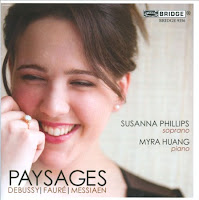
Young soprano Susanna Phillips may be from Alabama, but her mesmerizing voice and excellent French diction belies that fact in the trio of works she sings on her first recital disc. Debussy’s dreamy Ariettes Oubliees, Messiaen’s surreal Poems pour Mi and a quartet of glorious Faure melodies bring Phillips’ elegant musicality to the fore, accompanied by (once again) Myra Huang’s sympathetic piano playing. One quibble: this 54-minute disc could have been fleshed out with an entire Faure cycle, which would give us more chances to hear this beautiful voice.

Friday, October 28, 2011

Theater Roundup: MLK and Woody on Broadway, WASPs Off-Broadway

The Mountaintop
Written by Katori Hall; directed by Kenny Leon
Starring Angela Bassett, Samuel L. Jackson
Previews began September 22, 2011; opened October 13
Jacobs Theatre, 242 West 45th Street, New York, NY
themountaintopplay.com

Relatively Speaking
Written by Ethan Coen, Elaine May, Woody Allen; directed by John Turturro
Starring Caroline Aaron, Lisa Emery, Ari Graynor, Steve Guttenberg, Danny Hoch, Julie Kavner, Richard Libertini, Mark Linn-Baker, Marlo Thomas
Previews began September 20, 2011; opened on October 20
Brooks Atkinson Theatre, 256 West 47th Street, New York, NY
relativelyspeakingbroadway.com

Children
Written by A.R. Gurney; directed by Scott Alan Evans
Starring Darrie Lawrence, Margaret Nichols, Richard Thieriot, Lynn Wright
Previews began October 18, 2011; opened October 27; performances thru November 20
Becket Theatre, Theatre Row, 410 West 42nd Street, New York, NY
tactnyc.org

Award-winning playwright Katori Hall has set herself up to be knocked down off the mountain with her speculative drama about Martin Luther King.

Set in the Memphis hotel room that King stayed in the night before he was killed, The Mountaintop pits King against Camae, a maid who is more (or less) than whom she initially seems. The plot would work better a lot shorter, especially since a Twilight Zone episode would wrap things up in 30 minutes.

Jackson, Bassett in The Mountaintop (photo: Joan Marcus)

Unfortunately, Hall pads her play with imagined conversations between King and Camae, often filled with unneeded profanity. Camae apologizes profusely several times to King after letting loose with expletives, and the show’s biggest laughs come when King throws down his own F-bombs. Hall tries humanizing King by showing him behind closed doors, as it were, off the pedestal he’s occupied since his assassination. When the play opens, King enters the hotel room coughing, shivering, desperately needing a cigarette; he goes into the bathroom where we hear him urinating. At least he doesn’t belch or pass gas, which would be too obvious, apparently.

The play’s shallow crux--an unpersuasive revealing of Camae’s true identity--makes the first hour, in retrospect, nothing more than a pointless buildup, and the last part is simply Hall climbing to the top of her soapbox to show what King’s death has wrought. Some dialogue has bite, humor and even occasional insight, but Hall is too enamored of her conceit to plumb the depths of her flimsy characters.

Director Kenny Leon stages The Mountaintop as realistically as possible on David Gallo’s spectacularly shabby hotel-room set, which yields to a visually impressive visualization of the play’s title (which is taken from a King speech heard at the beginning). Gallo’s apt projections accompany Camae’s monologue about the last 40-odd years of universal struggle following MLK’s death.

Samuel L. Jackson and Angela Bassett are too old for their parts, but Jackson’s King is nicely understated and Bassett’s Camae is amusingly over the top; Bassett (who looks smashing, by the way) has been criticized for hamming, but she’s so infectious that she makes sitting through The Mountaintop less of a chore than it would have been if a lesser actress was onstage.

Graynor, Guttenberg in Woody Allen's Honeymoon Motel (photo: Joan Marcus)
The three one-acts making up Relatively Speaking are seen in ascending order of hilarity. Ethan Coen’s short curtain-raiser, Talking Cure, is a one-note riff on the offbeat characters he and his brother have made their onscreen specialty; Elaine May’s George Is Dead is an amusingly slight character study about a narcissistic rich widow; and Woody Allen’s old-fashioned farce Honeymoon Motel has jokes galore, with hit or miss laughs.

Director John Turturro seems at sea in the rudderless Coen comedy, which moves in fits and starts. If not for Danny Hoch’s delightfully deranged line readings, Talking Cure would be 15 minutes of wasted talking. That Turturro better grasps May’s comic rhythms in George Is Dead is shown in Marlo Thomas’s tour de force of shrill intensity as the clueless Doreen, a role May herself might have played earlier in her career. As Doreen’s straight woman, Lisa Emery gives a sympathetic portrayal that grounds May’s sometimes strident comedy with a dose of much-needed reality.

All bets are off in Allen’s Honeymoon Motel, which is stuffed to the gills with one-liners and zingers that have collected in Allen’s fertile comic brain for the past four decades. There’s a goodly amount of groaners, to be sure, but there are also enough good lines sprinkled about that the pace rarely flags until Woody winds things down to an abrupt finale. You can hear Woody’s own voice when someone says “There’s a lot to be said for inertia in marriage--especially now with Netflix” or “Did you see the look on the rabbi’s face? Like someone gave back the Left Bank.”

As in May’s play, Turturro adeptly lets his 10 cast members find their own comic rhythms and meshes them together: adroit comic performers like Julie Kavner, Richard Libertini, Mark Linn-Baker and Ari Graynor don’t overwhelm lesser lights like Steve Guttenberg. The three plays‘ formidable visual design comprises Santo Loquasto’s ravishing sets, Kenneth Posner’s deft lighting and Donna Zakowska’s agreeable costumes. Relatively Speaking works best as Woody Allen’s return to the uncontrolled outrageousness of Bananas.

Lawrence, Nichols in Children (photo: Stephen Kunken)
Children, A.R. Gurney’s 1974 comic study of New England WASPs, is tougher than other plays like The Cocktail Hour and The Dining Room, whose genteel satire is replaced with more acid.

At a summer house on an island off the Massachusetts coast on July 4th weekend in 1970, an affluent family is in crisis. Just-divorced Barbara, who has brought her children, is quietly carrying on with the family’s former lawn keeper; her hotheaded, competitive brother Randy, a school teacher, is is visiting with his easygoing wife Jane and their kids; and their widowed mother (called “Mother“), who announces that she’s marrying longtime family friend “Uncle” Bill, who remains unseen, along with other characters: Barbara and Randy’s younger, free-spirited brother Pokey and wife Miriam, who arrive with their soda-drinking, foul-mouthed kids; and Barbara, Randy and Pokey’s.father, who died five years earlier. Gurney generally handles these glaring absences well, except in Mother’s final monologue, when she speaks to Pokey, who’s standing behind a screen door: his silence during her conversation is implausible.

Throughout the course of one day, this family’s varied skeletons come tumbling out of the closet, and Gurney lays bare the generations-long repression of these WASPs. As always, Gurney’s dialogue sparkles as both repartee and riposte: Jane’s coming-out party --where she met Sandy--is called a “WASP bar mitzvah,” while Barbara makes an astute observation about her family: “That‘s why we have to be near the ocean. We have to go through these ritual cleansings.”

Despite his affection for them, Gurney mercilessly dissects these children. The final image of Mother alone on a terrace with a view of the sea (nicely rendered by set designer Brett J. Banakis and Bradley King’s lighting) shows a resignation, even a loneliness, usually missing from Gurney’s work.

Scott Alan Evans ably guides a superb cast: Richard Thieriot (Randy), Lynn Wright (Jane) and Darrie Lawrence (Mother) solidly grasp their roles, but Margaret Nichols, whose Barbara is a beautifully-realized lost soul, is so good that one wonders why such a valuable actress isn’t onstage more often.

Sunday, October 23, 2011

October '11 Digital Week IV

Blu-rays of the Week
Bad Teacher (Sony)
I’ve never been a fan of Cameron Diaz, so I had little hope for Bad Teacher: but she’s perfect as a sexy, foul-mouthed teacher in this raunchy, mean-spirited, occasionally funny comedy. It’s tough getting laughs while showing off your trim bod as you wash cars, but Diaz manages to do both. Jason Segal is a decent foil as the gym teacher with the hots for her, but once again Justin Timberlake is lifeless as a substitute teacher Diaz likes. The movie’s insipid, sure, but it’s also defiantly un-P.C., so that counts for a little. The Blu-ray transfer is solid; extras include deleted scenes, gag reel, outtakes and on-set interviews.

The Clowns (Raro Video)
This 1970 paean to the circus that Federico Fellini always loved, made for Italian TV, might not be as visually or comically memorable as his obvious classics, but if “Felliniesque” wasn’t yet in use, it would have been coined for this surreal, shaggy dog of a film. Fellini is our guide for a loving look at circus clowns that opens with a beautiful nocturnal dream sequence of a young Fellini basking in the glow of the tent going up as the circus comes to town. This modest but immensely pleasing partial autobiography has an excellent hi-def transfer bursting with color; extras include Fellini’s 1953 short, The Matrimonial Agency, and Adriano Apra’s dry, academic essay, Fellini’s Circus.

The Guns of Navarone (Columbia/Sony)
One of the big super-spectaculars of its time, this overlong, muddled adventure is set in Greece during World War II. With Gregory Peck, Richard Harris, Anthony Quinn and David Niven in top form, J. Lee Thompson’s creaky epic (from Alistair McLean’s novel) works thanks to stunning location shooting--which looks remarkable in a restoration immortalized on Blu-ray--and Dmitri Tiomkin’s heavingly bombastic score. Extras are commentaries by Thompson and film historian Stephen J. Rubin, three documentaries, eight featurettes and an interactive feature, The Resistance Dossier of Navarone.

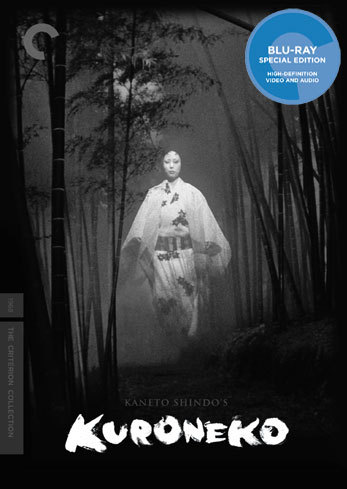
Kuroneko (Criterion)
Best known for his terrifying ghost story Onibaba, director Kaneto Shindo turned to another scary tale with 1968’s Kuroneko (Black Cat), an eerie fable of murder, sex and redemption. Shindo ramps up the atmospherics with exquisite B&W cinematography and Hikaru Hayashi‘s haunting score. This Criterion Collection release gives Shindo’s classic its due with a breathtaking Blu-ray transfer and extras comprising a Shindo interview and appreciation by film critic Tadao Sato.

Monte Carlo (Fox)
This vehicle, Selena Gomez’s attempt to escape her Disney shackles, is a pleasant teen rom-com that finds her in Paris on a vacation that includes her being mistaken for a prissy heiress and whisked off to Monte Carlo for laughs and love. It’s forgettably watchable, with European locales (Paris, Monte Carlo, Budapest) giving it added luster, especially on the decent-looking Blu-ray. Extras include fluffy on-set footage and deleted scenes.

Page One: Inside the New York Times (Magnolia)
This fascinating look behind the scenes of the Gray Lady chronicles the last bastion of traditional American journalism through reporter David Carr, whose own story (ex-drug addict, felon) is as interesting as his own take-no-prisoners attitude. In our unbrave new world of bloggers and internet arrogance, there’s room for newspapers, director Andrew Rossi says…or is there? At 90 minutes, the movie’s a little too breezy, but 20 minutes of deleted scenes are included, as are interviews and a Q&A following its premiere.

Pirates of the Caribbean: On Stranger Tides (Disney)
In the fourth installment of the Pirates franchise, even Johnny Depp looks bored trotting out Jack Sparrow again. The fetching, able Keira Knightley has been replaced by a not-fetching, unable Penelope Cruz, good British actors Gregory Rush, Richard Griffiths and Ian McShane ham entertainingly, but director Rob Marshall (who also ruined Chicago and Nine) has no clue how to shoot action, even ruining a foolproof mermaid scene. The movie has a great Blu-ray transfer; extras comprise gag reel, short film and commentary.

Salo: or the 120 Days of Sodom (Criterion)
Pier Paolo Pasolini’s 1975 adaptation of de Sade’s magnum opus about debauchery and torture updates it to fascist Italy, where innocent young men and women are forced to perform grotesque acts of self-debasement before being horribly murdered by their jaded captors. Obviously, Salo is an acquired taste, and even if much looks undoubtedly fake (eating shit, cutting out tongues, gouging out eyes), it’s disgusting enough to avert one’s eyes anyway. Despite Pasolini’s passionate anti-fascism, Salo’s shock value obliterates artistic or psychological concerns. The Criterion Collection provides a typically first-rate release, with a fine hi-def transfer and extras that contextualize a movie screaming for it.

V: The Complete 2nd Season (Warners)
This cancelled sci-fi series, with supposedly benign visitors from outer space actually having malevolent intentions, wraps up its second--and final--season with 10 episodes on two discs. (There’s a letter-writing campaign by fans to get the show on another network.) Dazzling visuals--which look terrific on Blu-ray--outpace the rather routine contretemps between humans and aliens; at least the lead alien is easy-on-the-eyes Morena Baccarin, who could sucker any red-blooded human male into thinking she’s on his side. Extras include a blooper reel, deleted scenes and making-of featurettes.

DVDs of the Week
Ancient Marvels (PBS)
This boxed set of episodes from PBS’ intelligent science series NOVA brings together explorations of great, awe-inspiring architectural achievements of lost civilizations: Stonehenge, the Sphinx, Machu Picchu, the Parthenon, Easter Island, China’s Rainbow Bridges. Each hour-long episode dissects how and why each masterpiece was built, with modern-day archeologists and scientists attempting to replicate these monuments showing how amazing these achievements are, hundreds and thousands of years later.

The Music Lovers and
The White Bus

(MGM)
The latest MGM Limited Edition Collection releases are, unfortunately, two top British directors’ least interesting films. Ken Russell’s The Music Lovers, a bizarre, vulgarized 1970 biopic of Russian composer Piotr Tchaikovsky (played with youthful energy by Richard Chamberlain), has frenzied visuals and blasting music but little nuance. Lindsay Anderson’s The White Bus is a short, surreal 1967 melodrama that alternates between B&W and color like his superior next film, If…. While the films’ transfers are not top-notch by any means, they are adequate enough.

The Rise and Fall of Margaret Thatcher (BBC)
The Iron Lady, England’s first female prime minister, gets the biopic treatment in this trio of BBC productions showing Margaret Thatcher’s political triumphs and failures. The Long Walk to Finchley dramatizes how Thatcher (a superb Andrea Riseborough) wins her first election despite sexism; The Falklands Play has Thatcher (a stern Patricia Hodge) dealing with England’s 1982 war with Argentina; and Margaret shows Thatcher (a splendid if too youthful Lindsay Duncan) during her waning years of power. Together, these films provide an absorbing portrait of a formidable and controversial woman.

The Shock Doctrine (Kimstim/Zeitgeist)
Naomi Klein’s provocative book The Shock Doctrine details Milton Freidman’s free-market capitalism as an inevitable by-product of natural and man-made disasters like war, terrorist attacks and hurricanes. Michael Winterbottom and Mat Whitecross’ pungent documentary, an illuminating overview of Klein’s “disaster capitalism” thesis, includes the author discussing her ideas. However, Klein gives too much credence to Friedman and his acolytes’ “success,” which seems coincidental and anecdotal.

CDs of the Week
Anna Netrebko: Live at the Metropolitan Opera (Deutsche Grammophon)
In the decade since her smashing 2002 Metropolitan Opera debut in Prokofiev’s masterpiece War and Peace, Russian soprano Anna Netrebko has become the biggest star in the classical music world. This compilation of excerpts from her starring roles on the Met stage includes a disappointingly short scene from War and Peace (one of the most underrated operas of the 20th century), along with more obvious examples of her magnetic personality and gorgeous voice: Don Giovanni, La Boheme, The Tales of Hoffman, Gounod’s Romeo et Juliette and the bel canto works now dominating her repertoire-- Donizetti’s Lucia di Lammermoor and Don Pasquale and Bellini’s I Puritani.

Mojca Erdmann: Mozart’s Garden (Deutsche Grammophon)
German soprano Mojca Erdmann’s CD debut comprises a well-chosen group of arias by Mozart and contemporaries: his supposed nemesis Antonio Salieri (infamous from the play and movie Amadeus), Giovanni Paisiello, Ignaz Holzbauer and J.C. Bach. Erdmann’s lustrous tone and creamy voice hit all the right notes in the Mozart arias from Zaide, Idomeneo, Figaro and The Magic Flute. Giving estimable musical support are conductor Andrea Marcon and La Cetra Barockorchester Basel. Here’s looking to more from this luscious-sounding (and -looking) young artist.

Friday, October 21, 2011

2011 New York Film Festival

49th New York Film Festival
September 30-October 16, 2011
filmlinc.com
For its 49th annual edition, the New York Film Festival became bigger than ever, literally: in addition to the usual two dozen main-slate films, its showcase screenings (Opening Night, Centerpiece, Closing Night) expanded by two Galas. Will the Festival soon go the way of Toronto and have a Gala screening every night?

There were also sidebars like a Pauline Kael panel discussion and related screening of James Toback’s awful Fingers; special events including several documentaries; and a 37-film retrospective of classic Japanese films from the Nikkatsu studio. And in anticipation of next year’s 50th anniversary Fest, the Film Society of Lincoln Center is screening one film from each previous festival every month, beginning with the first Opening Night feature in 1962: Luis Bunuel’s classic The Exterminating Angel.

Whether greater quantity equals greater quality is questionable: of the dozen films I saw in this year’s main slate, only Alice Rohrwacher’s smashing debut, Corpo Celeste, was a happy discovery. Films by supposed major talents (Almodovar, Kaurismaki, Polanski, Payne, the Dardennes, von Trier, Cronenberg) ranged from OK to disappointing to disastrous. The documentaries, however, were intriguing, as were the Nikkatsu entries, especially Shohei Imamura’s masterworks Pigs and Battleships and Intentions of Murder.

The Opening Night film was Roman Polanski’s Carnage (opening December 16). Yasmina Reza’s play God of Carnage isn’t very deep, but it’s a rip-roaringly nasty entertainment about two civilized New York City couples who meet to hash out their fighting sons’ differences and end up at each other’s throats…like their boys. Broadway’s superlative cast--James Gandolfini, Marsha Gay Harden, Jeff Daniels, Hope Davis--made Reza’s one-note comedy explode. That’s missing from Roman Polanski’s rote reenactment: a deeply committed Jodie Foster outclasses a miscast John C. Reilly, a shrill Kate Winslet and a weirdly out-of-place Christoph Waltz. Polanski’s other misstep is showing the boys’ battle, erasing any ambiguity (it’s only discussed in the play). Polanski moves his camera shrewdly around the tight spaces of a Brooklyn apartment, but zeroing in on unfocused performances in close-up reveals the material’s essential shallowness.

I didn’t see the Centerpiece film, Simon Curtis’ My Week with Marilyn (opening November 23), due to a strange decision to have the lone press screening on the Sunday morning of Columbus Day weekend. However, I did catch the two other Galas. At a slim 99 minutes, David Cronenberg’s A Dangerous Method (above, opening November 23), a study of Carl Jung and Sigmund Freud--based on Christopher Hampton’s talky if literate play--comes across as Psychoanalysis 101. Still, with terrific acting by Michael Fassbinder (Jung), an unrecognizable Viggo Mortensen (Freud) and a no-holds-barred Kiera Knightley (Jung’s patient-turned-lover Sabine), Method is Cronenberg’s most entertaining movie in ages, even with moments (a close-up of Sabine’s post-sex blood on the sheets) where it’s obvious that one of cinema’s least subtle directors is at the helm. No matter: these people’s sexuality is on the surface anyway.

In The Skin I Live In (opened October 14), Pedro Almodovar has made a stylish but stupid thriller about a crazed doctor who rebuilds his dead wife with the body of the young man whose rape of the doc’s teenage daughter caused her suicide. Got that? To hide the implausibilities and inconsistencies, Almodovar has cleverly structured the film by scrambling chronology so that the big plot twist/revelation doesn’t occur until near the end, which gives viewers fewer chances to think about how ridiculous it all is. Antonio Banderas suffers nobly, while a fabulous-looking Elena Anaya is put through any number of demeaning acts. The movie’s as sleek and slickly-made as all latter-day Almodovar. But I’d never thought I’d miss his earlier ramshackle comedies.

The Closing Night film, The Descendants (opening November 23), is the latest by Alexander Payne, maker of Election, Citizen Ruth and Sideways. Payne’s movies aren’t as substantial as they want to be, and the new film is no different. A superbly befuddled George Clooney (above, with the equally good Shailene Woodley) plays a rich Honolulu lawyer who discovers, after she’s is in a coma, that his wife cheated on him, so he gathers his daughters to track down the guy. The first half is a nicely observed adult comedy about dealing with everyday disasters, but when the movie switches gears to find the adulterer, it spins its wheels. Although Payne rights himself for a satisfyingly melancholic ending, he too often looks for easy laughs by descending into sitcom territory, a la James Brooks.

Turning to the rest of the main slate, an important theme--illegal immigration--is turned by Aki Kaurismaki’s Le Havre (opening November 4) into something as topical as last year’s almanac. Kaurismaki’s familiar deadpan style has worn thin and his expressionless actors turn a potentially powerful premise into molasses. The city of Le Havre is no jewel of France, but it surely deserves better than Kaurismaki’s latest minor effort; aside from a few ‘90s gems (La Vie de Boheme, Juha, Drifting Clouds), Kaurismaki’s uninspired films have been providing ever more meager returns.

George Harrison: Living in the Material World (currently on HBO), Martin Scorsese’s sprawling 3-½ hour biography, mimics Harrison’s first solo album All Things Must Pass in its attempt to encompass every facet of an artist whose musical talent was hidden behind the formidable Lennon and McCartney. Structured chronologically and including vintage Harrison interviews and archival footage of him with and without the Beatles, Material World doesn’t unearth any revelations for those familiar with George’s career, but genuinely heartfelt and touching words from colleagues (Ringo, Paul, Clapton, Petty, Yoko) and family (ex-wife Patti Boyd, widow Olivia, son Dhani) refer to his selfless spirituality that was also evident in his music.

Belgium’s Dardenne brothers ask viewers to suspend disbelief in their latest, The Kid with a Bike (opening in 2012), which follows a young boy, orphaned by a deadbeat dad, who wants to get his bike back. An uncommonly selfless woman takes an interest in him, buys back his bike and becomes his mother-cum-guardian angel figure; more damagingly, a medical miracle occurs at the end of a movie that, aside from its fairy-tale female lead, had been intently realistic. Aside from these huge implausibilities, there’s much to admire, notably the performances of newcomer Thomas Dorset, raw and natural in the title role, and Cecile de France, winningly believable as the too-good-to-be-true heroine (both in photo above).

Corpo Celeste (opening in 2012), the startling debut film of writer-director Alice Rohrwacher, is a deeply insightful chronicle of an adolescent girl’s difficulties at home, at school, with her friends, and life in general. The film, properly set in southern Italy, is shot through with the kind of religious guilt that could smother anybody: as Marta prepares for her confirmation, a big deal for teenage Catholics, she cannot get a handle on the hypocrisies she finds among adults and her peers. Rohrwacher savvily and humorously presents Marta’s troubles without condescension and, coupled with (above) Yle Vianello’s marvelously unaffected performance, has created a serious comedy that truthfully explores the life of a teenager in ways far removed from the sentimentality and cheap laughs of American movie and TV screens.

Ham-fisted, obvious, relentlessly clumsy in its narrative, characterization and metaphorical baggage, Lars von Trier’s Melancholia (opening November 11) begins with an overwrought wedding sequence that chews up so much time it ends up a slack-eyed parody of The Deer Hunter. Trier’s leaden dramatics are on display for a mind-boggling 135 minutes: he actually has poor John Hurt (who has never looked more embarrassed) repeat jokes about wedding guests named Betty and hide forks to fool a waiter. Kirsten Dunst has gotten raves and Oscar talk, but she’s fatally hamstrung by her character’s essential shallowness: this depressive heroine’s troubles are small potatoes compared to the title planet (who named it?) coming too close to earth. Trier even repeats his trite effects: Antichrist’s slo-mo Handel opening returns, only this time Armageddon is scored to Wagner’s Tristan and Isolde. Delusions of grandeur, anyone?

Shame (opening December 2), Steve McQueen’s studied, stylized follow-up to his studied, stylized Bobby Sands biopic, Hunger, turns a solid subject--sex addiction--into soap opera. A successful Wall Street dude jerks off at work/home, hires hookers, picks up/screws women at bars, and even hooks up for anonymous gay sex! But at least he’s a cultured pervert who listens to Bach’s Goldberg Variations while watching porn. Shame is hysterically unconvincing about one man’s predilections, even burdening him with a needy sister who stays at his apartment and walks in on him in the bathroom while he’s masturbating. (For shame!) The real shame is a shoehorned, dramatically suspect climax involving a suicide attempt. Michael Fassbender is excellent in the lead, Carey Mulligan is equally good as his sister, and McQueen cannily uses New York locations, but his movie thinks it’s more controversial and hard-hitting than it is.

Pina (opening December 21), Wim Wenders’ affecting elegy for modern-dance choreographer Pina Bausch, alternates between reenactments of her signature pieces--including a scintillating Rite of Spring--and touching reminiscences and valentines from her colleagues and dancers, which are a truly international group: German, French, British, Spanish, Russian, Japanese. Wenders intercuts among Bausch’s many dances, staged both in Bausch’s usual locale and in outdoor places ranging from Berlin street corners, public transit and even a picturesque hillside. Shot in 3-D--well-used but far from essential--Pina is a lasting memorial from one artist to another.

First-time writer-director Nadav Lapid begins his drama Policeman (no distributor) with an extended episode about Israeli special forces’ travails on and off the job: an upcoming trial over collateral killing during the assassination of an Arab terrorist; one man’s hugely pregnant wife; another’s upcoming operation on a possibly malignant tumor. After introducing these everyday lives, Lapid switches gears to show a group of nearly laughably idealistic young anarchists who decide to kidnap billionaires attending a wedding (no bodyguards for just such a possibility?). The two strands come together organically but ineptly. This well-made, documentary-like drama is filled with stick-figure caricatures that weaken its polemical persuasiveness.

Michel Hazanavicus’ The Artist (opening November 23) is a slight but delightful foray into the magic of the movies. This black and white, silent movie is not a spoof, like Mel Brooks’ Silent Movie, but rather a hokily entertaining story of silents giving way to the sound era. The movie is impressive visually and sonically thanks to Guillaume Schiffman’s photography and Ludovic Bourse’s score (with an assist from Bernard Herrmann's music for Vertigo). I don’t want to overrate what’s simply a diverting concoction--like a tasty ice cream sundae--but there are compensations: the dog is the best movie dog ever, a Jack Russell terrier of terrifying talent; the leading man, Jean Dujardin, is a handsome throwback to the superstars of yesteryear; and leading lady Berenice Bejo (above, center), a French actress from Argentina, is not only gorgeous but also endearing and adorably approachable. It's a one-trick movie, but it does that trick well enough.

I also caught a quartet of the “special events” documentaries. Vito (on HBO in January 2012), Jeffrey Schwartz’s impressive, loving portrait of Vito Russo, icon of the gay activist movement during the 70s and 80s fighting for gay rights during the specter of the AIDS epidemic, which finally killed him in 1990. Russo, who worked at the Museum of Modern Art, was also a pioneering film scholar who wrote The Celluloid Closet, a great book about gay subtexts in films. This honest bio, a fascinating overview of the history of gay activism, has poignant recollections from people whom Russo touched in his brief life--friends, colleagues and family members.

Patience (After Sebald) (no distributor), Grant Gee’s compelling visual essay, is based on the novel The Rings of Saturn by German author W.G. Sebald, who spent the last decades of his life in England and whose books are filled with the geography of that area. Gee takes a journey through Sebald’s writing, showing the places which gave him inspiration. There are also the usual talking heads discussing Sebald’s work and these places’ importance. Sometimes it plays like a Peter Greenaway-like spoof--I thought of Vertical Features Remake more than once--with beautiful photography and locations, coupled with the elegance of Sebald’s writing (Jonathan Pryce narrates).

Italian director Stefano Savona went to Cairo when anti-Mubarak crowds started forming in Tahrir Square last January to make Tahrir (no distributor), a first-hand look at the first Islamic revolution. This emotionally and politically overwhelming event is captured with Savona’s hand-held camera, which records engaged, intelligent and orderly men and women who risked their lives for a new government. In addition to glimpses of the crowds chanting what we saw on the news, there are though-provoking conversations among a group of people embarking on a dangerous voyage into uncharted territory. Thankfully, filmmakers like Savona were there to record these important first baby steps.

A remarkable study of human culpability, stupidity and, ultimately, redemption, Joe Berlinger and Bruce Sinofsky’s Paradise Lost 3 (on HBO in January 2012) follows the West Memphis 3 from their trumped-up trial for killing three young boys to their recent prison release despite proclaiming guilt in exchange for time served. The film ties together narrative strands from the previous two films, creating a landmark study of American justice and religious obsession. The film also raises a troubling question: if these men (who were mere teens when jailed) are innocent, then who is the real killer? Tantalizingly, the filmmakers point to a dead boy’s stepfather, but it doesn’t reach The Thin Blue Line chillingness. So who is the prime suspect now? Does anyone care?

Saturday, October 15, 2011

October '11 Digital Week III

Blu-rays of the Week
Beautiful Boy (Anchor Bay)
Michael Sheen and Maria Bello give emotionally overwhelming portrayals of a couple about to separate who must deal with a shattered existence after their only son has committed a heinous campus shooting. Director/co-writer Shawn Ku’s low-key approach, which attempts to avoid clichés, ends up as a meandering and unaffecting clinical study of the depths of solitude and sorrow. The Blu-ray image is perfect; the extras comprise Ku’s commentary and deleted scenes.

Boccaccio ‘70 and Casanova ‘70
(Kino Lorber)

The Holy Grail of 1960s omnibus films, Boccaccio ‘70 united directors Mario Monicelli (whose segment was deleted for American release), Vittorio de Sica, Luchino Visconti and Federico Fellini for a 3-½ hour stew of sexual hypocrisy: Fellini’s segment, The Temptation of Dr. Antonio, is a masterly hoot. Casanova ‘70, Monicelli’s delightful sex comedy stars Marcello Mastroianni as a playboy who discovers he’s impotent unless a life and death situation stares him in the face. Both films have received excellent hi-def transfers with a film-like graininess; too bad there are no extras.

Bonekickers and Going Postal (Acorn Media)
These witty British television series are clever amalgams of comedy, history, mystery and adventure. Bonekickers, set in Bath, follows intrepid archeologists, while Going Postal features a con man trying to run a run-down post office. Those summaries don’t do justice to the whimsy and wit included in both series in equal measure, with a group of stellar actors balancing such lunacies effortlessly. Both series’ visuals are improved greatly by the hi-def upgrade, especially the beauties of Bath in Bonekickers, whose extras include behind-the-scenes segments; Postal extras include commentary, introduction, interviews, deleted scenes and blooper reel.

The Four Feathers (Criterion)
Zoltan Korda’s sumptuous and entertaining 1939 color adventure is the best adaptation of the classic novel about British troops in Africa. Although the intimate dramatic scenes are creaky, the rousing action sequences in Khartoum make this film Zolta’s brother Alexander’s most flamboyant productions. The Criterion Collection’s stellar Blu-ray gives this seven-decade-old film its best-looking image ever; extras include an audio commentary, an interview with Korda’s son and a vintage behind-the-scenes featurette.

Master Harold and the Boys (Image) Athol Fugard’s heartfelt play about the relationship between a white teenager, Hally, and two middle-aged black servants opened eyes that Apartheid’s horrors were vastly more complicated than what’s usually remembered (if at all). Lonny Price’s earnestly stiff adaptation decently renders the atmosphere of a specific time and place, while Freddie Highmore (Hally), Ving Rhames and Patrick Mofokeng are affecting in the three lead roles. The film looks good on Blu-ray; there are no extras.

Masterpiece: Mansfield Park, Northanger Abbey, Wuthering Heights (PBS)
Direct from Britain, this trio of classic literary adaptations--two by Jane Austen, one by Emily Bronte--which aired on PBS’ Masterpiece series are distinguished by the compelling portrayals by several of the best young British actresses in the lead roles. Mansfield Park features Billie Piper and Hayley Atwell; Northanger Abbey stars Felicity Jones and Carey Mulligan, an actress incapable of a false note; and Wuthering Heights has Charlotte Riley. An added diversion is gorgeous period locations like Newby Hall in North Yorkshire, which looks splendidly enticing on Blu-ray; the lone extra is Wuthering Heights behind the scenes footage.

Mr. Nice (MPI) Rhys Ifans’ delicious turn as Britain’s most unlikely marijuana smuggler is the center of Bernard Rose’s inventively stylish biopic, another of those “too unbelievable to be made up” true stories. With hallucinatory sex, drugs and rock’n’roll sequences and a topnotch supporting cast led by the always great Chloe Sevigny and an irresistibly slimy David Thewlis, this is one extremely entertaining portrait of a wild and crazy era. The Blu-ray image is first-rate; a making-of featurette is the lone extra.

Terri (Fox)
Finally: a rare film about teenage misfits that doesn’t condescend or pretend that everyone is a world-class wit. Director Azazel Jacobs and writer Patrick DeWitt introduce overweight loner Terri (Jacob Wysocki) on his own terms, allowing him to interact with a cute girl with her own problems (Olivia Crocicchia) and his unconventional vice-principal (John C. Reilly). Not everything works, but the believable teenage milieu allows us to care about these people which, in this era of smartass foolishness, is a real achievement. The Blu-ray transfer is solid; the extras comprise a behind the scenes featurette and deleted scenes.

The Tree of Life (Fox)
Terrence Malick’s visually stunning personal essay is ostensibly the story of a 1950s Texas family as a microcosm of life lived either as a state of grace or of nature. The 19-minute “creation of the universe” sequence is audacious enough; scenes featuring a sullen Sean Penn tie things together in what could be considered a true religious film. Sublime editing, extraordinary photography, excellent use of much classical music and gripping performances by Brad Pitt and Jessica Chastain, make this philosophical film another thought-provoking work of art by America’s greatest living director. The movie looks amazing in hi-def; the lone extra is the 30-minute Exploring The Tree of Life, with interviews with cast, crew, and admiring directors David Fincher and Christopher Nolan.

DVDs of the Week
The Harvest (Cinema Libre)
This arresting documentary profiles a trio of child migrant workers in the United States, of all places, who work back-breaking hours seven days a week to help keep farms going. Kudos to director U. Roberto Romano for the intimate scale and executive producer Eva Longoria, who obviously took the subject to heart and shepherded it to completion. Seeing these youngsters working ungodly hours for little pay is something we all could learn from, but the people who need to see it will not. Extras include additional scenes and Longoria and others speaking in Washington D.C.

The Trip (IFC)
Michael Winterbottom’s winning road movie stars two of our most capable comic actors, Steve Coogan and Rob Brydon, playing thinly veiled versions of themselves while trekking around England sampling the cuisine…and, not coincidentally, annoying the hell out of each other. That’s pretty much the entire movie. But superb comedians ad-libbing their way through reading menus, ordering food, dissecting the other one’s flaws and doing spot-on impressions of celebrities like Michael Caine is all Winterbottom needs, and he wisely shoots and edits to keep everything percolating for 105 minutes. Extras on-set featurettes and deleted scenes.

The War of 1812 (PBS)
This documentary about America’s first war since gaining its independence is a lucid, impressive account that makes good use of talking heads (including several Canadian scholars), historic maps and other illustrations. Still, this Joe Mantegna-narrated program suffers from “reenactment-itis,” which, instead of letting history come alive on its own, amps up the drama with awkward-looking performers enacting Dolly Madison and other big names of that era. This style never works, for me at least; luckily, the rest of The War of 1812 is informative and insightful.