Showing posts with label Tribeca Film Festival. Show all posts

Monday, June 16, 2025

Film Festival Roundup—2025 Tribeca Festival

2025 Tribeca Festival
June 6-15, 2025
Various locations in Manhattan
Tribecafilm.com/festival

Once again, the annual Tribeca Festival premiered dozens of features, shorts and documentaries—the latter are what I concentrated on, and as always, the films made for interesting, informative and at times exasperating viewing. 
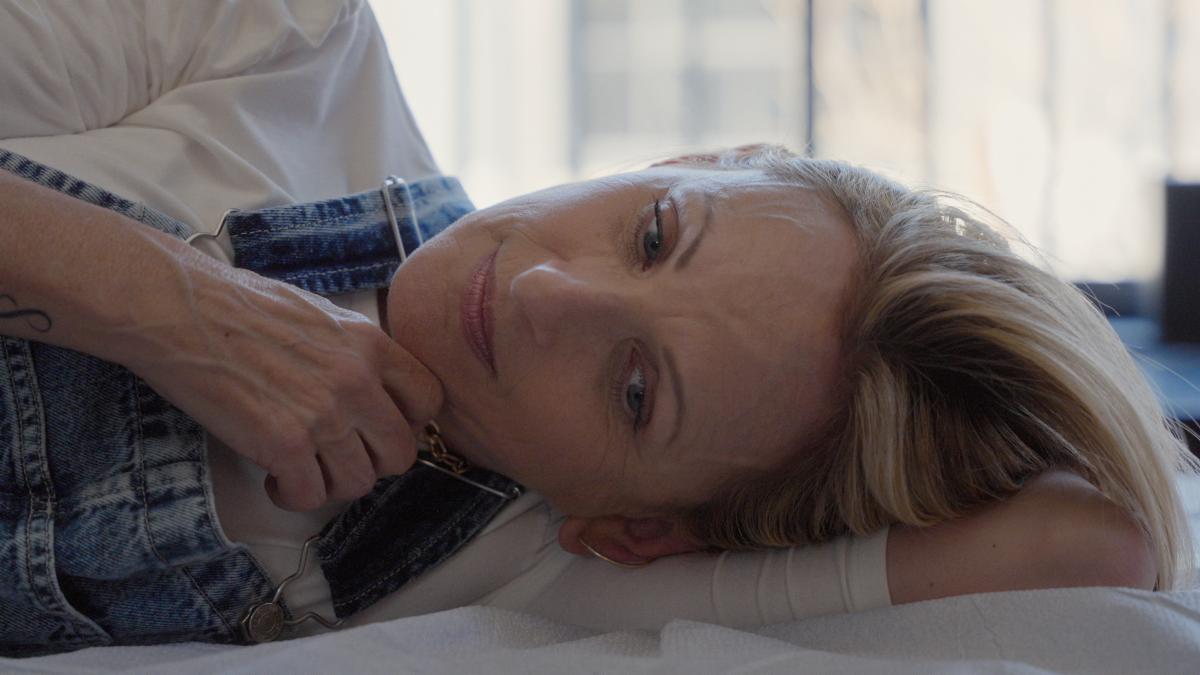

Marlee Matlin—Not Alone Anymore (Kino Lorber, opens June 20)
In Shoshannah Stern’s perceptive portrait of the first deaf performer to be nominated for and win an Oscar—for best actress in Children of a Lesser God (1986)—Marlee Matlin (above) lays herself bare, as a deaf person, an actress, and an advocate for the hearing-impaired community. She is remarkably candid about her upbringing, her addictions, her volatile romantic and professional relationship with William Hurt, her uneasiness at becoming the global “face” of the deaf community after winning the Oscar and her satisfaction at the nearly four-decade career she’s had despite many saying she was a one trick pony. Stern also speaks with Aaron Sorkin (who wrote a part in The West Wing specifically for Matlin), Henry Winkler (a close friend for many years), Lauren Ridloff (who played the same role in Lesser God a few years ago and received a Tony nomination) and Randa Haines (who directed the Lesser God film), all of whom illuminate the subject as a performer and, even more importantly, as a person.


Backside
Everybody knows that Churchill Downs is where the Kentucky Derby has been run for more than 150 years, but director Raúl O. Paz Pastrana focuses his camera on those whom the millions of visitors to horseracing’s most famous race never see—or even knew about. It’s the many workers behind the scenes (at what is considered the track’s “backside”) who groom and clean and pamper and feed and ensure that the horses are ready for training or racing. Pastrana takes his cue from the great Frederick Wiseman for this fly-on-the-wall record of the people (several of whom are migrants) who get no glory but are indispensable in keeping a booming industry going.


The Inquisitor
Briskly directed by Angela Lynn Tucker, this is an edifying examination of Barbara Jordan (above, center), who was a political trailblazer in many ways, including her being the first Black Southern woman elected to Congress, in 1972, which also enabled her to become a clear and articulate voice of reason during the Nixon impeachment hearings. Tucker not only uses well-chosen archival clips of Jordan herself but also conducts new interviews with admirers from Dan Rather to Jasmine Crockett. Narrator Alfre Woodard provides Jordan’s strong, eloquent voice.


Natchez
The Mississippi town that still clings to the fantasy of antebellum—that the South before the Civil War was a beautiful and glorious place, ignoring that it was built on the backs of its enslaved people—is chronicled in Suzannah Herbert’s thoughtful documentary that contrasts the booming antebellum tourist business with how local residents and officials are dealing with what’s often been an unspoken history. In this look at a wide array of people on all sides of the divide, Herbert’s camera displays the observational muscle of a Frederick Wiseman, which is high praise indeed.


Re-Creation
Although not a documentary per se, Jim Sheridan and David Merriman’s tantalizing hybrid tackles a vexing criminal case: in 1996, a French woman was murdered in rural Ireland, and journalist Ian Bailey was a prime suspect who never faced an Irish jury. Playing off 12 Angry Men, the film posits a theoretical trial with evidence presented, actor Colm Meaney playing Bailey, Sheridan himself as the frustrated foreman and the amazing Dutch actress Vicky Krieps as the lone “not guilty” holdout who tries to convince the others that contradictory evidence and witnesses make a conviction anything but clear-cut. 


Something Beautiful (Trafalgar Releasing/Sony Music)
In this “visual album” based on her just-released eponymously titled recording, Miley Cyrus (above) and codirectors Jacob Bixenman and Brendan Walter look for some variety in what are basically videos for all 13 songs, mixing straightforward performance clips with elaborately staged and costumed fantasy trips. I’m not a Miley fan, finding her songs repetitive mindless pop, but she does have a good singing voice and a real onscreen presence, so it’s too bad that this comes off as slight and self-indulgent instead of slight and fun. 


Watch Over Us
In this devastating short, director Carlos Garcia de Dios follows Victoria Lopez (above), a Minnesota mother of four sentenced to a stupefying 88 months in jail for selling meth, who sees her kids before surrendering to the authorities and starting her jail term. (I’d love to know what sentence that judge would give to a white male frat boy for the same offense). Even though Lopez had her sentence commuted after a year in prison, the film still mortifyingly displays how our unfair justice system affects so many people, including family and friends of those convicted.

Sunday, June 16, 2024

Film Festival Roundup—2024 Tribeca Festival

2024 Tribeca Festival
Through June 16, 2024
Various locations in Manhattan
Tribecafilm.com/festival

As usual, among the dozens of films premiering at Robert DeNiro’s annual Tribeca Festival (“Film” was dropped from the title last year to mark the fact that it’s encompassing much more than just cinema) are an interesting mix of documentaries that touch on subjects as varied as movies, music, theater, and the never-ending business of war, corporate welfare and—yes, still—even UFOs. 

Brats

Brats 
(Neon, streaming on Hulu)
In this engaging if slight documentary, Andrew McCarthy visits the other members of the so-called “Brat Pack”—a group of 20something actors who 40 years ago starred in movies like The Breakfast Club, St. Elmo’s Fire and Pretty in Pink—to discuss whether that moniker was helpful, hurtful or somewhere in between. McCarthy chats with Rob Lowe, Emilio Estevez, Jon Cryer, Demi Moore, Lea Thompson, Tim Hutton and Ally Sheedy about their thoughts on the 1985 magazine article that gave them the label. (Judd Nelson and Molly Ringwald did not participate, unfortunately—their thoughts would have been welcome.) The conversations are chatty, amusing, even occasionally insightful—as McCarthy also talks with others like writer Bret Easton Ellis and director Howard Deutch (who is Thompson’s husband)—and the result is an entertaining trek back to the mid-80s for some of us.

Made in England

Made in England—The Films of Powell and Pressburger 
(Cohen Media, opens July 12)
For three decades and 20 films, Michael Powell and Emeric Pressburger made some of the most enduring works in British cinema, which include many indelible images, from those of The Life and Death of Colonel Blimp (1943), A Matter of Life and Death (1946) and Black Narcissus (1947) to The Small Back Room (1948), The Red Shoes (1949) and The Tales of Hoffman (1951). David Hinton’s informative documentary dissects their partnership and why it ended (Powell made films himself, including the overrated cult item Peeping Tom, in 1960). Then there’s Martin Scorsese, an unabashed Powell and Pressburger fan, who not only narrates but acts as our on-camera host, even comparing what he did in some of his films with what they did in their pictures (a word he loves). Scorsese is always a terrific raconteur and knowledgeable commentator on film history, but Made in England needs a little less Marty and a little more Powell and Pressburger.

Satisfied

Satisfied 
Broadway performer Renee Elise Goldsberry, who won a Tony for playing Angelica Schuyler in Lin-Manuel Miranda’s Hamilton, is the focus of Chris Bolan and Melissa Haizlip’s personal portrait. Balancing home and work isn’t the most original subject for a documentary, but like the Ani DiFranco doc (below), this makes for often riveting viewing as Goldsberry, who has a young son and adopted daughter, tries keeping her professional and personal lives afloat while dealing with setbacks and triumphs, at times simultaneously—as during her final, filmed performance of Rent on Broadway—and she is the perfect doc subject: endlessly personable and confessional. 

1-800-On-Her-Own 

1-800-On-Her-Own 
The same could be said for alternative music pioneer Ani DiFranco, the Buffalo-born musician turned entrepreneur (she has her own record label, Righteous Babe) who’s released dozens of albums in the past three decades. In Dana Flor’s intimate fly-on-the-wall portrait, DiFranco—now in her early 50s—must navigate how to remain relevant in a business that’s very different from when she began and keep her artistic integrity while raising her two daughters. The film’s title refers to the toll-free phone number for her Buffalo office in the early days; it also describes DiFranco’s fierce independence that’s marked her career.

Hacking Hate

Hacking Hate 
How right-wing racists and fascists on social media get their hateful messaging across is the focus of Simon Klose’s forceful documentary, which follows muck-raking Swedish journalist My Vingren as she tracks down online offenders, often by creating fake profiles to interact with, and catch, them. The heroic Vingren—well aware of the social media giants’ history of appeasing and even monetizing hate on their platforms—also talks with Twitter whistleblower Anika Collier Navaroli, who emotionally recounts the blowback from her decision to ban Trump from the site after the January 6 riot.

Checkpoint Zoo

Checkpoint Zoo
Russia’s illegal 2022 invasion of Ukraine not only put people and property at great risk but also countless animals; Joshua Zeman’s wrenching documentary homes in on Feldman Ecopark, an animal refuge near Ukraine’s second-largest city where those in residence there need to be removed from their dangerous location to safer spaces. Zeman also introduces the many brave people, from zoo workers to volunteers, who risk their very lives to try and get the animals to safety, all while a deadly war rages around them. In fact, the most memorable moments of the documentary are the raw footage from the front lines that these same people record for posterity.

Emergent City

Emergent City 
(to air on PBS’ POV series in 2025)
A long-disused area in Brooklyn called Industry City is the center of a plan by developers to have it rezoned for commercial use, while local politicians and ordinary people line up to oppose it. But Kelly Anderson and Jay Arthur Sterrenberg’s documentary, which follows many of the principals over several years of back and forth in community meetings and other settings, allows everyone to tell their side of the story—and the result is a complex mosaic of how the 21st century city can exist for all, even those with diametrically opposing viewpoints.  

They're Here

They’re Here 
Directors Daniel Claridge and Pacho Velez talk to several people in New York State—several in the Rochester area and others in Scarsdale and Orange County—who believe they have either seen or been visited by aliens. (The title, of course, comes from the famous line spoken by the young daughter Carol Ann in Poltergeist.) Although the film takes their claims seriously, and they definitely seem affected by something inexplicable, there’s also a welcome lightheartedness to this study of people who are looking for any sort of connection, and so those who are skeptical can also appreciate and even sympathize with their wide-eyed wonder.

Wednesday, June 14, 2023

Film Festival Roundup—2023 Tribeca Festival

2023 Tribeca Festival
Through June 18, 2023
Various locations in Manhattan
Tribecafilm.com/festival

Maggie Moore(s)

As usual, this year’s Tribeca Festival—which, although it has dropped “Film” from its title, remains movie-centric—is an interesting mix of new fiction features and documentaries. Among the former, Maggie Moore(s) (opening June 16)—which follows a small-town New Mexico sheriff (Jon Hamm) flummoxed by the murders of two women with the same name within days of each other—is hampered by director John Slattery’s insistence on making this black comedy something that the Coen brothers might have rejected: absurdist atmosphere punctuated by cartoonish violence. Hamm is charming, as always, and his scenes with Tina Fey as a nosy neighbor who enters his life are the best in an alternately enjoyable and enervating movie.

The Future

Israeli writer-director Noam Kaplan’s The Future, in which Yaffa, an Arab student from the West Bank who has murdered Israel’s minister of space and tourism, is interrogated by Nurit, a scientist and profiler whose new program, The Future Project, failed to predict this act of terrorism, asks probing questions about free will, motherhood and civilization’s advances (the first Israeli moon landing is happening while the interrogation plays out). In the leads, Samar Qupty (Yaffa) and Reymond Amsalem (Nurit) give powerful portrayals of these antagonistic but strong-willed women.

The Last Night of Amore

In The Last Night of Amore, that terrific actor Pierfrancesco Favino plays a cop who, after 35 years without firing his gun, is planning to retire. Of course, fate has other plans, and he spends his final hours on the force trying to clean up a fatal mess that he’s had a hand in creating (and yes, he does fire his gun). Andrea Di Stefano directs with assured elegance, although the too-twisty script leads him and his protagonist into contrived alleys. Still, it’s a taut thriller about how underpaid policemen are and how that might make them take a questionable or unethical side job. 

The Listener

Best known for playing the dutiful boxer’s wife in Creed and its sequels, Tessa Thompson gets a chance to stretch dramatically in The Listener, Steve Buscemi’s film about a suicide helpline volunteer that has Thompson onscreen for its entirety. Although it gets repetitious and obvious at times—each call she receives brings with it a new melodramatic hook—Thompson is magnetic, often quietly so as she alternates between talking and listening: in her silent moments, she is mesmerizing. Some of the voices may sound familiar: callers are voiced by the likes of Logan Marshall-Green, Margaret Cho and Rebecca Hall.

Marinette

Marinette Pichon, France’s first female soccer star, had to go to the U.S. and play for the short-lived Philadelphia Charge team in 2002 and 2003 to make money and get respect doing what she most loved, according to Virginie Verrier’s energetic, conventional but at times rousing and enraging biopic, Marinette. Pichon was gay at a time when she couldn’t safely come out, and her relationships with women culminate with Ingrid Moatti, the paraplegic basketball player whom she would marry and have a child after her retirement. Garance Marillier’s intensely physical and thoroughly honest performance carries the film, both on and off the field.

Against All Enemies

I caught a half-dozen documentaries at the festival, starting with the necessary but scary Against All Enemies, Charlie Sadoff’s incriminating study of how and why so many veterans of the U.S. armed forces gravitate toward militias and other white supremacist groups, which are looking ahead (or maybe looking forward) to what many of them consider the next civil war. Sadoff talks with military vets, generals and civilians, along with experts on the subjects (especially Kathleen Belew, who has written about the white power and paramilitary movements), who illuminate a subject that will probably be around indefinitely, unfortunately. But why Sadoff ends his film with the fact-free rantings of the unhinged Eric “General E” Braden is a real head-scratcher.

Chasing Chasing Amy

Chasing Chasing Amy is a labor of love for director Sav Rodgers who, as a queer 12-year-old, watched Kevin Smith’s Chasing Amy over and over again—years later, Rodgers questions not only the film’s premise (a lesbian is “won over” by the perfect straight guy) but also his own relationship to it and how he feels now compared to when he was a confused youngster. Rodgers actually gets Smith himself to discuss his film’s legacy, and they become friends; Guinevere Turner, who co-wrote and starred in the breakthrough lesbian film Go Fish back when Smith made Amy, refreshingly gives her witty take on it as well, and Amy star Joey Lauren Adams opens up more candidly than maybe even she would have thought. Chasing Chasing Amy is, when all is said and done, a more important personal film than Smith’s sincere but gravely flawed original.

It's Basic

Guaranteed Basic Income, or GBI, which has been touted by Martin Luther King, Richard Nixon and, more recently, presidential candidate Andrew Yang, has yet to be part of the mainstream political and economic discourse. But, as director Marc Levin shows in his succinct documentary, It’s Basic, things are slowly changing. Levin follows several mayors who have begun a pilot program in their local municipalities as well as people who have received the monthly payments—these are not the “lazy” poor but people who are making the best of their financial boost. Just maybe, It’s Basic suggests, GBI’s time has come.

Richland

In Richland, director Irene Lusztig visits the eponymous town in Washington State that sprang up near the Hanford nuclear site for workers in WWII’s Manhattan Project who made weapons-grade plutonium to live with their families—and discovers an essential contradiction: pride in the nuclear accomplishments of 80 years ago and a sense that a reckoning with the past is overdue, i.e., the town was built on Native land. Lusztig chronicles those who are unapologetic about the town’s history (the high school football team still wears uniforms emblazoned with a mushroom cloud) and those who want to look to the future (environmental workers resoil areas that used to be contaminated by nuclear material). Most movingly, a Japanese woman whose grandparents were killed by the atom bomb in 1945 hangs a symbolic recreation of that weapon of mass destruction (see above photo) that perfectly encapsulates the subject’s complexities.

Rock Hudson—All That Heaven Allowed 

Hollywood’s ultimate masculine heartthrob, Rock Hudson broke both women’s and men’s hearts in a career that encompassed movies in the 50s and 60s and TV series in the ’70s and ’80s—then was the first celebrity to die during the early years of AIDS, in 1985. Stephen Kijak’s illustrative documentary Rock Hudson—All That Heaven Allowed (premieres June 28 on MAX) recounts how the Hollywood machine ensured that gay actors remained in the closet—Hudson even had a marriage of convenience to his agent’s assistant for a few years—and also delves unblinkingly into the actor’s same-sex relationships, a secret he kept from fans until he was on his death bed. In the process, Kijak attacks the hypocrisy of the entertainment industry that still exists, in some form, today.

Ron Delsener Presents

Anyone who went to rock concerts in the New York City area since the late ’60s has probably noticed “Ron Delsener Presents” on the ticket—and this entertaining documentary, also titled Ron Delsener Presents and directed by Sting’s son, Jake Sumner, follows Delsener’s storied career as a concert promoter, from his early days working on the Beatles’ 1964 appearance in Forest Hills, through concerts at the Fillmore and the Palladium through today, where, at 85, he’s still going strong, sometimes attending several shows a night and keeping abreast everything he can. Sumner not only speaks with Delsener himself, his wife, and his children—and shows copious archival footage from many iconic concerts—but also colleagues from the business and an array of stars who touchingly remember his guiding hand, from Bruce Springsteen and Billy Joel to Patti Smith and Paul Simon.

Wednesday, June 30, 2021

2021 Tribeca Film Festival Roundup

20th Tribeca Film Festival 
New York, NY 
June 9-20, 2021
tribecafilm.org

After going completely remote in 2020, the Tribeca Film Festival returned to public showings—all outdoors—in various locations throughout New York City, along with online screenings. But the festival remains a base to launch worthy documentaries, as it has for the past couple of decades.

Kubrick by Kubrick

By far the most memorable doc at this year’s fest was Kubrick by Kubrick, Gregory Munro’s too-short exploration of the greatest American director’s philosophies of filmmaking, spoken by Kubrick himself in a series of interviews conducted by the great French critic Michel Ciment over a 30-year span. As we listen to Kubrick’s Bronx-accented voice discuss matters of technique and subject matter in his unpretentious and straightforward way, Munro shows key moments from several of Kubrick’s classics, from Dr. Strangelove and 2001 to A Clockwork Orange and The Shining. Interspersed are pithy comments by close Kubrick collaborators like set designer Ken Adam, Steadicam operator Garrett Brown, actors Malcolm McDowell and Lee Ermey and actresses Marisa Berenson and Shelley Duvall, as well as his widow Christiane. At only 73 minutes, Kubrick by Kubrick leaves us wanting a lot more—perhaps there’s a Kubrick by Kubrick 2 in our future? 

The Conductor

In The Conductor, Bernadette Wegenstein gains unprecedented access to Marin Alsop, protégée of the legendary Leonard Bernstein and one of the first women to become music director of a major American orchestra (although JoAnn Falletta, music director of the Buffalo Philharmonic since 1999, also deserves to be in this conversation). Alsop engagingly and candidly describes her long and fraught journey from New York to leading conductor on world stages; her mentoring student conductors is given ample screen time. Wegenstein makes good use of vintage footage of Alsop as a child, a student and a young conductor, showing how her tenacity and talent gained her a foothold in the notoriously sexist and misogynistic classical world.

Ascension

Winner of the festival’s best documentary award, Jessica Kingdon’s Ascension is an eye-opening look at how modern China grooms—literally and figuratively—its people for success in a way that is both warning and cautionary tale. In a series of pointed vignettes astonishing in their breadth and level of access (how did Kingdon get the OK to film so much of this?), we watch a workshop in which young women learn etiquette in English and how to eat western foods properly, factory workers making sex dolls, young men rehearsing filming how-to videos in front of the camera, and aspiring entrepreneurs discussing how many millions they expect to make soon. In her brilliantly observational style, Kingdon shows the complexity of the “Chinese dream”—from the working poor to the middle-class to the newly affluent—in a nation that remains stubbornly authoritarian as it transforms into a capitalist juggernaut. 

The Neutral Ground

The Neutral Ground (on PBS July 5; opens in select markets in July), comedian CJ Hunt attacks the loaded question of Confederate monuments, starting with his hometown of New Orleans. The question is: why do so many benighted people defend keeping monuments in the name of “history”? Hunt explores these and other reactions up to a point: his film is more successful as a guide through the historical wreckage of white supremacy and why it’s been so difficult to take the monuments down over the years. Always interesting if only occasionally illuminating, The Neutral Ground works best as a primer about a subject that, unfortunately, will likely remain with us for the foreseeable future.

Love Spreads

Among the festival’s fiction features, Love Spreads is a messy, self-indulgent drama about messy, self-indulgent artists: an all-female band is at a fabled, remote studio to record the follow-up to its smash debut, but the leader and main songwriter, Kelly, finds herself blocked. Writer-director Jamie Adams records the frustrations and irritations that mount among the women and their manager, Mick—including the guitarist’s departure and the arrival of a replacement, played with gusto by the always winning Eiza González —but very little of it feels organic or insightful. There’s also a fine portrayal of Kelly’s insecurity by Alia Shawkat in an otherwise familiar music tale that spreads itself thin.

In the Heights

Finally, there’s In the Heights (in theaters and on HBO Max), which opened the festival with screenings in all five city boroughs. Director Jon M. Chu’s exuberantly sentimental adaptation of Lin-Manuel Miranda’s breakthrough stage musical—which hit Broadway in 2008—retains much of its street vibe, especially the aura of Miranda’s musical mélange of hip-hop, musical theater and salsa in upper Manhattan. But at 143 minutes, the movie suffers from repetitiveness, including too many meandering storylines and climaxes. The cast is mainly good: Olga Merediz, the only major Broadway cast member to reprise her role, is a warm Claudia; Anthony Ramos takes on Miranda’s lead role of Usnavi with aplomb; and fresh-faced Leslie Grace is a better Nina than Mandy Gonzalez was onstage. As the vivacious Vanessa, Melissa Barberra is nearly the equal of the electrifying Karen Olivo on Broadway. Miranda himself is in fine fettle as Piragüero, the ice vendor, and Christopher Jackson—also an original cast member—has an amusing cameo as the Mister Softee driver.

Sunday, June 30, 2019

2019 Tribeca Film Festival Roundup

18th Tribeca Film Festival
New York, NY
April 24-May 5, 2019
tribecafilm.com

Maiden
The latest edition of the Tribeca Film Festival premiered dozens of documentaries, shorts and domestic and international features: as usual, docs led the way. Alex Holmes’ Maiden, a bracing account of the first all-female crew in yachting’s premier Whitbread Round the World Race, reunites its members, led by crew leader Tracey Edwards, all of whom speak with a mix of wonder and pride over their amazing race in 1989. Edwards is as modest and unassuming as her crewmates are effusive in their praise for her steady leadership that helped them conquer many physical and psychological hurdles on their way to finishing the grueling months-long trek.

In the satisfying A Taste of Sky, Michael Lei explores how the goodwill of Danish gourmand Claus Meyer, whose Gustu is a high-end restaurant and cooking school for poor youths in La Paz, Bolivia, has allowed those (like the chefs profiled in the film, Kenzo and Maria Claudia) with marks against them to make their own mark on the culinary scene. Lil Buck: Real Swan is Louis Wallecan’s eye-opening portrait of the street dancer turned sought-after artist Lil Buck, from his early days growing up as Charles Riley in Memphis to his newly-minted celebrity that has included performances with Madonna and with Cirque de Soleil.

What Will Become of Us is Steven Cantor’s frank portrait of Frank Lowy, Australian founder of the shopping mall giant Westfield, who while in his 80s decided to discuss his tragic past as a Jew in Hungary during World War II: the most devastating moments find Lowy sharing intimacies about his father (who was killed in Auschwitz) and his beloved wife (afflicted with Alzhimer’s).

Meeting Gorbachev
The curious mind of German director Werner Herzog is on display in his latest docs. Meeting Gorbachev shows Herzog—who co-directed with André Singer—sitting down with the jolly former Soviet premier, who doesn’t pull punches (well, not many) as he discusses Glasnost, the end of the Cold War and the current state of the world. Herzog might be a little too differential to his subject, although that may be because that’s the only way Gorbachev would talk at all. In Nomad: In the Footsteps of Bruce Chatwin, Herzog touchingly chronicles the life and death of one of his closest friends, a British writer and adventurer who died of AIDS 30 years ago. Herzog even allows himself to wax sentimental as he traces Chatwin’s footsteps—literally and figuratively. 

An intriguing but frustrating documentary, Framing John DeLorean is Don Argott and Sheena Joyce’s look at the Detroit car maker who became infamous when his world blew up in a haze of unsold cars and cocaine possession charges by the Feds. Par for the course are reenactments of events in DeLorean’s life, but with a twist: an A-list cast performs them, starting with Alec Baldwin as DeLorean and Morena Baccarin as his wife. The result feels stagy and awkward along with not providing any more insight than other parts of the film do. Bloating the running time are moments when Baldwin—while having his makeup applied—comments on the man he’s portraying, again to scant effect.

Of the two features I saw, Takashi Doscher’s Only is far more forgettable, a lackluster post-apocalyptic nightmare where women are prized only for their breeding capabilities. Despite the winning presence of Frieda Pinto, complemented by a persuasive Leslie Odom Jr. as her partner, Doscher’s nightmarish scenario isn’t very distinctive from the dystopias we’ve been bombarded by elsewhere.

Charlie Says
Better is Charlie Says, Mary Harron’s at times harrowing drama about the Manson cult, shown through the eyes of three of Charlie’s women—Leslie Van Houten (Hannah Murray), Patricia Krenwinkel (Sosie Bacon), and Susan Atkins (Marianne Rendón)— who discuss their exploits with a prison analyst (Annabeth Gish). Harron effectively dramatizes the ecstasies and agonies of life in a cult, including the killings themselves, which are never displayed as exploitatively as in disastrous recent The Haunting of Sharon Tate. Strong acting by the women and a bizarrely scary turn by Matt Smith as Charlie help smooth out the bumpier paths the movie takes.

Sunday, June 10, 2018

2018 Tribeca Film Festival Roundup

17th Tribeca Film Festival
New York, NY
April 18-29, 2018
tribecafilm.com

Woman Walks Ahead
For its 17th edition, the Tribeca Film Festival had its annual array of features and documentaries, television and Netflix series for preview, dozens of shorts and talks and special events. In the first festival since the #MeToo movement, women both in front of and behind the camera were featured, starting with Woman Walks Ahead, Susannah White’s absorbing historical drama about Catherine Weldon, a widowed painter from New York who in 1892 traveled across the country in hopes of painting the great warrior Sitting Bull. As usual with such films, historical veracity be damned, but Woman Walks Ahead is filled with gorgeous western vistas and an estimable cast led by Jessica Chastain’s forcefully bull-headed heroine and Michael Greyeyes’s humane, gentle Sitting Bull. There’s also fine support from Sam Rockwell, Bill Camp and Ciaran Hinds as the men who help—or hinder—Weldon in her seemingly quixotic quest.

Based on the early life of the author of Frankenstein, Mary Shelley has sumptuous sets and costumes that smother the familiar tale of a young woman not being taken seriously in a culture where men are the poets and thinkers. Elle Fanning makes an engaging if superficial Mary, Douglas Booth a less-than-fascinating Shelley (the poet who takes Mary away at age 16) and Bel Powley a too-modern stepsister Claire (who had a baby with Lord Byron). Director Haifaa al-Mansour gets bogged down in bodice-ripper clichés; Bright Star this isn’t.

Slut in a Good Way
From the Quebecois duo of director Sophie Lorain and writer Catherine Leger, Slut in a Good Way is an irreverent look at a bunch of high-schoolers (particularly 16-year-old Charlotte) and how their casual attitudes toward sex often confuse the issue. A group of engaging young performers—led by the remarkably self-assured Marguerite Bouchard as Charlotte—makes this an amusing and pointed ride through raging teen hormones.

M
French actress Sara Forestier consolidates her status as a triple-threat by writing, directing and starring in M, a funny, touching, sometimes difficult-to-watch drama about a young woman with an embarrassing stutter who falls in love with a barely literate baker. Their volatile romance, complicated by social and economic differences, is enacted with formidable intensity by Forestier and Radouanne Hardane, and there’s a realistic sense of two imperfectly matched people hoping to not just get by but transcend their hardscrabble environment.

Disobedience
Following his Oscar-winning Best Foreign Film A Fantastic Woman, Chilean director Sebastián Lelio returns with Disobedience, an Orthodox Jewish lesbian romance. For a movie that spends much of its time delving into the culture of the London Orthodox community, it all boils down to when Rachels Weisz and McAdams—both sensationally good (except for McAdams’ occasional lapsed accent)—will find their way to a bedroom. Lelio never sensationalizes the women’s relationship, even if he and co-writer Rebecca Lenkiewicz succumb to melodrama. But both actresses, at the top of their game, invest this charged material with emotional directness; credit also goes to Alessandro Nivola, who scores in the underwritten role of McAdams’ husband.

Smuggling Hendrix
Set before and during the 2011 riots in London, Obey is a scalding study of people living in a maelstrom of social unrest, racism and economic poverty. Zeroing in on a young man who falls for a beautiful but dangerous young woman, Obey has its missteps but on the whole is a stellar debut for director Jamie Jones. Another look at a real-life volatile area, Smuggling Hendrix follows Yiannis (Adam Bousdoukos), whose dog Jimi runs away to the Turkish controlled part of Cyprus, from which he cannot brought back without it becoming an international incident. Writer-director Marios Piperides shows a light but artful touch with potentially sticky material, smartly having his hero enlist his ex—now with another man—to retrieve their dog. Bousdoukos is a perfect put-upon everyman, and Vicky Papadopoulou gives a bravura performance as a woman whose feelings for her beloved canine help her through a dicey situation with Yiannis.

A choppy distillation of Chekhov’s heartbreaking play, The Seagull sacrifices the depth and humanity of Chekhov’s writing and characters in director Michael Mayer’s and writer Stephen Karam’s unfortunate adaptation, leaving only the bare bones of unrequited love, which is not remotely what Chekhov was after. Still, there’s splendid scenery and forceful acting by Annette Bening, Brian Dennehy and especially Siorose Ronan, an actress who seemingly gets better every time she appears onscreen.

Every Act of Life, Jeff Kaufman’s documentary about playwright Terrence McNally, is a joyous valentine to theater and an affecting reminiscence in which McNally engagingly speaks about his life growing up in the Midwest and moving to New York where he became a celebrated writer and Tony winner while befriending seminal artists like Edward Albee and Wendy Wasserstein—with both of whom he had affairs!—and worked with first-rate actors like those heard from in the film: Nathan Lane, Angela Lansbury, John Benjamin Hickey and Christine Baranski, for starters.

Marco Proserpio’s documentary The Man Who Stole Banksy enlightens us about a seedy side of the art world: the legal buying and selling of illegal artworks, namely the public street art of the famous eponymous artist who went to Palestine in 2007 to paint on many of the area’s outdoor spaces. We see an enterprising businessman who takes it upon himself to make sure that money can be made from Banksy’s site-specific works, no matter the economic and moral difficulties.

Ryuichi Sakamoto: Coda, director Stephen Nomura Schible’s touching documentary about the Japanese composer who won an Oscar for The Last Emperor, shows an artist dealing with devastation from within and without: his 2014 throat cancer diagnosis and horrifying disasters like September 11, the Iraq War and the Fukushima nuclear-plant disaster, all of which marked him personally and artistically. Sakamoto is a gentle, soft-spoken soul, and Schible’s intimate portrait presents a hopeful glimpse of how art can heal.

Monday, May 8, 2017

2017 Tribeca Film Festival Roundup

15th Tribeca Film Festival
New York, NY
April 19-30, 2017
tribecafilm.com

Bobbi Jene
At the Tribeca Film Festival, documentaries usually dominate my viewing, and this year was no different. A triple winner of awards at the festival (Best Documentary, Best Cinematography and Best Editing), Bobbi Jene is an excruciatingly personal chronicle of American dancer Bobbi Jene Smith, who performed with the Israeli troupe Batsheva for ten years before deciding to return to the States. Her passionate commitment to her art and her emotional journey from Israel back home is gracefully recounted by director Elvira Lind, who begins her film by showing Bobbi Jene dancing in the nude: this intimate portrait only becomes more so as it goes along.

Julian Schnabel: A Private Portrait
In Julian Schnabel: A Private Portrait (opened May 5 in New York), director Pappi Corsicato presents Schnabel, one of the contemporary art world’s biggest names, in all his personal and professional glory. Interviewing wives, daughters, friends, colleagues and admirers (among them Al Pacino and Willem Dafoe)—along with the man himself—Corsicato also makes canny use of Schnabel’s own archive of home movies and photos, along with new footage of his most recent work. By saving Schnabel’s greatest achievement—his 2007 film The Diving Bell and the Butterfly, for which he was nominated for a Best Director Oscar—for last, Corsicato shows that his subject has an artistic seriousness to match his penchant for self-promotion and celebrity.

Elián
If there’s another Cuban besides Fidel Castro who can be ID’d by his first name, it’s Elián Gonzalez, and Elián (opens May 12 in New York) provides a concise overview of how the little boy became a symbol of the simmering tensions between the United States (good) and Cuba (evil) after he was discovered floating alone in the water in late 1999. The coup by directors Tim Golden and Ross McDonnell is an interview with the now-grown up Elián, who stands by his love and adoration for his “god” Fidel and his lack of sympathy for his Miami relatives, who are still angered by our government snatching him from them at gunpoint in the spring of 2000 and returned to his father. There’s even a discussion of whether President Clinton and his attorney general Janet Reno’s handling of the situation could have led to Al Gore’s defeat in Florida, which would make the Elián Gonzalez affair an even biggest historical event than it already is.

A Gray State
Not surprisingly, several of this year’s docs tackle relevant political issues. A Gray State calmly dissects what led to the disturbing deaths of Iraqi vet and fringe right-winger David Crowley, his Muslim wife and their young daughter: there’s copious footage of Crowley making his paranoid dystopian movie, Gray State, and director Erik Nelson allows conspiracy theorists who think the government shut Crowley up to vent their predictable but misplaced anger. Eerily complementing Nelson’s film, David Byars’ No Man’s Land chronicles the stand-off between right-wing militants and government forces at Oregon’s Malheur National Wildlife Refuge last year, evenhandedly presenting both sides with astonishing footage of the take-over, stand-off and trial, at which the men were found not guilty. As an incredulous observer notes, if these were Black Lives Matter protestors, the outcomes of the stand-off and trial would most likely have been far different.

Two National Geographic docs had world premieres ahead of their network broadcasts. Sebastian Junger and Nick Quested’s searing Hell on Earth: The Fall of Syria and the Rise of ISIS (premieres June 11) is a meticulous and frightening exploration of how the Islamic State took advantage of the broken country after Assad allowed it to spin into chaos. Entirely comprising archival footage—some of which has not been seen until now—Dan Lindsay and TJ Martin’s LA 92 (now showing) paints a vividly ugly picture of Los Angeles before, during and after the riots triggered by the infamous “not guilty” verdict for the policemen accused of beating Rodney King.

Finally, two films show how we humans adversely affect our planet. The Sensitives introduces several people who have adverse reactions to simply trying to live a normal life: whatever the reason, anything their body perceives as toxic makes them so sick that they have to live in enclosed places. Director Drew Xanthopoulos sympathetically shows their plight and a possible cure: an advocate for their rare malady who is one of the “sensitives” herself. Mark Grieco’s A River Below is a consistently surprising study of the near-extinction of the Amazon’s pink river dolphins, as their hunters and the activists trying to save them do battle in a showdown that raises pertinent questions about the ethics—or lack of such—of both sides.