Showing posts with label Criterion DVDs. Show all posts

Sunday, April 21, 2013

April '13 Digital Week III


Blu-rays of the Week
Escapee
(Anchor Bay)
Campion Murphy’s dull serial killer thriller begins auspiciously: a group of students visits a prison and an inmate makes advances to the most attractive female among them. After that, what should be the meat and potatoes is instead mostly gristle as a murderer outsmarts a bunch of not very smart people. A half-hearted attempt at psychology is risible, and even the bloodlettings are a letdown for those who want that sort of thing. The Blu-ray image is stellar; lone extra is a making-of featurette.

Massage Parlor Murders
(Vinegar Syndrome)
This mid-‘70s cinematic artifact ineptly attempts being sexy and scary as a diabolical killer offs a Manhattan massage parlor’s nubile masseurs. What’s watchable is a time-capsule glimpse at New York City: the streets, grime, crime, people, vintage vehicles are fascinating by themselves. The disc contains an original cut and re-release cut, which junks a deadpan opening massage; there are also seven minutes of outtakes. The movie’s graininess remains on Blu-ray, which helps with its frozen-in-amber “look.”

A Monster in Paris
(Shout Factory)
The best thing about this mundane animated adventure is its setting: taking place in 1910 Paris, Bibo Bergeron’s movie has a chase scene on the Eiffel Tower and a shootout on the uncompleted Sacre Coeur church. Too bad the dazzling animation is at the service of a nondescript tale complete with bad guys and a misunderstood creature who ends up a hero. The voice talent (Danny Huston, Vanessa Paradis, Bob Balaban, even Sean Lennon) is capable; the Blu-ray transfer looks terrific in both 3-D and 2-D.

Richard III
(Criterion)
Laurence Olivier’s magnificent adaptation of Shakespeare’s early tragedy is not only a cinematic marvel but also contains one of Olivier’s most flamboyant but unhammy performances—Richard is a showboat, which Olivier plays to the hilt. But Olivier the director smartly allows his supporting cast breathing room, and Claire Bloom, Ralph Richardson, John Gielgud and Cedric Hardwicke respond superbly. The boisterous colors of this 1955 Vistavision production are captured immaculately in the Criterion Collection’s transfer; extras comprise a commentary, restoration demo, 12-minute trailer with on-set footage and an Olivier interview from a 1966 BBC series Great Acting.

Wings of Life
(Disneynature)
If you ignore corny narration spoken by Meryl Streep—who must have been gagging during recording—the latest exquisite-looking Disney nature doc shows how the world of plants interconnects with all of earth’s life. The amazing HD photography—which catches the minutest movements and variations among the flowers and insects in a nature dance that’s been going on for billions of years—is the reason to watch, even if the soundtrack (along with Meryl’s silly speech, there are lame songs of uplift) is less than sound. The Blu-ray image is unsurprisingly perfect-looking.

DVDs of the Week
Childrens Hospital—The Complete Season 4
(Warner Archive)
Rob Corddry’s whacked-out satire is undoubtedly the best 10-minute show on TV each week, and this disc brings together 14 hilarious episodes from the series’ fourth season. Along with wickedly imaginative writing, the cast is a comic dream, a group of actors—Malin Akerman, Erinn Hayes, Megan Mullally and even the Fonz himself, Henry Winkler—that’s exactly what Corddry (who’s insanely funny as a clown doctor who believes in the healing power of laughter) and his show needs.
  
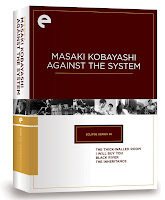
Eclipse 38—Masaki Kobayashi Against the System
(Criterion)
Masaki Kobayashi is a Japanese master known for a trio of masterworks: the three-part The Human Condition (1959-61); 1962 samurai epic Hara-kiri; and 1964 eerie ghost tetralogy Kwaidan. This set comprises four films by a director unafraid to tackle pressing, even controversial social issues. The Thick-Walled Room (WWII war criminals), I Will Buy You (baseball corruption), Black River (American postwar occupation)—all released in 1956—and 1962’s The Inheritance (amoral affluence) are further proof of Kobayashi’s exceptional prescience and formidable cinematic style. Now if Criterion releases his later films—Hymn to a Tired Man, Fossil, Tokyo Trials—I’d be forever grateful.

Erroll Garner—No One Can Hear You Read and
The Last Flight of Petr Ginz
(First Run)
These documentaries introduce two individuals—a stellar musician and teenage artist—whom history has forgotten about. Erroll Garner is a tangy portrait of an unsung jazz great whom director Atticus Brady chronicles as an important, overlooked purveyor of uniquely American music. And directors Sandy Dickson and Churchill Roberts’ Petr Ginz stunningly demonstrates that a talented 16-year-old was on his way to a greatness that was tragically cut short by the Nazis.

In Another Country
(Kino Lorber)
For his playful but innocuous comic drama, Korean director Hong Sang-soo casts French actress Isabelle Huppert in a lazy trio of segments in which she plays three different women named Anne whose interaction with lovers, strangers and jealous wives have slight variations depending on the context. What could have been a charming bon-bon about relationship confusion ends up so light and airy that it literally disappears while one is still watching it, despite Huppert’s best efforts..

Shakespeare—The King’s Man
(Athena)
Shakespeare scholar James Shapiro—author of two level-headed books about the Bard, 1599 and Contesting Will—is our tour guide through the last decade of Shakespeare’s creative life, when his plays mirrored the political situation in Britain after Elizabeth’s death and James’s ascension to the throne. At first it’s jarring when Shapiro walks around contemporary London while discussing the Jacobean era (when other playwrights were also flourishing), but Shakespeare’s for-all-time brilliance comes through. The lone extra is a 1983 BBC performance of Macbeth with Nicol Williamson.

Vietnam—Ten Thousand Day War
(Time Life)
In this thorough 26-part series about the Vietnam War, journalist Peter Arnett created an incisive examination of America’s most pointless war, with archival footage and interviews with many participants, both famous (American and Vietnamese officials) and not (ordinary soldiers). It first aired in 1981, so its mention of the Gulf of Tonkin incident, to give one example, lacks the truth which was discovered afterward, but overall, the show’s 11-plus hours that run from France’s initial involvement through the final fall of Saigon can still be considered a definitive history.


CD of the Week
Dutilleux—Correspondances
(Deutsche Grammophon)
Now age 97, Frenchman Henri Dutilleux has a claim on the "world's greatest living composer" mantle, and the three works on this recording—including one world premiere—back up that assertion. The enigmatic 1970 cello concerto, "Tout un monde lointain..." (played with authority by Anssi Karttunen) and the 1997 The Shadows of Time (a magical work with three angelic boys' voices) are two of the anything but prolific composer's masterpieces. But the centerpiece is Correspondances, a remarkably muscular vocal piece from 2003, sung by the exquisite soprano Barbara Hannigan. Leading the Radio France Philharmonic Orchestra is conductor Esa-Pekka Salonen, one of Dutilleux's great champions.

Sunday, March 31, 2013

March '13 Digital Week IV


Blu-rays of the Week
The Big Picture
(MPI)
In this at times absorbing drama, the excellent Roman Duris is a husband and father escaping his current life after a horrible mistake occurs when he confronts a friend over his wife’s infidelity. Too bad that, once director Eric Lartigau’s effective set-up yields to the plot, the movie becomes much less significant; after the protagonist’s new identity is solidified, it all evaporates from memory. Intelligently made and persuasively acted on well-chosen locations, the whole is less than its parts. The Blu-ray image is good.

Day of the Falcon
(Image)
Continuing the sad decline of once formidable director Jean-Jacques Annaud—maker of Black and White in Color, Quest for Fire and The Bear—this epic Arabian adventure, while slickly made, nicely shot, acted and edited, is disappointingly routine. It’s always great to see Freida Pinto—one of our most beautiful actresses—at work, but the visual richness only masks the script’s thinness, despite being based on real events. The hi-def image looks spectacular; extras include making-of featurettes.

Killing Them Softly
(Anchor Bay)
Andrew Dominik’s follow-up to his masterly The Assassination of Jesse James by the Coward Robert Ford is the antithesis of that magnificently slow-burning accumulation of tiny details: a quick-moving, brutal look at modern America through the prism of small-time criminals during the last economic meltdown. Framed by the 2008 election, Killing might not resonate like the earlier film, but Dominik’s stylish eye makes this one of 2012’s most memorable films: the perfect ensemble features Brad Pitt, James Gandolfini and Ray Liotta. The hi-def transfer is terrific; extras are deleted scenes and a featurette.

The Life and Death of Colonel Blimp
(Criterion)
In their 1943 epic—also their biggest and splashiest production—directors Michael Powell and Emeric Pressburger created an indelible dissection of the British imperial state of mind. Roger Livesey’s robust portrayal of the patriotic military man who parallels the history of England’s colonial empire and 20-year-old Deborah Kerr’s captivating trio of women in his life are unforgettable. The Criterion Collection’s exquisite hi-def transfer returns glorious color to this classic; extras include a Martin Scorsese intro, Scorsese and Powell commentary, Thelma Schoonmaker (Powell’s widow) interview and featurettes.

Marvin’s Room and
The Shipping News
(Echo Bridge)
Adapting onstage and on-page hits are problematic, as these films demonstrate. From Scott McPherson’s play, 1996’s Marvin’s Room moves from comedy to tragedy without ever becoming compelling, for which we must blame director James Lapine, who wastes good actors like Diane Keaton, Meryl Streep and Leonardo DiCaprio. Lasse Hallstrom similarly does a disservice to E. Annie Proulx’s best-selling The Shipping News with his scattershot 2001 version featuring by-the-numbers acting by Kevin Spacey, Julianne Moore and Judi Dench. The Blu-ray image isn’t bad.

Ship of Fools/Lilith
(Mill Creek)
Two veteran directors in their decline made these middling films. Stanley Kramer’s Ship of Fools (1965) is a well-intentioned but lumbering drama that allegorizes Nazi Germany by an array of passengers in a ship bound for Germany in the 1930s. Robert Rossen’s melodramatic Lilith stars Jean Seberg and Warren Beatty, who struggle through a psychologically damaging love affair. As two-fers go, this might fill gaps in the collections of Kramer and Rossen’s fans. The Blu-ray image is OK.

Waiting for Lightning
(First Run)
I have no interest in skateboarding, so I’m not the target audience for Jacob Rosenberg’s documentary about daredevil Danny Way, who attempts to skateboard off the Great Wall of China. But I was wrong: this is a riveting study of a unique performer discussed with awe even by the likes of Tony Hawk. The footage of Way’s breathtaking stunts, culminating with his Great Wall attempt, is ridiculously entertaining. The hi-def image is first-rate; extras include additional interviews and deleted scenes.

Willow
(MGM/Fox)
I had forgotten about this fantasy collaboration between director Ron Howard and producer-writer George Lucas until this Blu-ray reminded me why it disappeared from everyone’s radar. This visually striking but empty film—which fails to create a brave new world—has uninspired creatures and special effects alongside forgettable performances. At least Val Kilmer (hero) and Joanne Whaley (villainess turned heroine) got married. (It didn’t last.) The movie looks fine on Blu-ray; extras include deleted scenes with Howard’s remarks, and new and vintage featurettes.

DVDs of the Week
All Together
(Kino Lorber)
In this agreeably ramshackle comic drama, Jane Fonda shines in her first French-language role in nearly 40 years (since Godard’s Tout va bien) as the American wife of a Frenchman who join their aging friends to live together instead of at assisted living facilities. It’s small potatoes, but delightful performances by Claude Rich, Pierre Richard, Geraldine Chaplin, Guy Beros and Fonda compensate, as does writer-director’s Stephane Robelin’s refusal to get sentimental til the end—when it works and all is forgiven.

Easy Money
(Anchor Bay)
Daniel Espinosa’s ingenious thriller follows a student who gets in way over his head when he starts working for organized crime, whose members are involved in drug dealing. For awhile, the movie speeds along, cleverly hiding its narrative holes, but its ending asks us to swallow too much, even for a genre that thrives on implausibility. Still, it’s stylish fun—and two sequels will follow, along with the inevitable American remake.

Fatherland
(First Run)
Nicolas Prividera’s unorthodox documentary looks at Buenos Aries’ La Recoleta cemetery, which has as much history and stunning architecture as Pere Lachaise in Paris. Individuals read from letters and books from different eras of Argentine history as they sit among mausoleums, sculptures and other cemetery markers, while ordinary people who live nearby go about their daily lives. This is a highly individual and anything but whitewashed study of a country whose volatile existence can be traced through those luminaries buried in this, their final resting place.

Oliver Twist
(e one)
This adaptation of Dickens’ famous novel stars George C. Scott as a relatively restrained Fagin—at least when compared to this outsized personality’s usual onscreen bluster—alongside who may be the most cherubic Oliver ever, Richard Charles. James Goldman’s script is faithful but skimpy, and Richard Donner’s direction is merely functional: but the material remains powerful, and the supporting cast, including Michael Hordern, Tim Curry and Cherie Lunghi, props up the familiar tale.

Scavenger Hunt
(Cinema Libre)
The near-extinct California condor is the subject of Matthew Podolsky and Eddie Chung’s informative documentary about how usually opposing groups, the NRA and EPA, agree to help these amazing birds survive in the wild when it’s discovered that they’re getting lead poisoning by eating deer carcasses that are filled with lead bullets. Extras are deleted scenes and outtakes.

Shakespeare Uncovered
(PBS)
This sextet of programs covering Shakespeare’s artistic and humanistic greatness invites  actors and directors to give their personal thoughts on the Bard’s genius. With Ethan Hawke discussing his dream acting job, Macbeth, Joely Richardson talking about Twelfth Night and As You Like It, and Trevor Nunn dissecting The Tempest, and so on, the series provides new insights for Shakespeare veterans as well as an accessible way in for those who find him too daunting to deal with.

CD of the Week
Holmboe—Chamber Music (II)
(Dacapo)
The gifted Danish composer Vagn Holmboe (1909-96) wrote music in all genres, although mainly orchestral (symphonies and concertos) and chamber music, of which this disc is a representative sample. Never tied down by one format, his intimate works run the gamut on this disc from a solo cello sonata to a sextet for flute, clarinet, bassoon, violin, viola and cello, all showing off Holmboe’s effortless amalgam of modernism, classical structure and folk idioms. The five pieces on this disc are dazzlingly played by members of Ensemble MidtVest.

Monday, November 5, 2012

November '12 Digital Week I


Blu-rays of the Week
Americano 
(MPI)
Talent must skip a generation: son of French director Jacques Demy and his more talented wife Agnes Varda, Mathieu Demy, wrote, directed and stars in this routine drama about a Frenchman returning to California, where he grew up, after his mother dies; Demy doesn’t give it the urgency which might make it more than merely meandering. Salma Hayek makes a savvily sexy hooker, but another bad-seed celebrity offspring, Chiara Mastroianni, rivals Demy’s onscreen dreariness. The Blu-ray image looks fine; lone extra is a Demy interview.

The Campaign 
(Warners)
Will Ferrell and Zach Galifianakis play opposing senatorial candidates in this sporadically funny comedy that shows how absurd and infantile American politics is—but do we need a lame Ferrell flick to tell us (and one with 11 minutes of raunchier material on Blu-ray)? Ferrell basically gives a foul-mouthed Dubya impression, Galifianakis is an unwatchably campy rival, and running gags of punching infants and dogs wear out before they begin. The Blu-ray image is good; extras include deleted scenes and a gag reel.

Chained 
(Anchor Bay)
I’m no fan of David Lynch, but he’s infinitely preferable to his director-writer daughter Jennifer Lynch, who made the abominations Boxing Helena and Surveillance. Her sordid latest follows a cab driver who murders a mother and keeps her young son in chains until they gradually evolve into a sadistic sort of father/child relationship. The many gory killings are reprehensible and pointless; I don’t get moralistic about movies, but in this case, I’d make an exception. Why Julia Ormond bothers to make films with Lynch—she was also in Surveillance—is head-scratching. The Blu-ray image is excellent; extras are an alternate murder scene and Lynch’s commentary with actor Vincent D’Onofrio.

Excision  
(Anchor Bay)
In this perverse sexual fantasy about a homely teenage girl whose hormones cause self-destructive behavior—written and directed by a man, of course: Richard Bates, Jr.—Annalynne McCord gives a fearless performance as Pauline, a typical loner who ends up acting on increasingly grotesque dreams of gore-filled glory. Even if Bates directs the fantasy sequences as titillation, McCord grounds Pauline’s behavior in an uncomfortable reality. The Blu-ray image is top-notch; lone extra is a Bates/McCord commentary.

House of Dark Shadows and 
Night of Dark Shadows 
(Warners)
On the heels his television show Dark Shadows’ success, Dan Curtis quickly made two features in 1970-1 that captured the series’ flavor. Unlike Tim Burton’s 2012 reboot, Curtis avoids camp but the horror isn’t horrific enough to overcome the oppressive gothic atmosphere. Overall, the movies nicely do what they set out to, and there’s a beguiling debut by future Charlie’s Angel Kate Jackson—her perfect face, in close-up, is what hi-def is for.

Pat Metheny—The Orchestrion Project 
(Eagle Vision)
Grammy-winning jazz guitarist Pat Metheny displays his amazing six-string versatility in this special musical project where he plays along a series of newly-made “instruments” built by imaginative inventors. Although some of the music on this nearly three-hour disc has a certain sameness to it, the tone and precision of Metheny’s guitar playing remains a wonder to hear after so many decades. The Blu-ray image looks solid; extras include additional performances and a Metheny interview.

The Reichorchester  
(Arthaus Musik)
Enrique Sánchez Lansch’s probing 2007 documentary tackles the moral quandary of members of the Berlin Philharmonic from 1933 to 1945, when the ensemble became an official cultural attaché for Hitler and Goebbels. Lansch interviews the last surviving members from that time—93-year-old Hans Bastiaan and 84-year-old Erich Hartmann—and their often painful reminiscences vividly inform the narrative of a cultured nation which turned a blind eye to inhumanity to preserve itself at a horrible human cost. The hi-def image is decent; lone extra is a 10-minute film of renowned conductor Wilhelm Furtlanger leading the orchestra in a Wagner prelude in 1942.

Santa Claus Conquers the Martians 
(Kino)
If you’re in the mood for a badly written, directed, acted and photographed 1964 Z-movie that does nothing in 70 minutes except conjure memories of bad Ed Wood anti-spectaculars, then there’s nothing I can say except: enjoy. Otherwise, Santa—rightly on “Worst Movies Ever” lists—won’t satisfy anyone except unpicky kids who want to watch anything Christmassy. You’ve been warned. The visuals, which look abominable, aren’t much better on Blu-ray; though there are 45 minutes of archival footage, it would have been fun to have a commentary by the MST3000 guys.

DVDs of the Week
Coma 
(Sony)
Novelist Robin Cook’s medical thriller was turned into an effective if silly movie by Michael Crichton in 1978, with beautiful Genevieve Bujold as its star. Now, 34 years later, we get this overlong, bloated, occasionally interesting TV movie starring Lauren Ambrose and Stephen Pasquale as doctors who discover devious doings going on at their hospital. The plot twists and turns are as ludicrous as they were in the original, but the earlier movie’s faster pace has been ruined by a pokey 160-minute mini-series designed for a four-hour TV time slot.

Elena 
(Zeitgeist)
A masterly dissection of the “new” Russia—in which oligarchs outpace the working classes at a rate even greater than the good ol’ USA—Andrey Zvyagintsev’s drama is best when silent: when all else falls away and we are left with the naked pain and desperation of the title character, a former nurse married to a gazillionaire whose own family is ignored by her rich husband. Too bad Philip Glass’s risible and self-parodic music downgrades every scene it’s heard in; happily, Zvyagintsev sensibly builds the most powerful moments—beginning with the evocative opening shot—with silence that speaks volumes more than broken Glass. The lone extra is a 30-minute Zvyagintsev interview.

Free Men 
(Film Movement)
The French resistance is seen through a new lens in Ismael Ferroukhi’s drama set at the Paris Mosque, where the Muslim community assisted Jews to escape the Nazis. Despite melodramatic touches, Ferroukhi builds tension without sacrificing credible psychology as his young protagonist Younes becomes politically—and morally—engaged. Tahar Rahim, memorable in Jacques Audiard’s prison yarn A Prophet, plays Younes as an innocent naïf, a blank slate with which the director fills in Younes’ interior complexity. This tense chronicle shows a multi-faceted Vichy atmosphere through the eyes of people rarely encountered onscreen: Muslims putting their lives on the line to defeat Hitler.

Rosemary’s Baby 
(Criterion)
Roman Polanski’s 1968 shocker, from Ira Levin’s novel, is one of the most frightening horror movies ever made. Polanski’s matter-of-fact direction makes the reality of Rosemary (Mia Farrow), her husband (John Cassavetes) and baby—spawn of Satan?—even more horrifying, and when the movie spills over into the supernatural, there’s no turning back, despite being couched in a plausible New York milieu. Extras include new interviews with Polanski, Farrow and producer Robert Evans and Komeda Komeda, a portrait of composer Krzysztof Komeda, who wrote the eerie score.

The Streets of San Francisco—Complete Season 5 
(CBS)
Karl Malden and Michael Douglas, a hit duo, broke up at the beginning of the 1976-7 season—Douglas, who won an Oscar producing One Flew Over the Cuckoo’s Nest, was carving out a big-screen career—and handsome Richard Hatch came on board. The new partners did well, but audiences dwindled, and this became the series’ last season. A smattering of decent episodes (out of 24) includes the opening two-parter, The Thrill Killers, which sees Douglas’s exit and Hatch’s entrance; there’s amusement in nice girls Patty Duke and Susan Dey as cold-blooded murderers.

Turn Me On, Dammit 
(New Yorker)
Jannicke Systad Jacobsen’s caricatured comedy about a teenage girl whose hormones rage uncontrollably might have made a fun, insightful short, but stretched to 72 minutes—though fairly compact for a feature—it has little to say about Jacobsen’s protagonist, who spends her time fantasizing about sex or trying to rub herself raw. Helene Bergsholm’s nuanced portrayal completely outclasses her writer-director’s film. Extras include deleted scenes and a director interview.

CD of the Week
Joyce DiDonato: Drama Queens 
(Virgin Classics)
American mezzo Joyce DiDonato, who puts on various guises in this entertaining collection of baroque arias sung by Queens and other royalty, is equally at home singing these extravagantly ornamented vocal works and contemporary music. Alternating works by composers both familiar (Handel, Gluck, Monteverdi) and obscure (Cesti, Ormandini, Giacomelli), DiDonato has an uncanny ability to inhabit these women in a vivid musical journey, inestimably helped by conductor Alan Curtis and ensemble Il Complesso Barocco.