Friday, December 16, 2011

Smoking Gun

Addiction Incorporated
Produced & Directed by Charles Evans Jr.
A Variance Films Release; opened November 14, 2011

The current demonization of Wall Street may have helped trigger the Occupy movement, but there’s an even more hated entity in the minds of most Americans: Big Tobacco. Thanks to shrewd marketing that has kept millions of Americans smoking (and dying) from the teen years on (sometimes even earlier), tobacco companies are the most egregious example of corporate greed and heartlessness that predates what’s now on the daily news and in the streets.

Charles Evans, Jr.’s documentary Addiction Incorporated shines a flashlight on Big Tobacco and its underhanded tactics that rope smokers in, at least until they die of lung cancer. It’s not simply a shrill polemic, as Evans allows tobacco company defenders to have their say, but since that say is often Spin 101, it doesn’t take much to show how absurd and unethical their position is. (There’s a delicious moment when all seven Big Tobacco CEOs say, under oath at a congressional hearing, that they believe that nicotine is not addictive.)

Victor DeNoble, the movie’s protagonist, worked for a tobacco company in the 1980s as a research scientist: he helped created a new form of nicotine in the lab that was less lethal but more addictive, so smokers would be stricken be fewer diseases and, it was assumed, continue their habit for years to come. But when his research also showed that nicotine was an addictive drug--much like heroin or cocaine--that was too much for the powers that be: right before the studies were to be published in reputable journal, DeNoble found out that not only was his lab and all of the research were being shut down but that he and his fellow scientists were being fired.

When Congress and the Clinton White House geared up for a round of hearings and meetings to determine the severity of cigarettes on people’s health, it fell to DeNoble--despite a confidentiality agreement he signed--to expose the tactics of Big Tobacco as a cynical attempt to cash in on its customers’ addictions.

Evans’ journalistic expose’ is similar to recent documentaries like the Oscar-winning Inside Job--about the Wall Street scandals that brought the world’s economy to its knees--in its reliance on solid reporting and a myriad of talking heads to chronicle malfeasance on a grand scale. Much of the information laid out in Addiction Incorporated is not new, but Evans binds it together in a tight, taut package that brings many opportunities for viewers to shake their heads in disbelief watching how profit-first corporations treat--or mistreat--consumers.

The terse accumulation of evidence includes eye-openers like showing how billion-dollar companies take care of their own: the ABC television network ended up blinking after tobacco giant Philip Morris filed a multi-billion dollar lawsuit against ABC for a 1995 Nightline expose, having Diane Sawyer apologize on-air for what was essentially a difference of opinion.

There are missteps. It seems that Evans thought that 100 minutes of talking heads and footage of congressional hearings would become repetitious and redundant, and so succumbs to the current “re-enactment mania.” In the hands of Errol Morris, whose The Thin Blue Line became unbearably tense due to his detached re-enactments of events surrounding a police officer’s murder, it’s way to display nuances that interviews can’t. But in other cases (all History Channel specials and here), re-enactments simply get in the way: this isn’t the Watergate break-in being discussing, it’s the laying out of a mountain of evidence--and showing researchers in the lab doesn‘t bring anything of substance to Evans‘ truth-telling. (Similarly, lighthearted use of animated rats--subjects of DeNoble’s nicotine testing--blissfully reacting to the drug--is cute but unnecessary.)

While people may be understandably cynical over the marriage of government and big business--indeed, a federal judge recently blocked new FDA warnings on cigarette packages as something that would inhibit tobacco companies’ “free speech”--Addiction Incorporated can be seen as both corrective and cautionary tale about the fallout when big business calls its own shots, even in what should be an ethically neutral area as scientific discovery.

Sunday, December 11, 2011

December '11 Digital Week II

Blu-rays of the Week
Becoming Jane
(Echo Bridge)

Anne Hathaway’s breakthrough performance in Julian Jarrold’s biopic about how a young Jane Austen became a beloved author highlights a refreshingly lighthearted costume drama filled with strong characterizations by James Cromwell, Maggie Smith and Julia Walters--only James McAvoy as Austen’s beau is too lightweight. With richly detailed sets and costumes, the movie’s visuals are ripe for a hi-def upgrade, and the excellent Blu-ray has the right amount of grain; extras include a commentary, deleted scenes and an on-set featurette.

Design for Living
(Criterion)

One of Noel Coward’s wittiest plays was transformed by director Ernest Lubitsch into a charming 1933 romantic comedy minus the acerbic Coward wit. With the trio played by Miriam Hopkins, Gary Cooper and Frederic March, this Design is amusing if surprisingly superficial. Dazzling-looking black-and-white visuals are courtesy of the Criterion Collection’s superb Blu-ray transfer; extras comprise scholar William Paul’s commentary, Joseph McBride interview about Ben Hecht’s adaptation, and a superior British TV condensation of the play introduced by Coward himself.

Friends with Benefits
(Sony)

Traversing territory recently trod by Ashton Kutcher and Natalie Portman in No Strings Attached, this routine comedy pits another charming and sexy actress--Mila Kunis--against a charmless Justin Timberlake, who again shows his glaring inability to enact a real character. Like the other movie, there’s nasty dialogue galore, and it’s fun to hear a beautiful actress spit out tart dialogue, but the game Kunis is wasted next her costar. The Blu-ray release sports a solid transfer and extras that include a commentary, outtakes and deleted scenes.

The Help
(Touchstone/Dreamworks)

Kathryn Stockett’s mega-bestseller about racism in 1960s South is transferred to the screen with minimal fuss and its basic tear-jerking mechanisms intact, courtesy of writer-director Tate Taylor. This story of black servants stoically retaining their dignity during Jim Crow is one that most audiences can watch and feel good about from a safe distance, while those who don’t connect can still admire the unfussy acting by Jessica Chastain, Allison Janney, Sissy Spacek and Viola Davis. (The others are too broad in their characterizations.) The picture is excellent on the Blu-ray transfer; extras include deleted scenes and an on-set featurette.

Life, Above All
(Sony)

Oliver Schmitz’s heartfelt drama about superstition and disease in a small African village is an emotionally wrought tragedy that’s lined with a sliver of hope. In this story of a teenage girl who tries to reverse a stigma that’s attached itself to her family when her infant sister dies, there are moments of melodramatic excess, but for the most part, the film is gripping, stark and brilliantly acted. The Blu-ray image is first-rate; the lone extra is a making-of featurette.

Medea
(e one)

Pier Paolo Pasolini’s typically idiosyncratic adaptation of Euripides’ tragedy, which stars ill-at-ease opera diva Maria Callas in the title role, is highlighted by intriguing visuals despite a modest budget. These include the centaur and splendid use of Turkish and Italian locations, including Pisa’s Field of Miracles that refrains from showing the famous Leaning Tower. On Blu-ray, the film looks especially good despite the limitations of the film stock. The lone extra is Tony Palmer’s fine 90-minute documentary about Callas.

Now and Later
(Cinema Libre)
Bring together a Wall Street whiz kid running from the law and a spiritual (and sexual) Latina who takes him under her wing and you have this partly interesting, mostly ludicrous Last Tango in East L.A. If you tune out the tin-eared dialogue--much of which sounds like New Agey outtakes--there’s lots of sex--some of which doesn’t look simulated--to keep one’s interest. Even if their line readings are mainly wooden, James Wortham and Shari Solanis handle the physical intimacy deftly. Hi-def doesn’t really help the movie’s low-budget look; extras include deleted scenes and cast interviews.

Tora! Tora! Tora!
(Fox)

In honor of the 70th anniversary of American sailors’ heroism at Pearl Harbor, this 1970 fictional reenactment of the prelude to and consequences of the Japanese attack resurfaces in hi-definition. Meticulously showing Japanese belligerent planning and the U.S. defensive posture, the movie has almost unavoidable and plodding sanctimony, but it’s still a worthwhile recreation of historic events. The Blu-ray release has an overload of film-like detail; included are both the U.S. and the Japanese versions (which includes an additional 10 minutes), with loads of extras including new and vintage featurettes and interviews.

2011 World Series Champions
(A&E)

When the St. Los Cardinals won its 11th championship in October, it was a fitting end to the season for baseball fans sick of hearing about the dominance of the league’s richest teams, the Yankees, Red Sox and Phillies, none of whom got very far. This highlight-rich retrospective--narrated by Mad Men star (and St. Louis native) Jon Hamm--shows off the team’s season-long run, which culminated in those amazing final weeks when the Atlanta Braves’ epic collapse allowed the Cards to clinch a playoff berth on the final day. Shot in hi-def, the World Series games look stunning; included among a bunch of extras is the clinching NLCS Game 5 against the Phillies in its entirety.

Vietnam in HD
(History)

On the heels of its excellent release WWII in HD comes this two-disc set containing four hours of hi-def footage from the most divisive U.S. war of the 20th century. With so much film footage--well-known or barely seen, much of it quite shocking--at their disposal, the filmmakers have made a thorough overview of the war from 1964 to 1975’s fall of Saigon, with several soldiers and family members’ own stories woven into the rich fabric. Even in its often ragged state, this color footage is extremely powerful in HD, and it gives the resulting document a “you are there” immediacy for viewers.

DVDs of the Week
Come Have Coffee with Us
(Raro Video)

Nearly forgotten Italian director Alberto Lattuada--who co-directed Fellini’s debut, Variety Lights, and also made the unforgettable 1964 comedy Mafioso--helmed this frisky 1970 comedy that stars the irrepressible Ugo Tognazzi as a man who gets involved with three spinster sisters after their rich father dies: predictably, amorous adventures ensue. Although the movie is not much different than other erotic Italian comedies of its era, Lattuada’s light touch and Tognazzi’s presence distinguish it. The lone extra is an interview with film critic Adriano Apra.

Inside Hana’s Suitcase
(Menemsha Films)

This unbearably moving documentary is yet another Holocaust story--but since so many will never be told, this one must be. When a young Jewish victim’s suitcase surfaces at Tokyo’s Holocaust Museum, its director and her students attempt to piece together its history. They discover that she died at Auschwitz as a teenager, but her older brother survived and now lives in Toronto. Director Larry Weinstein’s re-enactments--which normally don’t work for me in documentaries--are so restrained they snugly fit in the film. When Hana’s brother goes to Japan to meet the kids who have “resurrected" his sister, it’s so rawly emotional that I dare any eyes to stay dry in the movie’s final reels.

Milestones/Ice
(Icarus)

Robert Kramer’s epic study of Americans trying to come to terms with their disillusionment over their lost 60s idealism, Milestones is an epic snapshot of our nation at a specific point in time in a brilliant and original mash-up of documentary and fiction. This 200-minute masterwork of reportage--made over a period of years and finished in 1975--gets its first DVD release some dozen years after the filmmaker's death; also included is Kramer’s espionage-paranoia meditation, Ice (1969), which is more relevant historically than artistically.

CDs of the Week
Britten, A Midsummer Night’s Dream
(Glyndebourne)

Benjamin Britten’s 1959 opera based on Shakespeare’s fantastical play of sprites, fairies, mechanicals and lovers is given a superlative hearing in this 2006 recording from England’s summer Glyndebourne festival. The orchestra positively shimmers during the nocturnal interludes, while countertenor Bejun Mehta (as fairy king Oberon) and soprano Kate Royal (as one of the lovers, Helena) head a terrific cast, with an inspired group of youngsters making up the impish fairies’ chorus.

Honegger, Orchestral Works
(LPO Live)

The masterly Swiss composer Arthur Honegger was a member of Les Six, a group of French-based composers from the first half of the 20th century. This recording of live performances by the illustrious London Philharmonic Orchestra under the steady baton of conductor Vladimir Jurowski--highlights Honegger’s brilliant orchestral work, from the shimmery Summer Pastoral and propulsive Symphony No. 4 to the glorious chorale of his final composition, the seasonally apt Christmas Cantata.

Saturday, December 10, 2011

Klapisch Crashes

Viard and Lellouche in My Piece of the Pie
My Piece of the Pie
Directed and written by Cedric Klapisch
Starring Karin Viard, Gilles Lellouche
Released by Sundance Selects; opened December 9, 2011

Cedric Klapisch’s boisterous films cram many characters and story lines into two (or so) hours. His last effort, Paris, was even more kaleidoscopic than usual, with the director adroitly juggling several relationships: of course, having some of France’s best actors (including Fabrice Luchini and Juliette Binoche) onscreen didn’t hurt.

Now comes his newest, My Piece of the Pie: for this director, it’s almost an intimate chamber piece that revolves around two protagonists--or antagonists, as we shall see. In the Norman seaside town of Dunkirk, heroine France (Karin Viard) is a single mother of three children who loses her job when the company she works for goes under as part of the global economic crisis. Meanwhile, in Paris (and London), is the financial whiz kid who personally caused France’s unemployment: charismatic anti-hero Steve is a cool customer whose lack of scruples extends from the board room to the bedroom, where he’s taken aback when the supermodel he’s wooing refuses to have sex with him after he flies her to Venice in his private plane.

After alternating between France’s and Steve’s separate worlds (the movie could also be called 99% vs. 1%), Klapisch finally gets to the nitty-gritty after France--desperate for a job to keep her family together--takes the train from Normandy to Paris to become a cleaning lady. Whom does she end up working for? You guessed it: Steve becomes France’s boss, and after many machinations that are undeniably clever but so obvious that you can spot them crawling up the Champs-Elysses, they end up as lovers--at least until Steve tells France (after their first night together) that he and his co-workers destroyed the company and sent her adrift in our anything-but-brave new economic world.

My Piece of the Pie is nothing if not timely, and Klapisch enjoys showing what a rich bastard Steve is (at one point the says, unapologetically, “Finance makes the world go round”) and how much fun it is being a rich bastard (wooing supermodels, flying around Europe, having an eternal five o’clock shadow). But the movie is too heavy-handed in its attempts to show that opposites really do attract.

The first half, as the precarious global economy and small-town blue-collar struggles bump up against each other, smartly sets up the conflict between France and Steve, but the second half falls apart as Klapisch muddies his message of responsibility and accountability with a shrill, feel-good revenge ending.

It’s bad enough that the movie heroine’s name is France. But during the film’s strange climax (which I won’t give away except to note that it involves the kidnapping of Steve’s young son in London, who is taken to Dunkirk as blackmail), the friendly crowds begin to yell “France! France! France!” and what’s already been obvious is flagrantly underlined for those who still didn’t get it for the first 105 minutes.

As France, Karin Viard carries an entire nation’s economic suffering on her shoulders, and although she’s a luminous presence, there are moments--when she impersonates Steve’s Russian bimbo during a dinner with his colleagues or dances with her kids to Roy Orbison’s “Pretty Woman” in a department store while spending her first big paycheck--where even she can’t rescue the movie from Klapisch’s silliness.

The same goes for Gilles Lellouche, who has Steve’s impulsiveness, immaturity and single-mindedness down pat. But except for a few tender moments with his son, he’s unable to create a coherent character. The film suffers as Klapisch seems content to keep his antagonistic couple one-dimensionally symbolic.

In this underwhelming context, ending the film on a question mark--France responds to the crowd yelling for her and condemning Steve--is its single subtle moment. But subtlety is all wrong in a movie that hammers home its points throughout.

Friday, December 9, 2011

NYC Theater Roundup: Off-Broadway Doings

Neighbourhood Watch
Written and directed by Alan Ayckbourn
Previews began November 30, 2011; opened December 7; closes January 1, 2012
Brits Off Broadway @ 59 E 59, 59 East 59th Street, New York, NY
britsoffbroadway.com

Burning
Written by Thomas Bradshaw; directed by Scott Elliott
Previews began October 20, 2011; opened November 14; closes December 17
The New Group, 410 West 42nd Street, New York, NY
thenewgroup.org
Matthew Cottle and Frances Grey in Neighbourhood Watch (photo by Karl Andre Photography)
For his 75th play, the astonishingly prolific and proficient Alan Ayckbourn has created the scarily prescient Neighbourhood Watch, which premiered in North Yorkshire after riots engulfed London and other British cities last summer. With Ayckbourn’s typical precision and wit, the play explores relevant themes of law and order (or lack thereof), as a gated community finds itself at the mercy of outside lawbreakers and resorts to extreme measures for self-protection.

It’s a pair of new arrivals, the middle-aged and God-fearing brother and sister Martin and Hilda who, after fending off a would-be juvenile intruder in their own backyard, decides to start a neighborhood watch group with other like-minded folk in the Bluebell Hill development. The siblings are joined by local gossip and widower Dorothy; former security man Rod; cuckolded husband Gareth; and music teacher Magda, whose tyrant of a husband Luther wants nothing to do with them.

Martin, despite his essential passivity (and pacifism), becomes leader of the group, turning Bluebill Hill into a mini-police state with armed patrols, mandatory ID cards, barbed-wire fences and even stocks for egregious lawbreakers (which don’t work so well for anorexic teenage girls, who are able to slip out of them). Martin soon begins to enjoy the perks of being in charge, and there are not only whisperings of future political office--the group’s success at curbing crime is receiving attention from the media--but also the attention of Gareth’s supremely unfaithful wife Amy.

Ayckbourn, of course, plants weeds in this supposed garden of paradise, as the responsible law-and-order crowd can’t see past its paranoia until it is too late, and a home is burned down and one of the group is shot dead by the police who think a weapon is being brandished (it’s only a statue of Jesus, while Martin’s equally benign garden gnome was thrown through the window during an earlier melee).

As always, Ayckbourn sets up outlandishly farcical situations--especially Martin’s dalliance with the ravenously sexy Amy--and transforms them into comic nirvana by grounding his characters, however eccentric they are, in a basic realism. Like last year’s My Wonderful Day--another highlight of the annual Brits Off Broadway festival--Neighourhood Watch finds dark humor and humane insight in the everyday, even if the ending lacks a certain comic finesse.

Under Ayckbourn’s own spirited direction, which takes the full measure of his foolishly endearing characters, the formidable cast of eight is superlative separately and together, combining subtlety and broadness in a kind of ridiculously grand tango.

Frances Grey’s nymphomaniacal Amy, Alexandra Mathie’s protective Hilda and Matthew Cottle’s naive Martin are best, but kudos also go to Eileen Battye (Dorothy), Terence Booth (Rod), Phil Cheadle (Luther), Amy Loughton (Magda) and Richard Derrington (Gareth). In fact, everything about Neighbourhood Watch is so effortless that it appears to be a frivolous farce, not a corrosive satire. Stephen Tyrone Williams and Larisa Polonsky in Burning (photo by Monique Carboni)
In Burning, playwright Thomas Bradshaw obsesses on sex and death: there are numerous gay, straight and interracial couplings, funeral/memorial/cremation scenes, even a movie house murder. But there’s no discernible point of view or credible psychology, for all the screwing and killing.

Bradshaw’s story, which encompasses two generations of characters living in New York and Berlin, can be described by its sexual pairings: incestuous German neo-Nazi brother and sister; two men and 14-year-old Chris; Chris and another man, who later dies of AIDS; grown-up Chris with Franklin, cousin of Chris’ half-sister Josephine’s husband Peter; Peter, who is black, and Josephine; Peter and Gretchen, an African-born prostitute while he’s in Berlin for a gallery opening of his paintings.

It’s telling that the lone sexual act not enacted onstage is Franklin’s first sexual encounter, when he was raped by a hermaphrodite when he was 17: he only describes it to Chris before they have sex. Now that would have been something to see! The problem with so much simulated sex is that it turns the actors into mere performers: these sex scenes add nothing to our understanding of their relationships, except to discover that most of these people love anal sex, an unilluminating revelation in the scheme of things.

Bradshaw’s fixation on anal sex makes little sense on the evidence he presents: for example, if Peter really wants to screw Gretchen anally because Josephine doesn’t want to, why isn’t that shown earlier when husband and wife have sex, which is obviously loving and tender and consensual, but without any begging (from Peter) or whining (from Josephine) about what kind of sex they’re going to have.

Scott Elliott’s sharp-edged direction smoothes many bumps in Bradshaw’s script, but those that remain make for a nearly three-hour slog. Although the large and talented cast falls just short of turning Bradshaw’s chess pieces into real people, Larisa Polonsky makes the most of her brief time onstage to create a sympathetic, touching Josephine, another memorable performance by an actress who, with One Arm and now Burning, is quickly becoming one of our more reliable performers.

Wednesday, December 7, 2011

NYC Theater Roundup: Was ‘Once’ Enough?

Once
Book by Enda Walsh; music and lyrics by Glen Hansard and Markéta Irglová
Directed by John Tiffany
Starring Steve Kazee, Cristin Miloti
Previews began November 15, 2011; opened December 6; closes January 1, 2012
New York Theater Workshop, 79 East 4th Street, New York, NY
nytw.org

An Evening with Patti Lupone and Mandy Patinkin
Directed by Mandy Patinkin
Previews began November 16, 2011; opened November 21; closes January 13, 2012
Barrymore Theatre, 243 West 47th Street, New York, NY
pattyandmandyonbroadway.com Kazee and Milioti as Guy and Girl in Once (photo by Joan Marcus)
A bona fide cult hit, the 2006 movie Once was a modest, unassuming romance that hinged on its stars’ freshness: two unknowns parlayed their shared love of music and, soon enough, each other into an Oscar-winning song and spin-off concert tour.

I wasn’t a big fan of the movie, which evaporated from my memory after it ended, mainly because the characters (Glen Hansard played Guy and Marketa Irglova played Girl) weren’t memorable and neither were their songs, Oscar notwithstanding. Still, Once is the perfect candidate for stage musical adaptation: it’s a superficial romance with recognizable songs. The stage result, now off Broadway and already announced to transfer to Broadway in February, is as flimsy as the screen original.

The story is simplicity (or simplemindedness) itself: Irish Guy meets Czech Girl, Guy plays his songs for Girl, Guy kind of falls for Girl (and she for him). This basically plotless romance has been gussied up in Enda Walsh’s book with performers who not only enact secondary characters--Guy’s Da, Girl’s Czech roommates, mother and young daughter--but also play instruments like a cello, fiddles and guitars. That conceit, borrowed from John Doyle’s actors-playing-instruments Sweeney Todd, works more handily here since those onstage are playing musicians anyway.

Director John Tiffany and choreographer/movement director Steven Hoggett try their damndest to keep this basically immobile story moving. The cast of a dozen, when not sitting on stools at either side of the stage, is in constant motion, jumping up and walking on the large curved bar that sits at center stage (Bob Crowley’s remarkable set also contains 61 mirrors on the wall, a clever bit of conjuring an Irish pub atmosphere) or moving in synchronization during several meandering musical numbers.

Although the tired music is the least memorable thing about Once--the songs are either acoustic or piano-based drones with fortune-cookie lyrics, including the Oscar-winning “Falling Slowly”--Martin Lowe’s arrangements include lovely blocks of harmony that the dozen performers bellow with conviction and emotion. With Steve Kazee’s handsome and charming Guy and Cristin Milioti’s oddly endearing Girl at its center, this 2-½ hour slog is tolerable if not terribly memorable. Patinkin and Lupone, together again (photo by Joan Marcus)
A reunion of old friends makes An Evening with Patti Lupone and Mandy Patinkin endearing. Best known for starring in Evita for its 1979 Broadway premiere, Lupone and Patinkin revisit that show’s showstoppers (his “Oh What a Clown,” her “Don’t Cry for Me Argentina,” of course), and if their voices are not as rich as they once were--especially his--they get by on sheer emotion.

The two-hour performance, heavy on Stephen Sondheim numbers, begins with “Another Hundred People” and includes a bizarre duet of his “Loving You” and her “Getting Married Today,” the ultimate patter song that she easily tosses off. There’s also a nice Merrily We Roll Along medley, but the show’s centerpiece is Rodgers and Hammerstein: there are mini-groupings from both South Pacific and Carousel, in which they overact the dialogue but do well by the songs themselves, which culminate with a rousing “You’ll Never Walk Alone.”

The question needs asking: do we need Cliff’s Notes versions of our greatest musicals? Probably not, but standalone triumphs like Lupone’s Gypsy showstopper “Everything’s Coming Up Roses” work despite not having the necessary orchestral power behind the singers: pianist Paul Ford and bassist John Beal, who acquit themselves admirably, give the show an intimate nightclub quality. Or at least as intimate as a 1,000-seat theater can be. But it’s Patti and Mandy’s mutual admiration and affection that make this a treat.

Sunday, December 4, 2011

December '11 Digital Week I

Blu-rays of the Week
Another Earth (Fox)
This low-talent sci-fi fantasy stultifyingly attempts to turn a mumblecore movie into a credible psychological study; too bad co-writer/star Brit Marling and co-writer/director Mike Cahill aren’t up to that daunting task. A young woman tries making it up to the man whose life she ruined, while Earth 2--our planet’s mirror image--appears, populated by our doubles leading different lives. After studiously setting up the relationship and sci-fi premise, we’re left hanging with an obvious and clichéd final shot. The movie’s somber visual palette gets an appropriately low-key hi-def treatment; extras include deleted scenes, music video and making-of featurettes.

Beauty and the Beast: Enchanted Christmas (Disney)
One of Disney’s most beloved animated movies becomes this 1997 holiday special; the result is less enchanting than the original, mainly because the fairy tale must be shoehorned into the Christmas spirit. But Disney tries its best, and the supporting cast of living inanimate objects ends up giving off the most holiday cheer. This harmless family fun is filled with imagery that’s sharper than ever on Blu-ray; extras include behind-the-scenes features, a music video, and various musical bonuses.

Cave of Forgotten Dreams (IFC)
Werner Herzog is the most schizophrenic director: his fictional features are invariably disappointing, yet his invaluable documentaries are memorable. His dazzling look at historically important cave paintings in Southern France--which Herzog was the lone filmmaker to gain access to (in 3-D, no less)--is continuously stimulating, even if Herzog desperately tacks on an unrelated epilogue that strikes the film’s only false note. The wondrous visuals look amazing on Blu-ray in 2-D and 3-D; the lone extra (Herzog’s 30-minute film about the music of Cave) is also excellent.

5 Days of War (Anchor Bay)
Director Renny Harlin’s account of the 2008 war between Russia and the republic of Georgia is almost entirely free of real feelings, content to simply check off atrocities that accompany a brutal war such as this. Harlin has made a well-intentioned screed with a lot of visceral power but extremely little nuance. Obviously, the Blu-ray’s visuals are stupendous, as are the awful sounds of warfare in surround sound; extras include Harlin’s commentary and deleted scenes.

The Lady Vanishes (Criterion)
One of Alfred Hitchcock’s earliest classics, this 1938 comic mystery stars Margaret Lockwood and Michael Redgrave in the search for a missing old lady on a train across continental Europe. It’s razor-sharp, witty and immense fun, the first of many Hitchcock thrillers that made him the master of suspense. In the Criterion Collection’s superb new Blu-ray edition, the film looks better than it ever has, and its many extras come courtesy of the 2007 DVD re-release: historian Bruce Eder’s commentary; a 1941 adventure film, Crook’s Tour, with characters from this film; excerpts from Francois Truffaut’s 1962 audio interview with Hitchcock; and Mystery Train, a Hitchcock video essay.

Mireille (Bel Air)
Charles Gounod, best remembered for his operas Faust (1860) and Romeo et Juliette (1867), also composed this 1864 tragedy, given a splendid production in Paris last year. The opera itself is a pretty pedestrian affair, with lovely choral singing and a long-suffering heroine (brightly portrayed by Inva Mula) who dies gloriously and is feted in paradise; Nicholas Joel’s ravishing staging looks wonderful on Blu-ray, and the surround sound gives Gounod’s music the extra “oomph” it needs.

Our Idiot Brother (Anchor Bay)
Jesse Peretz’s study of a goofy young man who can’t get his sh*t together has a gentle comic tone and a sweetly chiding attitude toward its cracked characters. But Peretz and sister Evgenia’s script feels the need to tie up loose ends with a happy ending, faltering badly. Luckily, the exceptional cast, which includes Emily Mortimer, Elizabeth Banks and Zooey Deschanel as the sisters, helps; Paul Rudd, an most invaluable idiot, delivers the knockout punch: without him, the movie would fall apart. The Blu-ray has a first-rate transfer; extras include Peretz’s commentary, deleted scenes, making-of featurette.

Point Blank (Magnolia)
French director Fred Cavayé’s thrill ride, which rarely lets up during its taut 85-minute running time, is in the Hitchcock tradition of ordinary people caught in extraordinary circumstances: hospital nurse Samuel’s beautiful, pregnant wife Nadia is kidnapped before his very eyes, and he must deal with murderous crooks and police to track her down, finding his own moral boundaries tested throughout. Except for an over-explanatory sequence, the film’s momentum doesn’t flag: an exciting foot chase through the Paris Metro is followed by a satisfying finale. Elena Anaya (Nadia) and Gilles Lellouche (Samuel) are quite good as the leads. The Blu-ray image is tremendous; the lone extra is an entertaining 50-minute making-of documentary.

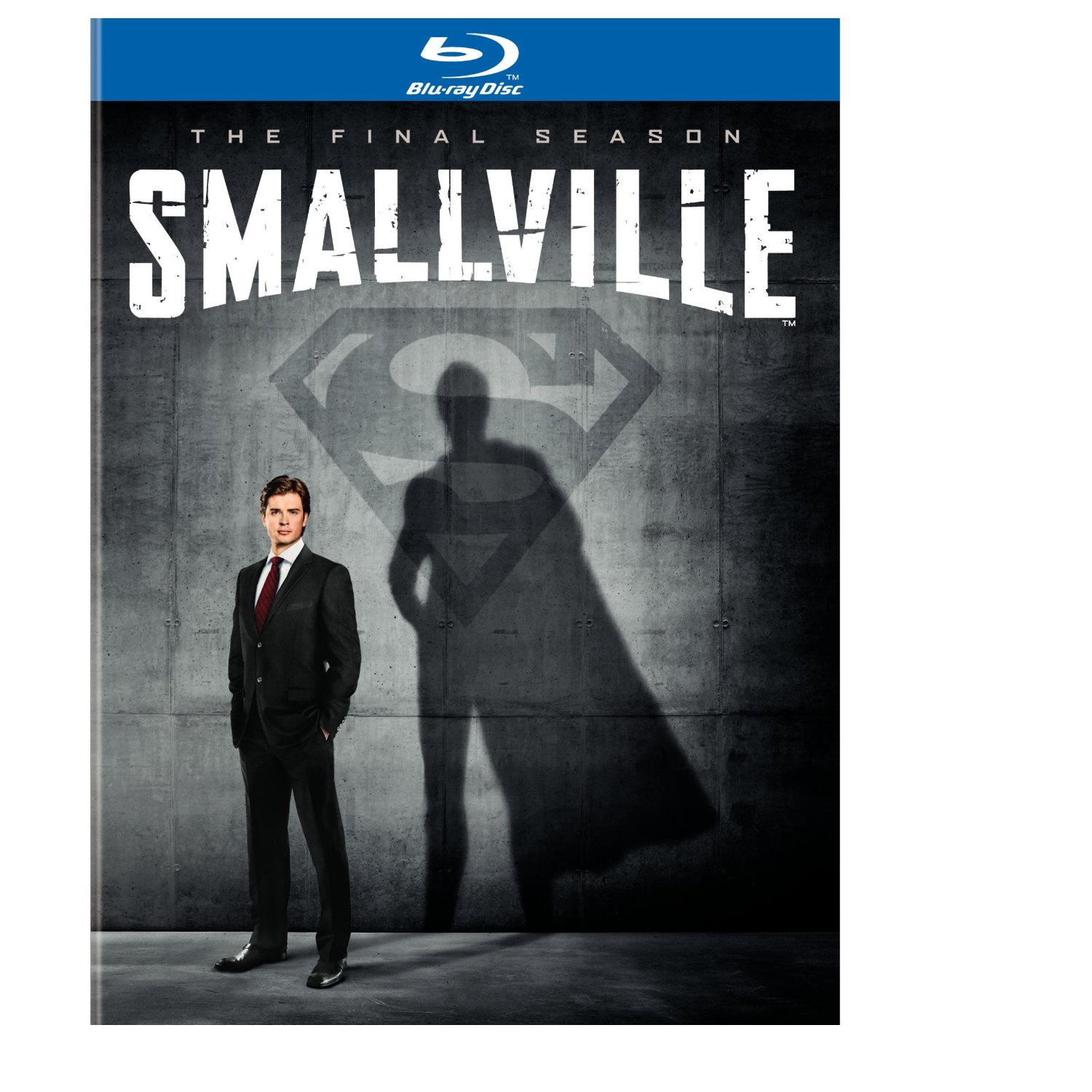
Smallville: The Final Season (Warners)
After 10 seasons, this series--the Superman legend as seen through the eyes of those living in the tiny burg Clark Kent called home before heading to Metropolis--calls it quits. Enacted by an attractive cast led by Tom Welling as Clark and Erica Durance as Lois, this charming show manages to overcome the rare bluntness of its final episodes, since understatement was its calling card. The Blu-ray transfer captures the show’s arresting visuals; extras include interviews, on-set footage and commentaries.

DVDs of the Week
Le Cirque: A Table in Heaven (First Run)
Sirrio Maccioni founded the four-star Manhattan restaurant Le Cirque, and this intimate documentary portrait recounts Maccioni and sons’ decision to close in 2004 for renovations, then re-open two years later with New York critics waiting to pounce. Maccioni, an old-world, old school boss, has an ebullient personality carries the movie, making the journey funny and even touching. Extras include deleted scenes.

Lulu (Deutsche Grammophon)
Alban Berg’s towering 12-tone operatic tragedy has a juicy soprano part, and Frenchwoman Patricia Petibon dives into the amoral, ambivalent anti-heroine with no compunctions: this fiery red-head is both splendid actress and wonderful singer, and her strong presence centers Olivier Py’s overly busy staging, which was captured in Barcelona earlier this year. Boldly colorful sets and costumes tip the production into cartoonishness, but Berg’s masterpiece survives thanks to Petibon’s assured performance.

The Smurfs (Sony)
The hit movie takes the tiny blue creatures to Manhattan for cute but increasingly wearying adventures. At 106 minutes, The Smurfs definitely wears out its welcome, unlike the recent Winnie the Pooh, which was a manageable 70 minutes. Still, there’s fun for kids and their parents who are roped into seeing it, and Neil Patrick Harris and Sofia Vergara keep their dignity while sharing the screen with the blue things. Extras include “Blue-pers” (cute), two commentaries, making-of featurette and games for the kiddies.

Women, War and Peace (PBS)
This memorable PBS four-part series has a quiet eloquence in its stories of women and war. Its four hour-long episodes, I Came To Testify (about Bosnian war atrocities), Peace Unveiled (showing Afghan women against the Taliban), The War We Are Living (Afro-Colombian women fight for their land) and War Redefined (which speaks for women’s increasing importance in waging war and peace), are narrated with appropriate gravity by Matt Damon, Tilda Swinton, Alfre Woodward and Geena Davis, respectively.

CDs of the Week
Patricia Petibon: Melancolia (Deutsche Grammophon)
French soprano Patricia Petibon sings beautifully on this enticing program of Spanish music that’s done with delightful flair. Obvious choices like Villa-Lobos’ Aria and Falla’s La Vida Breve excerpt are dispatched eloquently, while other distinguished composers are also included: Catalan master Xavier Montsalvatge is represented by two charming but too-brief songs, and there are worthy tunes by Granados, Turina and Castellanos. There’s also a new work by Nicolas Bacri, Melodias de la melancolia, which not only gives the CD its title but showcases Petibon’s velvety, sensual voice.

Poul Ruders: Volume 7 (Bridge)
The 62-year-old Danish composer, best-known for his operas The Handmaid’s Tale and Selma Jezkova, has also tried his hand at many instrumental genres, and this seventh volume of his compositions includes three of his most wide-ranging (but still typical) works. His Symphony No. 4, subtitled An Organ Symphony, is intensely dramatic and darkly colored, while the solo organ piece Trio Transcendentale is virtuosic in its brevity. Finally, the oddly titled Songs and Rhapsodies--performed by an ensemble of brass, winds and accordion--displays Ruders’ sharply honed eclecticism.

Saturday, December 3, 2011

Railroaded by Putin?

Khodorkovsky
Directed by Cyril Tuschi
Released by Kino Lorber; opens December 2, 2011

For anyone who’s followed the past decade’s political events in Russia even slightly, the documentary Khodorkovsky won’t be very surprising or revelatory. That that nation under Putin’s iron fist is not only corrupt and corrupted is not news at this late date. But that’s not the point of director Cyril Tuschi’s sympathetic portrait of Mikhail Khodorkovsky, a Russian billionaire unceremoniously tossed into prison by his arch-enemy Putin. Instead, it’s to reveal a desperate nation floundering as it reaches for a final post-Communist, post-privatization lifeline.

Mikhail Khodorkovsky was among the wealthiest of the oligarchs who dominated Russia’s new capitalist economy after the fall of Communism led to Perestroika under President Yeltsin. He was also one of the youngest: in 1995, at age 33, he bought the oil company Yukos for $300 million during the government’s auction of state monopolies, and its later net worth was $6 billion.

But Khodorkovsky, who knew that great wealth equaled great power in post-Soviet Russia, overstepped his bounds: he started negotiating with foreign companies himself and--the biggest sin of all--directly challenged Putin at the Kremlin, something not taken lightly. So, in 2003, when the oil magnate was arrested and, after what’s been described as a trumped-up trial on charges of tax evasion, sentenced to prison, the obvious culprit was Putin himself.

In his well-researched and thoroughly absorbing account of the amoral mess that Putin’s Russia has become, Tuschi offers up Khodorkovsky as Exhibit A: just look at the hatred in Putin’s eyes and the figurative steam coming out of his ears when the billionaire dared to prod him about widespread corruption in Putin’s own government during a televised press meeting. A later sequence shows another priceless moment during a nationally televised speech: Putin is asked a question by the moderator (apparently from an anonymous viewer via the internet) about when Khodorkovsky will be released and it takes all the self-control the president can muster to spit out generalities about his being behind bars since he was convicted in court of serious crimes. Putin even manages to connect him to high-profile murders. You can literally see Putin biting his tongue to keep his temper in check.

What’s most enlightening about Khodorkovsky is that it treats Khodorkovsky fairly, showing his quick rise to wealth and power but never taking a stance that he was blameless for any misdeeds: after all, he rose to prominence by being a relentless businessman. The included interviews--his first wife and oldest son, his colleagues, legal counsel, even if cell mate--give us a warts-and-all portrait of a man who, while definitely no angel, is not the monstrous criminal Putin swears he is.

When the man himself is onscreen--in news clips, previous interviews and a brief interview that the filmmakers are granted in prison as he awaits an appeal that never comes (he was actually re-sentenced to additional time at the end of last year)--he comes across as supremely intelligent and just the slightest bit arrogant: but, as we know from the Donald among other American oligarchs, that comes with the territory.

Tuschi’s sympathy for the imprisoned billionaire doesn’t blind him to the contradictions inherent in the “free Khodorkovsky” movement that has sprung up around the world. (There’s even a clip of then-President Bush questioning the appropriateness of the incarceration; of course, there‘s also a clip of Khodorkovsky hobnobbing with Bush beforehand.) Indeed, a human rights lawyer freely admits: “It’s the first time I’ve defended a capitalist, but even they have human rights.”

On a purely formal level, Tuschi’s film (which he shot himself) has a clean, classical elegance that underscores the moral messiness of the movie’s major players. Tuschi opens and closes Khodorkovsky with stunning, matching slow panning shots of a vast, beautiful expanse of snowy tundra, and includes brilliantly illustrative (and smartly infrequent) animated sequences. The inspired use of Estonian composer Arvo Part’s moody Los Angeles Symphony--dedicated to Khodorkovsky, whom Part considers a true Russian patriot--is another clue to where Tuschi’s own sympathies lie in a world populated by anything but black and white heroes and villains.

Friday, December 2, 2011

Beatles Deconstructed: An Interview with Scott Freiman

A Trip Through Strawberry Fields
Monday, December 5, 2011
IFC Center, 323 Sixth Avenue, New York, NY
beatleslectures.com

More than 40 years after the band’s breakup, The Beatles are as popular as ever: CDs keep selling like hotcakes, tribute bands are a cottage industry, and 69-year-old Paul McCartney is still one of the hottest stage acts on the planet, with fans from 4 to 84 at Sir Paul’s shows. There’s also a plethora of books that keeps on coming, from bios to musical analysis.

The latter is also what Scott Freiman does: for the past few years, his Deconstructing the Beatles lectures have been an entertaining showcase of the intense creativity that makes up the Beatles’ music. His multimedia presentations comprise video and audio samples, including snippets of rarely-heard demos and other stripped-down segments of the songs.

Freiman’s already done the White Album and Sgt. Pepper: his next lecture, at the IFC center in Manhattan on December 5, is A Trip Through Strawberry Fields, a dissection of that classic track along with “Penny Lane” and “A Day in the Life.” For a complete list of his upcoming schedule, visit beatleslectures.com.

The composer-producer-engineer-Fab Four expert spoke recently from his studio about deconstructing the Beatles.

Kevin Filipski: How did your lecture series begin?
Scott Freiman: I’ve always been a Beatles fan since I was young, and now I’m a composer with my own studio. About two years ago, I invited some friends over to listen to the Sgt Pepper album, and I did a presentation with behind-the-scenes rare tracks. It worked very well so I was encouraged to do more with it. I found out there was great interest in these presentations, so I started to go to local theaters to do them: I have a variety of different shows, and I’m adding new ones. No one takes people into the Beatles studio work like I am, and I do it in layman’s language so everyone can get a lot out of it, no matter their level of Beatles knowledge.

KF: What kind of audiences do you see at your lectures?
SF: I’m finding at many shows I do that I have a 88-year-old great-grandmother bringing her young great-grandson. What other musical presentation would do that? I think that’s what’s unique about the Beatles, because they mean an awful lot to so many people and continue to resonate with every succeeding generation, which is why there continue to be hundreds and hundreds of websites, books, etc.

KF: Talk about A Trip Through Strawberry Fields.
SF: “Strawberry Fields Forever” is one of the few songs in the Beatles canon where you can show how the song evolved from the demo version to the final recording. It‘s such a pivotal song in music history, along with “Penny Lane” and “A Day in the Life,” which I also discuss and play different mixes of. I find that, by concentrating on the music, showing how the tracks got built in the studio, and showing the different recording and compositional techniques, it become a history lesson about the recording technology of the ‘60s along with being a tribute to the Beatles.

KF: How much did the 2009 remastered CDs--in both stereo and mono--help with your analysis of the Beatles’ music?
SF: I think that a great job was done with that remix, which allows us to hear a lot of things better. More importantly, they also released the mono albums: the Beatles mixed all their albums for mono pre-Abbey Road, and in a lot of cases, the mono mixes are different than the stereo mixes. It’s always interesting to hear those, since they weren’t really available except on bootlegs. I have a lot of fun with that: when I discuss Sgt Pepper, I play a few of the more significant mono and stereo differences. I have thousands of recordings, interviews and videos that I’ve picked up through a whole variety of sources and I’ve also done work in my studio to isolate parts of recordings. There’s still a lot more to be officially released someday, I hope.

KF: After “Strawberry Fields,” the White Album, and Sgt. Pepper, what are you working on next?
SF: For next year, I’m working on Revolver, which is one of my absolute favorite Beatles albums. I find more and more that Revolver does best Sgt Pepper in many ways. What’s fun is that I can put together a show that keeps people interested and listening to these amazing albums in a new way. I just did a lecture at Hunter College (in Manhattan): when I got in front of these college students who all have Beatles music on their iPods, who all know the songs and who know the group’s history, it's amazing to see.

Sunday, November 27, 2011

November '11 Digital Week IV

Blu-rays of the Week
The Big Country (Fox/MGM)
William Wyler’s widescreen soap opera combines a sappy love story with an old-fashioned Old West adventure. There are memorable shots galore, but not many memorable scenes, mainly because the cast (save Burl Ives as the heavy) can’t overcome the two-dimensional characters: Gregory Peck as the hero is especially ill at ease. Blu-ray’s exceptional clarity shows off the stunning camerawork; the lone extra is a vintage featurette, Fun in the Country.

Carjacked (Anchor Bay)
This agonizingly routine thriller concerns a single mom whose car is hijacked with her son inside, and she manages to outwit the armed fugitive with blatantly obvious maneuvers that wouldn’t fool anyone. Although Maria Bello brings her usual intensity to the heroine and Stephen Dorff makes a plausibly nasty criminal, the movie spins its wheels for 90 minutes without much originality or excitement. The Blu-ray image is decent; the lone extra is an on-set featurette.

The Family Tree (e one)
A family living in the town of Serenity (get it?) has a chance to change its dysfunctional ways when the mother gets amnesia after hitting her head (while having sex their next- door neighbor, natch). Since no one in the family is enacted particularly interestingly by Dermot Mulroney (dad), Hope Davis (mom), Max Thierot (son) and Brittany Robertson (daughter), director Vivi Friedman and writer Mark Lisson’s manufactured tribulations don’t work; there’s at least amusing support by Gabrielle Anwar and Chi McBride. The movie has a solid hi-def transfer; extras include on-set footage and interviews.

Jungle Eagle, My Life as a Turkey, Radioactive Wolves (PBS)
This trio of PBS Nature documentaries explores the incredible animal world: the South American harpy eagle, a naturalist who raises 16 turkey chicks as their “mother,” and the amazing return of wolves and other animal and plant life to the desolate forbidden zone that came about due to Russia’s Chernobyl nuclear disaster. Each 52-minute program gives an illustrative if far from comprehensive overview, and the eye-popping hi-def imagery illuminates these fantastic but true stories that are more bizarre than any fiction.

Sarah’s Key (Anchor Bay/Weinstein Co)
Based on Tatiana de Rosnay’s sentimental but gripping novel, Gilles Paquet-Brenner’s drama is an occasionally affecting tragedy about France’s ambivalence toward French Jews killed by the Nazis. Kristin Scott-Thomas, elegant as always, outclasses the material as a journalist who uncovers the truth about a young girl who survived the German purge that destroyed her family. Despite the subject matter’s inherent power and Scott-Thomas’ presence, the movie--which looks tremendous on Blu-ray--is curiously disjointed. A more interesting watch is the bonus feature, a one-hour documentary that includes interviews with Rosnay, Paquet-Brenner and Scott-Thomas.

Spy Kids: All the Time in the World
(Anchor Bay/Weinstein Co.)

Director Robert Rodriguez reboots his family-friendly franchise with this loony but funny adventure that stars a new spy kids family and the return of the original kids, now the grown-up Alexa Vega and Daryl Sabara. Although Rodriguez can’t sustain any momentum, with the help of game performers like Vega, Sabara and even Jessica Alba (who has rarely seemed so animated as the new kids‘ stepmother), his movie is a quick and painless 85 minutes. The often dazzling visuals have an extra vividness on Blu-ray; extras include deleted scenes, featurettes and a Rodriguez interview.

The Taking of Pelham One Two Three (Fox/MGM)
Joseph Sargent’s taut 1974 thriller is a uniquely New York cops-and-robbers drama that moves at a breakneck speed that never overwhelms the well-thought-out story. As the bemused and amused detective who finds himself chasing three daring subway hijackers (Robert Shaw, Martin Balsam and Hector Elizondo), Walter Matthau embodies the tough-as-nails atmosphere, especially in that memorable final freeze frame. The grungy mid-‘70s Manhattan locations are perfectly captured on Blu-ray.

These Amazing Shadows (PBS)
In 1988, the National Film Registry was formed to preserve “significant” American movies for the ages, and Paul Mariano and Kurt Norton’s documentary presents a straightforward account of the Registry’s workings and its 550+ choices over the past two of what constitute the most essential of American films. You might not agree with all of the picks (I certainly don’t: How the West Was Won and A Woman Under the Influence?), but historical and/or artistic importance of most films cannot be denied. The movie comprises mostly talking heads and old clips, so the visual quality is variable, but the Blu-ray looks acceptably good. Extras include additional scenes and interviews.

12 Angry Men (Criterion)
Sidney Lumet’s 1957 adaptation of Reginald Rose’s play stays in the jury room for 95 minutes as the dozen men fight through their prejudices to decide whether to convict the defendant for murder, but it contains so many good performances (Henry Fonda, Lee J. Cobb and Jack Klugman are standouts) that it triumphs over essential staginess. The Criterion Collection’s Blu-ray has almost excessive grain which only accentuates Boris Kaufman’s gritty B&W cinematography; extras include interviews, featurettes and the 1955 television version of the play.

DVDs of the Week
The Adventures of Tintin: Season One
(Shout Factory)

The classic Belgian comic-strip character works best when he is animated (in both senses), and the 13 half-hour episodes on these two discs are a great introduction to one of the most beloved fictional characters ever--even if most Americans have never heard of him. At least until Steven Spielberg’s upcoming stop-motion adaptation, whose plot is actually taken from two of the stories in this set: The Secret of the Unicorn and Red Rackham’s Treasure. The lack of extras is irritating because providing pre-Spielberg context would seem to be mandatory.

The Green (Film Buff)
After a gay couple moves from New York City to a small town, teacher Michael is accused of inappropriate behavior with a student, compromising his relationship with his partner, caterer Michael. Instead of allowing their story to arise organically out of their characterizations, director Steven Williford and writer Paul Marcarelli impose strident melodramatics on it, resulting in a sadly missed opportunity. Still, excellent acting by Jason Butler Harner and Cheyenne Jackson as the couple, Julia Ormond as the lawyer they hire and Ileana Douglas as a close friend allows The Green to overcome these obstacles and emerge as a mature tale.

Making the Boys (First Run)
The Boys in the Band, the first unashamedly gay play, was a huge hit off Broadway in the late ‘60s and was made into a film by William Friedkin in 1970. Crayton Robey’s lovingly-made documentary explores playwright Mart Crowley’s background alongside the era’s unique dilemma for gay playwrights, in the process showing the play’s widespread influence on two generations of gay artists. Some of the interviewees include Edward Albee, surviving cast members like Laurence Luckenbill, Crowley and Friedkin, all honestly recounting their reaction to (and in some cases against) a now-classic play.

Robotech: The Complete Series (New Video)
This inventive Japanese anime series was a big hit when it first was shown in America in 1985 to 1987, and this jammed boxed set brings together all three seasons, otherwise known as the “Robotech Wars”--13 discs’ worth of 85 remastered episodes. In addition, there are another four discs that include a further 10 hours of bonus material, which ranges from a full-length making-of documentary and music videos to promotional reels, an hour of deleted scenes and an extended version of the series’ original pilot episode.

CDs of the Week
Andrea Bocelli: Concerto--A Night in Central Park
(Decca)

The beloved Italian tenor’s September performance was, despite subpar weather, obviously a labor of love for the singer and his loyal fans. Accompanied by Alan Gilbert and the New York Philharmonic, Bocelli sings alone and in duets with Celine Dion, Tony Bennett and Bryn Terfel; guest musicians include the scintillating violinist Nicola Benedetti. The CD captures it all for posterity, and the bonus DVD features video of the entire concert for those who want to relive it or who weren’t there. (It’s also on PBS in December.)

The Christmas Story (Harmonia Mundi)
Based on the traditional English holiday service, Nine Lessons and Carols, Paul Hillier has programmed a superb compendium of Christmas music that features two excellent ensembles, the a cappella vocal groups Theatre of Voices and Ars Nova Copenhagen, both led by Hillier. The well-chosen music tells the story of the Nativity through works by Renaissance era composers William Byrd and Johann Eccard, and familiar carols like “We Three Kings,” “The Holly and the Ivy” and, as the joyful finale, “We Wish You a Merry Christmas.”