Sunday, February 24, 2013

February '13 Digital Week IV


Blu-rays of the Week
Atlas Shrugged, Part II
(Fox)
The second part of this interminable adaptation of Ayn Rand’s bloated novel at least does away with her turgid prose, replacing it with mediocrity in front of and behind the camera. It’s infantile pro-“job creator” propaganda that even fans of Sean Hannity (who appears briefly—and badly—as himself) can understand. If you enjoy seeing trains crash, then this is the movie for you: and there’s a reward for those who make it through all 112 minutes…the cliff-hanger introduction of the one and only John Galt. The hi-def transfer is first-rate; extras are deleted scenes, making-of featurette, extended Hannity segment.

Special Forces
(e one)
This gritty thriller, set in war-torn Afghanistan, follows a French journalist (a strong Diane Kruger) kidnaped by the Taliban who’s rescued by an elite group of special forces (led by Djimon Hounsou and Benoit Magimel). While it goes on too long, Stephane Rybojadx’s drama is a real nail-biter, and the desert locales go a long way toward giving it an authenticity of time and place. The movie looks terrific on Blu-ray; extras include a making-of documentary as long as the actual movie and deleted scenes.

The Thief of Bagdad
(Cohen Media)
In this epic “Arabian Nights” fantasy, Douglas Fairbanks Jr. stars as Ahmed, the dashing thief who becomes a hero to the princess whom he sweeps off her feet. Although Raoul Walsh’s 1924 silent has its share of dramatic longeurs amidst its 124 minutes, there’s never a dull visual moment, thanks to William Cameron Menzies’ amazing sets. And on Blu-ray, in a restored edition, it looks about as good as an 89-year-old movie is ever going to look. Extras include a commentary and featurette.

Ultimate Mars Challenge
(PBS)
PBS’s Nova series takes a behind-the-scenes look at the grueling and difficult path to Curiosity, which is the latest attempt by NASA scientists to build a probe that will be sent to Mars and discover whether or not life has ever existed there. Through a series of detailed experiments, we are shown how the probe—by far the most sophisticated robotic system ever sent to the Red Planet—is given a landing system that includes a massive parachute and crane whose jobs are to slow and touch down a probe coming in at 13,000 MPH. The Blu-ray image is ravishing.

Undefeated
(Weinstein/Anchor Bay)
Dan Lindsay and TJ Martin’s inspirational documentary (and last year’s Oscar winner) follows coach Bill Courtney, whose arrival at sad-sack Manassas High in North Carolina—where he found a pervasive losing mentality and culture—transforms the team after six difficult seasons into a winner, both on and off the field. There are manipulative moments, but mainly this is an uplifting look at teenagers doing positive things when they set their minds to it. The Blu-ray image is good; extras include deleted scenes, directors’ commentary and making-of featurette.

DVDs of the Week
Bestiaire
(Zeitgeist/KimStim)
Quebecois director Denis Cote’s fascinating glimpse at a safari park outside Montreal is 70 minutes filled with wondrous shots of workers and visitors interacting with and being mesmerized by the vast park’s animal inhabitants. Bookended by evocative images—a young woman’s face in close-up and an elephant walking through a tree-filled landscape in long shot—the movie is, in a broad sense, reminiscent of Frederick Wiseman’s great documentaries. The lone extra is a Cote interview.

Chicken with Plums
(Sony)
It’s not surprising that the directors of the animated Persepolis (Marjane Satrapi and Vincent Paronnaud) made a live-action romantic/tragic fantasy that resembles a cartoon: characterizations are secondary to the lively atmosphere in this story of a noted violinist who recounts his rich life while awaiting death. Mathieu Amalric is his usual solid self in the lead, Golshifteh Farahani is a ravishing specter of missed love, but the movie bumpily moves from seriousness to frivolity without melding them together. Extras include directors’ commentary and Tribeca Film festival Q&A.

Henry Ford
(PBS)
In this hard-hitting PBS American Experience documentary, the innovative auto giant is profiled with two hours of insights into his achievements and embarrassments. In addition to creating the automobile industry that ruled American labor for decades, Ford was also deeply racist and anti-Semitic, which might or might not disallow him from the annals of great Americans. Either way, this deeply flawed but fascinating man is worthy of this biography.

How to Survive a Plague
(Sundance Selects)
This devastating piece of cinematic advocacy powerfully documents AIDS activists getting the deadly epidemic into the sights of an inattentive government band and enabling themselves to survive despite the death sentence the disease gave them. Director David France extensively—and adroitly—intercuts vintage footage with new interviews with the MVPs in the fight by ACT UP (the most prominent AIDS victims’ group) over so many years of fighting disease and government. Extras include commentary with France and ACT UP activists, along with deleted scenes.

Small Apartments
(Sony)
In writer-director Jonas Akerlund’s black comedy, several non-descript—but oh so edgy—people interact with one another in a rundown apartment complex, including unexpected deaths. A non-all-star cast—comprising Matt Lucas, Juno Temple, James Caan, Saffron Burrows, Rosie Perez, Billy Crystal and even Dolph Lundgren—is game but can’t overcome the interchangeable weirdness that fails to distinguish these characters. Extras include a behind the scenes featurette.

CDs of the Week
Peter Maxwell Davies—Concertos
(Naxos)
Peter Maxwell Davies’ concertos for trumpet, piccolo and piano—composed in 1988, 1996 and 1997, respectively—are ably conducted by the composer himself on these re-releases. His soloists—trumpeter John Wallace, piccolo player Stewart McIlwham and pianist Kathryn Scott—play splendidly; the trumpet concerto is certainly more astringent than the the lively piccolo concerto  and the dense, dazzling piano concerto. The other pieces on these discs (like Five Klee Pictures and his motet for orchestra, Worldes Blis) round out a compelling snapshot of this accomplished British composer.

Thursday, February 21, 2013

NYC Theater Roundup: 'Laramie Project' and "All in the Timing" Return


The Laramie Project Cycle
Directed by Moises Kaufman and Leigh Fondakowski
Performances February 12-24, 2013
Brooklyn Academy of Music, 651 Fulton Street, Brooklyn, NY
bam.org

All in the Timing
Written by David Ives; directed by John Rando
Performances through April 14, 2013
Primary Stages @ 59 E 59 Theatres, 59 East 59th Street, New York, NY
primarystages.org


The Laramie Project, which played off-Broadway in 2000, was an emotionally devastating experience. Director Moises Kaufman’s Tectonic Theatre Company—comprising several talented performer-writers—drew upon dozens of their interviews with citizens of Laramie (the Wyoming town where Matthew Shepard was brutally murdered in 1998 by two gay-bashers) to piece together an honest account of how such a heinous crime affected those who lived through it.

In 2008, Kaufman and company returned to Laramie for a follow-up, and The Laramie Project: Ten Years Later makes its New York premiere at BAM alongside the original, which remains a touchstone of theatrical journalism. So it’s almost inevitable that the sequel falls somewhat short of the high standards the company set for itself. But humane, intelligent and necessary viewing describes Ten Years Later to a T.

Using the same unadorned “style” of the original—the performers take turns directly addressing the audience while speaking in either their own or the locals’ voices and words—Ten Years Later deftly dismantles the dishonest “20/20” segment by Elizabeth Vargas from 2004, which trumpeted that Shepherd was murdered in a robbery and drug deal gone wrong. Those lazy untruths insinuated themselves into the very psyche of Laramie, as the Tectonics found when they returned to town: many people wanted to sweep the “hate crime” stigma under the rug.

Exploring what Shepherd’s murder means to Laramie a decade on—from anger to resignation to indifference— Ten Years Later also builds tension in separate interviews with killers Russell Henderson, whose appearance climaxes Act I, and Aaron McKinney, who dominates Act II. Henderson comes off as vaguely sympathetic and McKinney as an unrepentant dirtbag, but their dual presence doesn’t overwhelm the care and the craft that have gone into this searing—and must-see—play.

Liv Rooth and Carson Ellrod in All in the Timing (photo: James Leynse)
All in the Timing, David Ives’ delightful series of six one-acts, returns to Primary Stages, the theater which premiered it 20 years ago: it won’t run for 600 performances again, but its cleverness and humor permeate all two hours of John Rando’s winning new production. Although little more than glorified sketches, the playlets of All in the Timing have much to say about how we use and abuse language and one another.

The opener, “Sure Thing,” introduces Ives’ method, which has anything but madness in it: Bill and Betty meet in a Manhattan café and run through various permutations of how their conversation proceeds—or doesn’t—based on whether he, she or both respond in ways to further their discussion or to stop it dead in its tracks. Here’s a witty sample:
Bill: What’s the book?
Betty: The Sound and the Fury
Bill: Oh. Faulkner.
Betty: Have you read it?
Bill: I’m a Mets fan, myself.

In some ways, this rapid-fire two-hander is the best of the lot; other skits belabor their jokes (“The Universal Language,” about a new tongue dreamt up by a man to meet women), while others hammer their jokes into the ground (Philip Glass’s dully repetitive music is rightfully skewered in “Philip Glass Buys a Loaf of Bread,” although at ten minutes it wears out its welcome—like Glass’s music, which may be the point).

Better are “Words, Words, Words,” which smartly satirizes science telling us that a monkey at a typewriter can eventually write Hamlet; “The Philadelphia,” which snappily turns alternate reality on its head; and “Variations on the Death of Trotsky,” which transforms the Russian revolutionary’s murder into a wildly surreal voyage.

Rando’s irresistible staging whisks us from one skit to the next, while his adroit quintet—led by the comedically and histrionically agile Carson Elrod—effortlessly keep Ives’ amusing balls floating in the air. 

The Laramie Project Cycle
Brooklyn Academy of Music, 651 Fulton Street, Brooklyn, NY
http://bam.org

All in the Timing
Primary Stages @ 59 E 59 Theatres, 59 East 59th Street, New York, NY
http://primarystages.org

Tuesday, February 19, 2013

Film Comment Selects 2013


Film Comment Selects
February 18-28, 2013
Film Society of Lincoln Center, New York, NY
http://filmlinc.com

The 13th annual Film Comment Selects series comprises a selection of films that haven’t been seen yet in New York or not in awhile. Alongside new films by Marco Bellocchio, Manoel de Oliveira, Michel Gondry and Kiyoshi Kurosawa are lesser-known or forgotten films by Ingmar Bergman, James William Guercio and Howard Zieff.

Isabelle Huppert in Marco Bellocchio's Dormant Beauty
Easily the most anticipated film of the series is Dormant Beauty, the latest from Marco Bellocchio, whose late-career resurgence began with the masterly My Mother’s Smile, which premiered at the 2002 New York Film Festival. Since then, he’s made such gems as Good Morning Night, The Wedding Director and Vincere, which showcased the great Giovanna Mezzogiorno as a woman literally driven insane after her affair with Benito Mussolini.

Another film showing that Bellocchio—a grand master whose 1965 debut was the still potent and blackly comic Fists in the Pocket—is unafraid to court controversy (especially in deeply Catholic Italy), Dormant Beauty stars Isabelle Huppert and Toni Servillo in a dramatization of a real-life case that, like Terry Schiavo, forced Italians to address the right-to-die movement.

Of the series’ other new films, Gebo and the Shadow proves that, at age 104, Portuguese director Manoel de Oliveira still makes static, undramatic and colossally vacuous movies, this time adapting a surrealist play by Raol Brandao to no noticeable point. From Uruguay comes Pablo Stoll’s 3, which studies the individual lives of an estranged family—separated mother and father, and typically confused teenage daughter—with glimmers of humor and insight.

Miss Lovely, director Ashim Ahluwahlia’s feverish portrait of low-rent Bollywood filmmaking, scores points for slippery visual and narrative ploys but ends up being scattershot and unnecessarily drawn-out. Conversely, Call Girl, based on a 1970s Swedish government scandal, is a riveting thriller-cum-psychological portrait of a teenage girl recruited into prostitution to service some very important men. Director Mikael Marcimain, who creates a credible ‘70s atmosphere, smartly shows events unfolding through the eyes of his young protagonist, Iris (the superb Sofia Karemyr).

Of the “revivals,” if James William Guercio’s 1973 Electra Glide in Blue is a dated but intriguing curio, Howard Zieff’s Hearts of the West (1975) is a delightfully subtle comedy that features such wonderful then-young actors as Blythe Danner and Jeff Bridges. Finally, there’s From the Life of the Marionettes, a dark, brooding psychodrama that Ingmar Bergman made in Germany during a self-imposed tax exile from his native Sweden. If this 1980 film pales next to his best work, it’s still a daring attempt to enter the mind of a murderer.

Film Comment Selects 2013
http://filmlinc.com

Friday, February 15, 2013

February '13 Digital Week III


Blu-rays of the Week
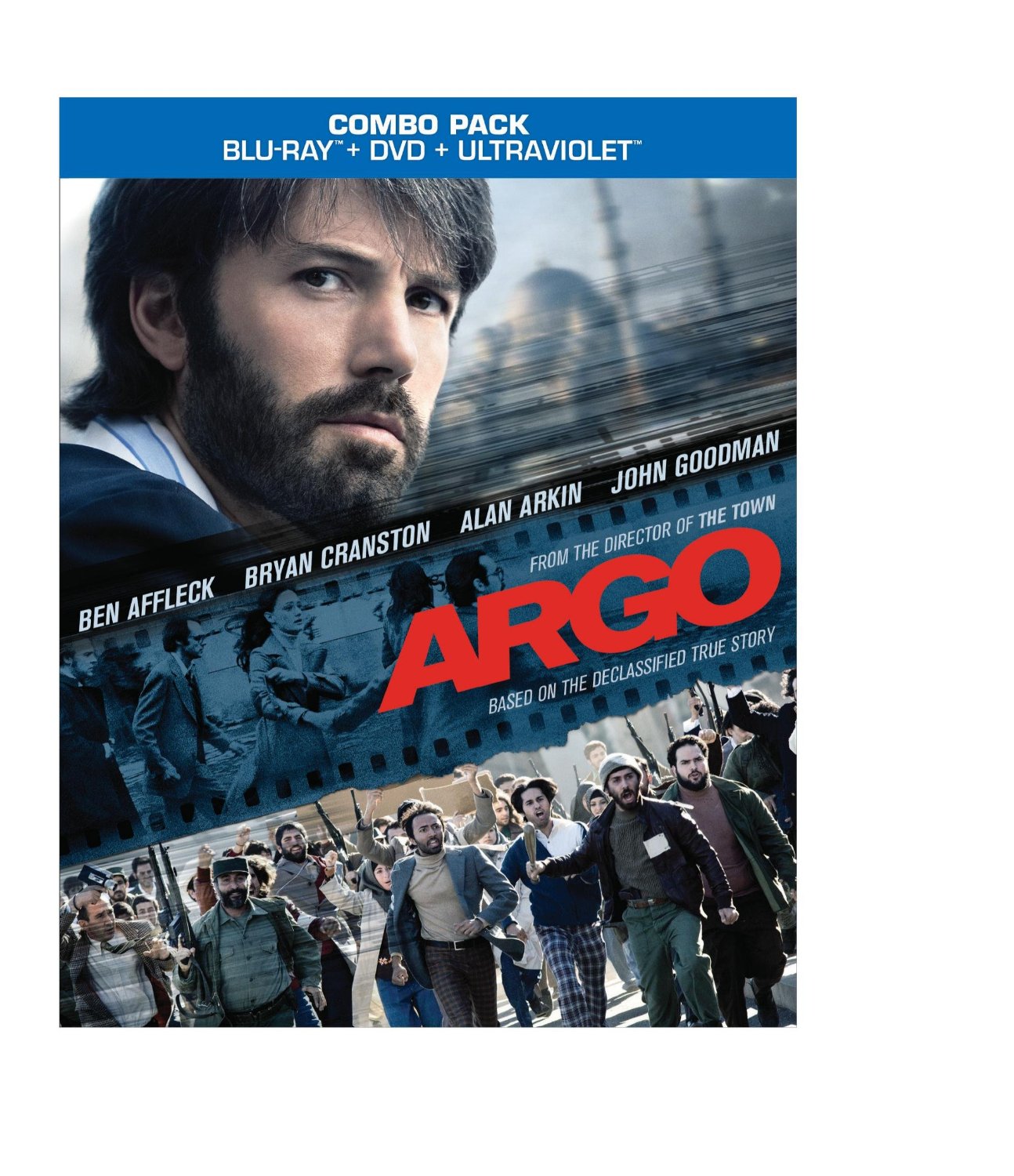
Argo
(Warners)
Director-star Ben Affleck dramatizes the so-strange-it-must-be-true story of U.S. embassy workers in Tehran during the 1979-80 hostage crisis holed up in the Canadian ambassador’s house while the CIA concocted an elaborate rescue plan. This is solid Hollywood moviemaking: Affleck smartly surrounds himself with top-notch actors and films it straightforwardly. The tension remains even though we know the outcome: it’s just too bad that Affleck can’t resist adding a phony “skin of their teeth” climax. On Blu-ray, it looks superb; extras include Affleck and writer Chris Terrio’s commentary, several featurettes and a documentary about the hostages on the 25th anniversary of their rescue.

Celeste and Jesse Forever
(Sony)
Despite her enormously warm presence, Rashida Jones is defeated in this irritating comedy of a couple that can’t let go despite knowing they should split up. Jones’ costar Andy Samberg’s one-note presence drags the movie down to a sophomoric level whenever he’s onscreen. But Jones is also to blame, since she co-wrote the script with McCormack: the writer lets the actress down. In addition, the delightful Ari Graynor (who plays Jones’ best friend) also deserves better. The Blu-ray image is decent; extras include commentaries, deleted scenes and featurettes.

Hara-kiri
(Tribeca)
A lone samurai warrior arrives at his lord’s estate hoping for an honorable death in this latest retelling of the epic swashbuckler immortalized in 1962 by master director Masaki Kobayashi. For this unnecessary remake, director Takashi Miike makes it all very stylish and lush—the original was in black and white, while this version is in vivid color—but not particularly compelling. Needless to say, the splashy visuals look amazing on Blu-ray, but since Kobayashi’s classic is available on Blu-ray from Criterion, this is an expandable release. The lone extra is Geoffrey Gilmore’s brief discussion of the film.

Little White Lies
(MPI)
Writer-director Guillaume Canet’s heavy-handed French Big Chill is a protracted tale of friends who gather at a beach house while one of them is in the ICU seriously injured from a motorcycle accident. The movie keeps stopping dead with scenes that do nothing to further our interest in the characters, who reek of self-indulgence and insufferability for 2-1/2 hours. Marion Cotillard, always intense, cements her rep as cinema’s best crier, while she and good actors like Francois Cluzet and Gilles Lelouche have only stick figures to play. The movie has a warm sheen in hi-def; extras include featurettes.

The Sessions
(Fox)
In Ben Lewin’s comic drama, John Hawkes is fantastic as Mark O’Brien, a man who’s spent most of his life in an iron lung, and who wants a sexual encounter—so he calls a sex therapist, played with astonishing tenderness by Helen Hunt, the rare American actress at ease with plentiful nudity. Lewin’s light touch is perfect for such adult subject matter and ordinary protagonist, but it’s his actors—save William Macy, too Macy-ish as Mark’s father confessor of sorts—who save the day. The Blu-ray image is immaculate; extras include featurettes and interviews.

DVDs of the Week
Diana Vreeland—The Eye Has to Travel
(e one)
Diana Vreeland—a leading fashionista long before that term gained currency—edited Vogue and transformed the Metropolitan Museum of Art’s moribund Costume Institute into something special. Lisa Immordino Vreeland’s otherwise pedestrian documentary of a terrific subject at least includes wonderful archival footage of the woman herself, along with discussions on her career and legacy by Marisa Berenson, Twiggy, Calvin Klein and others. Extras include additional interviews.

Girl Model
(First Run)
The world of high fashion modeling is shown in all its smarmy non-glory in David Redmon and Ashley Sabin’s tough documentary portrait. Unblinking cameras follow 13-year-old Siberian Nadya—who goes to Japan for her big break, unable to understand the language—and Ashley, a former model who selects newbies to (possibly) become famous in Japan. Not that it’s revelatory, but seeing how these innocent girls are treated in an industry that spits them out daily is disturbing to watch. Extras comprise deleted scenes.

Gossip Girl: Season 6
(Warners)
The final season of the popular TV series about the young and beautiful on Manhattan’s Upper East Side is a lively, amusingly superficial chronicle of the one percent spending its time insulated from the rest of the world. Still, one could do worse than watch the great Margaret Colin at her snarky best, and the vivacious Leighton Meester and Blake Lively are not to be taken lightly either. Extras include on-set featurettes and a gag reel.

Photographic Memory
(First Run)
In his first feature in several years, master documentarian Ross McElwee again trains his camera on himself—this time, he also returns to Europe to look up a long-ago girlfriend and deals with the difficulties his adult son has separating the virtual and real worlds. As always, McElwee manages to find humor amidst heartbreak and insightfully analyzes the very mediums he uses: photography, film and digital are parsed to reveal their importance to one’s past, present and even future.

Serena and Same Time Every Year
(Impulse)
These triple X movies are considered the height of “artistic porn” in the early 1980s; but although Fred Lincoln—the nominal director—was able to keep the camera focused on the correct body parts throughout, he’s no Radley Metzger or Gerard Damiano, to name two better purveyors of erotica. The hardcore scenes are intact—so beware to anyone unfamiliar with these movies—but so are the flimsy storylines: nowadays, the “gonzo” shooting style has done away with pointless “plots.” The lone noteworthy achievement is the genuine beauty of Loni Sanders in Same Time.