Showing posts with label concert previews. Show all posts

Thursday, March 21, 2019

Leon Botstein Interview—Martinů’s Opera “Julietta” at Carnegie Hall

American Symphony Orchestra: The Key of Dreams
Leon Botstein, music director
March 22, 2019
Carnegie Hall
americansymphony.org
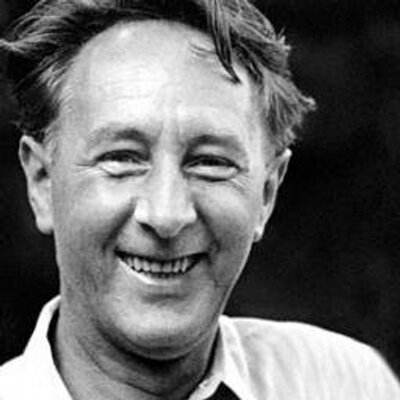
Czech composer Bohuslav Martinů

For decades, Leon Botstein and the American Symphony Orchestra have consistently put on the most innovative and exciting classical-music programming in New York. Usually thematic in nature—the ASO’s first concert this season in October, A Walt Whitman Sampler, featured a rare live performance of Vaughan Williams’ expansive A Sea Symphony—the annual slate also features an annual performance of an obscure opera, usually from the 20th century and often overdue to be heard by audiences.

Last season was Luigi Nono’s Intolleranza 1960, an unabashedly modernist and explicitly socialist work rarely presented in New York (or anywhere else, for that matter). On March 22 at Carnegie Hall, Botstein and the ASO present Czech composer Bohuslav Martinů’s Julietta, which many consider his operatic masterpiece. Botstein recently discussed Martinů, choosing operas to resurrect and what’s coming in a few months at his other job, running the annual Bard Music Festival, which looks at the musical world of a single composer each summer.

Kevin Filipski: With so many worthy but underheard 20th century composers from which to choose, how did you pick Martinů?
Leon Botstein: First of all, it’s the quality of the composer, the significance of the composer and the consistency of his music. Over the years, interest in Martinů has grown. There are the orchestral works, of course, and he was an avid opera composer. Two of his operas stand out: his last, The Greek Passion, and Julietta, which is considered his finest opera, a real masterpiece. The more you look into it, the more you see how unusual it is. I like to think of Julietta as a psychoanalytic opera, with extremely innovative use of speech and music, and melodrama and dialogue. It’s really a fantastic piece. I didn’t really know much of its performance history, and it’s never been done in the U.S.
Sara Jakubiak sings the title role of Julietta
(photo: Ashley Plante)

KF: Julietta was originally done in French. Why perform it in Martinů’s original language, Czech?
LB: This is a long back-and-forth. If I remember correctly, I retranslated it from French into Czech. The original story and novel are French. A Martinů scholar has done a new critical edition for the Czech version. Given its performance history and Martinů’s own relationship to the Czech language, he was quite like Janáček, who believed that the actual sound of the language was a crucial element. In Martinů’s case, it’s his own revision of the original version: if you will, an analogy might be made between Beethoven’s Fidelio and Leonore. Fidelio is what we play on the stage, but it’s Beethoven’s distillation of his complete work on this project. The Czech Julietta appears to have the same status. There’s a feeling that Czech is sonically more effective and that this version is the final statement by the composer.

KF: I know you have a list of many worthy operas you’d like to perform. Can you explain your process of choosing them?
LB: This opera was definitely on my list. There’s a whole fantastic repertoire of Czech opera, and two Smetana operas have always been on my list: Dalibor and Two Widows. In Martinů’s case, Julietta and The Greek Passion, as I said earlier, have been on the list of operas that need a fresh look and a fresh hearing. Julietta has been on my mind for awhile: in the 90s, I had the honor of working with Czech pianist Rudolf Firkusny, for whom Martinů wrote his piano concertos. He was a good friend of Martinů and lent me his own score of Martinů’s piano concertos and encouraged me to look into more of his music. For many of us, Martinů was a name but just in a general sense, not for any specific work. There was a tremendous output—he was tremendously prolific—but not anything that was so far in view that you could follow the trail, like Dukas’ The Sorcerer’s Apprentice, for example. When I was preparing for the Dvořák Bard Music Festival (1993), I stumbled on a whole bunch of names that I didn’t know anything about, including Suk and Martinů. Suddenly a whole Czech tradition opened up in the 19th and 20th century. My first encounter with Martinů was with the symphonic music: a few seasons ago I conducted his sixth symphony. 
Leon Botstein (photo: Ric Kallaher)

KF: Speaking of the Bard Music Festival, what’s on tap for this summer?
LB: This summer is Korngold, which will be fascinating, because he’s somebody who had 2-1/2 careers. He was an opera and chamber music composer before the mid-1930s, and he was also a phenomenal prodigy. Die Tote Stadt, which we’re doing a concert performance of, was one of the most highly performed operas in the early 1920s. He was a sensation, and his serious opera is Das Wunder der Heliane, which we will perform in a staged version. So we’ll look at Korngold’s career, and in the process, we’ll also hear how he was engaged in operetta along with his contemporaries. We’ll show how he took music he wrote for movies and turned it into concert music, because he really didn’t make a big distinction between them. And we’ll do a serious sampling of his orchestral and instrumental output. 

KF: In this fragmented culture, how does serious music stay relevant for audiences?
LB: There are essentially two pillars of our art forum that seem to do well. First, it’s the new: new work, new names on the scene and premieres; in that category I would put new artists like pianists, violinists and conductors. So in that sense it’s a new performer and new composer-based structure. Then there’s the standard repertory, what I would call a Ferris wheel, which goes around and around. We’ll see a lot of it in the Beethoven year (2020 is the 250th anniversary of his birth) and it changes almost not at all. What’s vanished completely is the third absolutely essential pillar, maintaining the vitality of the rich history of this art form, which is what we do with Bard and the ASO It’s the hardest thing to bring across. We’re in the business of engendering curiosity, not having an aesthetic war of, say, tonal vs. atonal. That kind of nonsense is no longer relevant. What is relevant is to get listeners to hear music with a sense of curiosity and not nervousness if they don’t recognize something. You have to build trust with the audience, which is what we are doing with Bard and the ASO.

Thursday, June 28, 2018

Interview with Peter Boyer, Composer of "Ellis Island: The Dream of America"

Ellis Island: The Dream of America
On PBS's Great Performances
Broadcast on June 29, 2018 (check local listings)
pbs.org

Pacific Symphony performing Peter Boyer's Ellis Island: The Dream of America (photo: Joshua Sudock)
It’s not often that a contemporary music composition is front and center on PBS’s long-running Great Performances broadcasts. But on June 29—just in time for Independence Day (check local listings)—a 2017 performance of Peter Boyer’s Ellis Island: The Dream of America is presented from the Renée and Henry Segerstrom Concert Hall in Orange County, California. Played by the Pacific Symphony under conductor Carl St. Clair, the work includes seven performers (Barry Bostwick, Camryn Manheim, Michael Nouri, Lesley Fera, Lucas Near-Verbrugghe, Samantha Sloyan and Kira Sternbach) reciting the very words—sometimes stirring, sometimes mundane, but always heartfelt and real—of some of the actual immigrants who stepped onto our shore during the early part of the 20th century at Ellis Island after passing by the Statue of Liberty in New York harbor.

The timely broadcast of Great Performances—Ellis Island: The Dream of America with Pacific Symphony comes during Immigrant Heritage Month, and Boyer’s soaring score—accompanied by dramatic archival photos of the American immigrant experience—provides a huge emotional impact. The work has been performed nearly 200 times by more than 80 orchestras since its 2002 premiere, and was a 2005 Grammy nominee for Best Classical Contemporary Composition.

Boyer spoke by phone recently about Ellis Island: The Dream of America’s road to this Great Performances broadcast and its relevance in today’s highly charged political climate.

Kevin Filipski: Ellis Island: The Dream of America was first performed in 2002, but is only now being presented on Great Performances. Can you explain this long and winding path?
Peter Boyer: It’s been a learning process. As soon as I composed the piece I had hoped it would end up on PBS and spent a few years trying to get that accomplished on my own. I had development deals with a couple of production companies but it never happened the way I envisioned it. I had hoped it would be done on Ellis Island, but the funding to make that happen was prohibitive. What led to this broadcast were connections to Pacific Symphony: two of its board members are recipients of the Ellis Island Medal of Honor, a yearly award given by the Ellis Island Honor Society for a variety of accomplishments. Pacific Symphony had performed the piece in 2005, and the idea first arose of a celebration for Ellis Island medal recipients in Southern California. It was pitched to PBS So Cal and Great Performances and ultimately, they got the go-ahead and raised a significant amount of money in a short amount of time. (Conductor) Carl St. Clair programmed the work during the symphony’s 2016-17 season but also the centerpiece of its American Composers Festival, which was a real honor. The key was that the chairman of Ellis Island Honor Society gave a significant gift that got it off the ground. It’s very expensive to mount—it’s a big orchestra, and it’s a huge endeavor to make that happen for the Symphony’s first national broadcast. It was a surreal moment to watch and hear my name on the program.

KF: How did Ellis Island: The Dream of America come about?
PB: The idea hit me around 1999 or 2000. I had been thinking about undertaking a major project with an American theme, and having grown up (Boyer was born in 1970) and knowing the end of the Emma Lazarus poem (“give me your tired, your poor…”), the history and symbolism of it was part of my upbringing and resonated with me. One day it hit me that Ellis Island would be a fascinating subject. My first thought was: has someone else done this? I couldn’t find anything, which surprised me. So I started to do research and learned about the Ellis Island Oral History project, and I knew that such a treasure trove of first-person accounts would define the piece. I set about trying to secure a commission, and my first idea was to organize a consortium and have several orchestras co-commission it. The Bushnell Center for the Performing Arts in Hartford (Boyer  attended The Hartt School at the University of Hartford) was the sole commissioner.

Composer Peter Boyer (left) onstage with conductor Carl St. Clair (photo: Joshua Sudock)
KF: What was your process while researching and composing?
PB: I worked on it for just under a year, and five months of that was research and creating a script before writing the music. I went to Ellis Island twice and looked through over 100 oral histories out of more than 2000, a small fraction to read. I knew I wanted a diversity of stories, both women and men, stories from multiple countries, and a diversity of mood and emotions. I knew there would be heavy material and humorous stories as well as emotional counterpoint. If it spoke to me directly, personally and compellingly, I chose it. I initially thought of ten—five men and five women—but that turned out to be too many, so I picked seven—four women and three men—from Europe and Russia from 1910 to 1940. It was hard to whittle down the script because I wanted all the words to be their words, without adding any material.

KF: How do the visuals work with the music?
PB: I had always envisioned an elaborate full-length visual presentation that would draw on the music and the stories. Because of my limited resources, I had chosen 100 or so photos from the Ellis Island archive for the prologue and epilogue. But for this broadcast, it’s more elaborate and filmed in high-definition, so I was thrilled that Pacific Symphony hired a team to work with me. They differentiated among the prologue, the epilogue and the personal stories, and the hundreds of photos from many sources totally surpassed anything I had done before. There’s a massive circular screen custom-built for the hall, which is there if they ever need it for other events. I think audiences are affected by the piece even more because of those added visuals.

Q: Have you found Ellis Island resonating now in a way it might not have even two years ago?
A: It’s been performed on a regular basis since it was composed, but absolutely there has been an uptick in the amount of performances in the last year and a half. For example, this September, it will be performed ten times by six different orchestras. There are impassioned opinions on immigration in the news, which I couldn’t have foreseen when I wrote the piece, which essentially takes a positive approach to American immigration. It’s not a political piece, it’s a historical piece. But people have found a relevance to the stories of these people who were driven by their desire to come to America, and people see the relevance to what’s happening in America today. 

Ellis Island: The Dream of America
On PBS's Great Performances
Broadcast on June 29, 2018 (check local listings)
pbs.org

Friday, February 5, 2016

Interview with Guitarist Russell Javors

The Lords of 52nd Street
February 5, 2016
The Space at Westbury, Westbury, NY
thespaceatwestbury.com

Russell Javors

As rhythm guitarist for Billy Joel during his heyday, Russell Javors played on some of Joel's biggest albums like Glass Houses and An Innocent Man, along with touring the world. Now, some three decades later, Javors has gotten together with Billy Joel band members, drummer Liberty DeVitto and sax player Richie Cannata, as The Lords of 52nd Street. They started playing music together again after reuniting in the fall of 2014 when they were inducted into the Long Island Music Hall of Fame.

Tonight, they play at the Space at Westbury, a make-up show after a snowstorm postponed the original January date. Javors spoke by phone about the new band and that other guy he once worked with.

Kevin Filipski: How did The Lords of 52nd Street come about?
Russell Javors: Well, we really hadn’t thought of it at all: we got together to do the Long Island Music Hall of Fame, and honestly I wasn’t even gonna do it. At first, I didn't have the feeling that anybody cared about it, but it was great getting together and seeing the guys and there was an overwhelming response. It was a part of my life I had moved on from, but now I'm with my brothers again. It all clicked in and was very natural. We hadn't seen each other in ages, but it went over well enough that we thought there might be something there and there’s interest in hearing us. It's funny: I've been playing together with Liberty since I was 15, and we didn't have to think about it. It's natural. It felt that we were like brothers, there's that pulse that we have together. It's nothing complicated: it's chemistry. 

KF: It's a crowded field of tribute bands that you're wading into.
RJ: Yes, there are lots of these kinds of bands out there, and they're good, like the Bigshot band. I had always stayed away from it because I just didn't feel it for awhile, but it's cool that Billy's music is kept alive, even though it’s funny to hear other people play my parts. But people care about this music, and they care about hearing us playing it. The tightrope we have to walk is we're not a tribute band, we are the actual band that played on those records. 

KF: Do you still see Billy Joel?
RJ: A year or two ago, I sat in with him onstage in Florida and before that in Hong Kong, and once in Detroit. It's always good to see everybody, and it's nice how they treat me like family. I'm different now that I was back then: if we made those records now, I might not play them the same way. You don't want to reinvent the wheel, but I look at these songs in a slightly different way now. We were a simple band: our whole mindset was to frame the songs and frame Billy: the song is always king. 

KF: How does it feel to be part of so many songs that touched so many people?
RJ: It's funny: I lived in Hong Kong for years and they have a Bourbon Street-type neighborhood, and I'd walk through and see myself in a video from the '80s. And I realized how much exposure that music had and how much it meant to so many people. You might not think of it that way when you're doing it, but looking back, it was an important part of many people's lives. Billy has earned his accolades with the test of time. I always think of us as Billy's E Street Band. 

Wednesday, January 29, 2014

Classical Concert Previews: Kremerata Baltica, American Symphony Orchestra

Kremerata Baltica
92nd Street Y
Lexington Avenue and East 92nd St, New York, NY
January 30, 2014
92y.org

American Symphony Orchestra
Carnegie Hall
7th Avenue and West 57th Street, New York, NY
January 31, 2014
americansymphony.org

Kremerata Baltica's new Weinberg CD
Even in New York City, it’s sometimes difficult to hear different music in our concert halls, forcing a search to find obscure or underperformed gems: thus, two concerts this week—Kremerata Baltica at the 92 nd Street Y and the American Symphony Orchestra at Carnegie Hall—are like manna from heaven.

The music of Polish composer Mieczyslaw Weinberg—who died in 1996 at age 76—is having a welcome renaissance, both on disc (CD releases and a Blu-ray of his powerful opera The Passenger, all on the Neos label) and onstage (Lincoln Center Festival is bringing The Passenger to Park Avenue Armory this summer).

Violinist Gidon Kremer and his stalwart ensemble Kremerata Baltica—which have recorded five of Weinberg’s haunting modernist works for a February 18 release on the ECM label—perform January 30 at the 92nd St Y. On disc, Kremer and his cohorts play Weinberg’s virtuosic but humane music with a lot of passion, which will surely be in abundance on the 92nd Street Y stage: in addition to Weinberg’s Concertino and Symphony No. 10, the concert comprises Arvo Part’s Cantus in memoriam Benjamin Britten, Britten’s Variations on a Theme of Frank Bridge, and Dmitri Shostakovich’s rarely-heard chamber opera, Antiformal Rayok.

Britten and Bridge, circa 1930
The American Symphony Orchestra’s artistic director, Leon Botstein, routinely curates the best classical programs in the city, and his orchestra’s January 31 Carnegie Hall performance is no exception. This England takes last year’s Britten Centenary as its jumping-off point to explore other avenues of 20th century British music, which is full of riches far beyond what’s usually heard from Britten and Edward Elgar.


Botstein has chosen carefully and well. Sir Arthur Bliss may have composed more memorable works than his score for the sci-fi movie Things to Come, but it’s certainly a tuneful diversion; Frank Bridge’s piano concerto Phantasm (with soloist Piers Lane) is a masterpiece, Robert Simpson’s Volcano is a solid left-field pick and William Walton’s Symphony No. 2, while not up to his glorious first symphony, is always worth hearing. I for one would have loved to hear other eminent composers as Arnold Bax, Lennox Berkeley, Alan Rawsthorne or the seriously undervalued Malcolm Arnold and Edmund Rubbra, but Botstein’s picks demonstrate the depth and variety of England’s overlooked musical heritage.

Friday, December 14, 2012

December in NYC: Holiday Music (and more) at Carnegie, Guggenheim, Met Museum


Orpheus
December 1, 2012
Carnegie Hall, New York, NY
orpheusnyc.com

New York Philharmonic
December 21 & 22, 2012
Metropolitan Museum of Art & Symphony Space, New York, NY
nyphil.org

Met Museum Holiday Concerts
Performances through December 23, 2012
Met Museum, New York, NY
metmuseum.org

Works and Process: Peter and the Wolf
Performances through December 16, 2012
Rotunda Holiday Concert
December 16 & 17, 2012
Guggenheim Museum, New York, NY
guggenheim.org

December on New York City stages means much—but not exclusively—holiday music. And the month began with an Orpheus concert at Carnegie Hall (December 1) in which the conductor- less chamber ensemble played joyful but decidedly secular works.

The concert opened with a snazzy version of Prokofiev’s skillful Haydn pastiche, the Classical Symphony (his first) and closed with Mozart’s monumental Jupiter Symphony (his last). In between was the main reason I was there: hearing the amazing Anne Akiko Meyers as soloist in Samuel Barber’s masterly Violin Concerto. The concerto, a treacherous piece to navigate, packs a lot into the space of a mere 20 minutes, but Meyers hit everything thrown at her, brilliantly building to the crescendo Barber wanted. Orpheus’ next Carnegie concert features the Wayne Shorter Quartet playing several of the jazz saxophone master’s works—including the world premiere of Lotus—on February 1.

Jack Quartet at Met Museum
Although annual New York Philharmonic seasonal concerts are on tap at Avery Fisher Hall—Holiday Brass (December 16) and Handel’s Messiah (December 18-22)—new music is on the docket December 21 at the Metropolitan Museum of Art and the next night at Symphony Space. With compositions that would never find be heard on a subscription Philharmonic program, the concert—conducted by Jayce Ogren—comprises world premieres by Jude Vaclavik and Andy Ahiko, a New York premiere by Andrew Norman, and the ensemble version of 1994’s Counterpoise, the last major work by Jacob Druckman, who died in 1999. Counterpoise will be sung by the exquisite soprano Elizabeth Futral, an artist who moves easily from baroque to modern music with a bit of Broadway thrown in, as witness her luminous Marian the Librarian in The Music Man at Glimmerglass Opera in Cooperstown last summer.
Peter drawing (Will Cotton)

The Metropolitan Museum of Art, in the midst of its holiday concerts in the Medieval Sculpture Hall in front of its annual Christmas Tree and Neapolitan Baroque Crèche, winds up its series with performances by the Jack Quartet, whose Modern Medieval is a selection of holiday music ranging from the Middle Ages to today (December 16); The Vienna Boys Choir, always a popular treat, singing Christmas in Vienna (December 18); and the choir ensemble The Crossing, doing David Lang’s Little Match Girl Passion and other contemporary works (December 23).

Finally, there’s the Guggenheim Museum, which hosts as part of its ongoing Works & Process series Sergei Prokofiev’s delightful Peter and the Wolf, staged by Will Cotton in a gingerbread chalet that houses the characters of this beguiling fairy tale, narrated by Isaac Mizrahi. Conductor George Manahan leads the Juilliard Ensemble. After the performances (which continue through December 16), audience members are invited to view the onstage sets up close.
Holiday concert in Guggenheim Museum Rotunda

On the evenings of December 16 and 17, the Guggenheim’s famed Frank Lloyd Wright rotunda is the scene for concerts of holiday music by the VOX Vocal Ensemble, conducted by George Steel. This is one performance, in a singular setting, that is fast becoming another New York holiday perennial.

Orpheus
December 1, 2012
Carnegie Hall, New York, NY
http://orpheusnyc.com

New York Philharmonic
December 21 & 22, 2012
Metropolitan Museum of Art & Symphony Space, New York, NY
http://nyphil.org

Met Museum Holiday Concerts
Performances through December 23, 2012
Met Museum, New York, NY
http://metmuseum.org

Works and Process: Peter and the Wolf
Performances through December 16, 2012
Rotunda Holiday Concert
December 16 & 17, 2012
Guggenheim Museum, New York, NY
http://guggenheim.org

Saturday, November 3, 2012

Concert Preview: Susanna Hoffs at City Winery, NY (Nov. 5) and Chicago (Nov. 6)


Susanna Hoffs (photo: Jonathan Kingsbury)
Susanna Hoffs
November 5, 2012
City Winery, NY, NY
November 6, 2012
City Winery, Chicago, IL
citywinery.com

Back in the late ‘80s, when the Bangles had hit after hit, Susanna Hoffs was one of MTV’s poster girls: although all four members shared singing duties —Hoffs, sisters Vicki and Debi Peterson and Michael Steele—Hoffs’ sultry looks turned her into their defacto lead singer, especially on videos like “Manic Monday,” “Walk Like an Egyptian” (despite three lead singers), “In Your Room” and “Eternal Flame.”

After the Bangles first disbanded, Hoffs released two solo albums, the poppy When You’re a Boy (1991) and more introspective Susanna Hoffs (1996). Following a Bangles reunion that produced the energetic Doll Revolution (2003), Hoffs teamed up with Matthew Sweet for two cover records, Under the Covers, Volumes 1 & 2, on which, under their monicker Sid’n’Susie, they tackled ‘60s and ‘70s staples “Cinnamon Girl,” “Monday Monday,” “Maggie May” and “You’re So Vain.”

The past year has been a busy one for Hoffs. First, the Bangles reunited yet again for their first album in eight years, the folk-influenced Sweetheart of the Sun, released in September 2011. And this past summer, Hoffs released her first solo album in 16 years, Someday, a pure-pop gem (clocking in at a mere 33 minutes, like early Beatle records) heavily influenced by the mellow acoustic sounds of the ‘60s.

Hoffs played New York’s City Winery in 2009 with Matthew Sweet as Sid’n’Susie; the club’s intimacy should also nicely complement the songs on Someday.