Showing posts with label music previews. Show all posts

Thursday, March 21, 2019

Leon Botstein Interview—Martinů’s Opera “Julietta” at Carnegie Hall

American Symphony Orchestra: The Key of Dreams
Leon Botstein, music director
March 22, 2019
Carnegie Hall
americansymphony.org
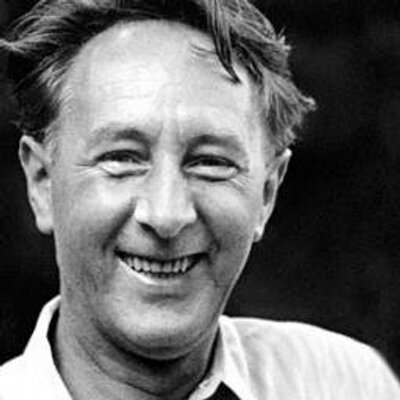
Czech composer Bohuslav Martinů

For decades, Leon Botstein and the American Symphony Orchestra have consistently put on the most innovative and exciting classical-music programming in New York. Usually thematic in nature—the ASO’s first concert this season in October, A Walt Whitman Sampler, featured a rare live performance of Vaughan Williams’ expansive A Sea Symphony—the annual slate also features an annual performance of an obscure opera, usually from the 20th century and often overdue to be heard by audiences.

Last season was Luigi Nono’s Intolleranza 1960, an unabashedly modernist and explicitly socialist work rarely presented in New York (or anywhere else, for that matter). On March 22 at Carnegie Hall, Botstein and the ASO present Czech composer Bohuslav Martinů’s Julietta, which many consider his operatic masterpiece. Botstein recently discussed Martinů, choosing operas to resurrect and what’s coming in a few months at his other job, running the annual Bard Music Festival, which looks at the musical world of a single composer each summer.

Kevin Filipski: With so many worthy but underheard 20th century composers from which to choose, how did you pick Martinů?
Leon Botstein: First of all, it’s the quality of the composer, the significance of the composer and the consistency of his music. Over the years, interest in Martinů has grown. There are the orchestral works, of course, and he was an avid opera composer. Two of his operas stand out: his last, The Greek Passion, and Julietta, which is considered his finest opera, a real masterpiece. The more you look into it, the more you see how unusual it is. I like to think of Julietta as a psychoanalytic opera, with extremely innovative use of speech and music, and melodrama and dialogue. It’s really a fantastic piece. I didn’t really know much of its performance history, and it’s never been done in the U.S.
Sara Jakubiak sings the title role of Julietta
(photo: Ashley Plante)

KF: Julietta was originally done in French. Why perform it in Martinů’s original language, Czech?
LB: This is a long back-and-forth. If I remember correctly, I retranslated it from French into Czech. The original story and novel are French. A Martinů scholar has done a new critical edition for the Czech version. Given its performance history and Martinů’s own relationship to the Czech language, he was quite like Janáček, who believed that the actual sound of the language was a crucial element. In Martinů’s case, it’s his own revision of the original version: if you will, an analogy might be made between Beethoven’s Fidelio and Leonore. Fidelio is what we play on the stage, but it’s Beethoven’s distillation of his complete work on this project. The Czech Julietta appears to have the same status. There’s a feeling that Czech is sonically more effective and that this version is the final statement by the composer.

KF: I know you have a list of many worthy operas you’d like to perform. Can you explain your process of choosing them?
LB: This opera was definitely on my list. There’s a whole fantastic repertoire of Czech opera, and two Smetana operas have always been on my list: Dalibor and Two Widows. In Martinů’s case, Julietta and The Greek Passion, as I said earlier, have been on the list of operas that need a fresh look and a fresh hearing. Julietta has been on my mind for awhile: in the 90s, I had the honor of working with Czech pianist Rudolf Firkusny, for whom Martinů wrote his piano concertos. He was a good friend of Martinů and lent me his own score of Martinů’s piano concertos and encouraged me to look into more of his music. For many of us, Martinů was a name but just in a general sense, not for any specific work. There was a tremendous output—he was tremendously prolific—but not anything that was so far in view that you could follow the trail, like Dukas’ The Sorcerer’s Apprentice, for example. When I was preparing for the Dvořák Bard Music Festival (1993), I stumbled on a whole bunch of names that I didn’t know anything about, including Suk and Martinů. Suddenly a whole Czech tradition opened up in the 19th and 20th century. My first encounter with Martinů was with the symphonic music: a few seasons ago I conducted his sixth symphony. 
Leon Botstein (photo: Ric Kallaher)

KF: Speaking of the Bard Music Festival, what’s on tap for this summer?
LB: This summer is Korngold, which will be fascinating, because he’s somebody who had 2-1/2 careers. He was an opera and chamber music composer before the mid-1930s, and he was also a phenomenal prodigy. Die Tote Stadt, which we’re doing a concert performance of, was one of the most highly performed operas in the early 1920s. He was a sensation, and his serious opera is Das Wunder der Heliane, which we will perform in a staged version. So we’ll look at Korngold’s career, and in the process, we’ll also hear how he was engaged in operetta along with his contemporaries. We’ll show how he took music he wrote for movies and turned it into concert music, because he really didn’t make a big distinction between them. And we’ll do a serious sampling of his orchestral and instrumental output. 

KF: In this fragmented culture, how does serious music stay relevant for audiences?
LB: There are essentially two pillars of our art forum that seem to do well. First, it’s the new: new work, new names on the scene and premieres; in that category I would put new artists like pianists, violinists and conductors. So in that sense it’s a new performer and new composer-based structure. Then there’s the standard repertory, what I would call a Ferris wheel, which goes around and around. We’ll see a lot of it in the Beethoven year (2020 is the 250th anniversary of his birth) and it changes almost not at all. What’s vanished completely is the third absolutely essential pillar, maintaining the vitality of the rich history of this art form, which is what we do with Bard and the ASO It’s the hardest thing to bring across. We’re in the business of engendering curiosity, not having an aesthetic war of, say, tonal vs. atonal. That kind of nonsense is no longer relevant. What is relevant is to get listeners to hear music with a sense of curiosity and not nervousness if they don’t recognize something. You have to build trust with the audience, which is what we are doing with Bard and the ASO.

Friday, February 5, 2016

Interview with Guitarist Russell Javors

The Lords of 52nd Street
February 5, 2016
The Space at Westbury, Westbury, NY
thespaceatwestbury.com

Russell Javors

As rhythm guitarist for Billy Joel during his heyday, Russell Javors played on some of Joel's biggest albums like Glass Houses and An Innocent Man, along with touring the world. Now, some three decades later, Javors has gotten together with Billy Joel band members, drummer Liberty DeVitto and sax player Richie Cannata, as The Lords of 52nd Street. They started playing music together again after reuniting in the fall of 2014 when they were inducted into the Long Island Music Hall of Fame.

Tonight, they play at the Space at Westbury, a make-up show after a snowstorm postponed the original January date. Javors spoke by phone about the new band and that other guy he once worked with.

Kevin Filipski: How did The Lords of 52nd Street come about?
Russell Javors: Well, we really hadn’t thought of it at all: we got together to do the Long Island Music Hall of Fame, and honestly I wasn’t even gonna do it. At first, I didn't have the feeling that anybody cared about it, but it was great getting together and seeing the guys and there was an overwhelming response. It was a part of my life I had moved on from, but now I'm with my brothers again. It all clicked in and was very natural. We hadn't seen each other in ages, but it went over well enough that we thought there might be something there and there’s interest in hearing us. It's funny: I've been playing together with Liberty since I was 15, and we didn't have to think about it. It's natural. It felt that we were like brothers, there's that pulse that we have together. It's nothing complicated: it's chemistry. 

KF: It's a crowded field of tribute bands that you're wading into.
RJ: Yes, there are lots of these kinds of bands out there, and they're good, like the Bigshot band. I had always stayed away from it because I just didn't feel it for awhile, but it's cool that Billy's music is kept alive, even though it’s funny to hear other people play my parts. But people care about this music, and they care about hearing us playing it. The tightrope we have to walk is we're not a tribute band, we are the actual band that played on those records. 

KF: Do you still see Billy Joel?
RJ: A year or two ago, I sat in with him onstage in Florida and before that in Hong Kong, and once in Detroit. It's always good to see everybody, and it's nice how they treat me like family. I'm different now that I was back then: if we made those records now, I might not play them the same way. You don't want to reinvent the wheel, but I look at these songs in a slightly different way now. We were a simple band: our whole mindset was to frame the songs and frame Billy: the song is always king. 

KF: How does it feel to be part of so many songs that touched so many people?
RJ: It's funny: I lived in Hong Kong for years and they have a Bourbon Street-type neighborhood, and I'd walk through and see myself in a video from the '80s. And I realized how much exposure that music had and how much it meant to so many people. You might not think of it that way when you're doing it, but looking back, it was an important part of many people's lives. Billy has earned his accolades with the test of time. I always think of us as Billy's E Street Band. 

Wednesday, January 29, 2014

Classical Concert Previews: Kremerata Baltica, American Symphony Orchestra

Kremerata Baltica
92nd Street Y
Lexington Avenue and East 92nd St, New York, NY
January 30, 2014
92y.org

American Symphony Orchestra
Carnegie Hall
7th Avenue and West 57th Street, New York, NY
January 31, 2014
americansymphony.org

Kremerata Baltica's new Weinberg CD
Even in New York City, it’s sometimes difficult to hear different music in our concert halls, forcing a search to find obscure or underperformed gems: thus, two concerts this week—Kremerata Baltica at the 92 nd Street Y and the American Symphony Orchestra at Carnegie Hall—are like manna from heaven.

The music of Polish composer Mieczyslaw Weinberg—who died in 1996 at age 76—is having a welcome renaissance, both on disc (CD releases and a Blu-ray of his powerful opera The Passenger, all on the Neos label) and onstage (Lincoln Center Festival is bringing The Passenger to Park Avenue Armory this summer).

Violinist Gidon Kremer and his stalwart ensemble Kremerata Baltica—which have recorded five of Weinberg’s haunting modernist works for a February 18 release on the ECM label—perform January 30 at the 92nd St Y. On disc, Kremer and his cohorts play Weinberg’s virtuosic but humane music with a lot of passion, which will surely be in abundance on the 92nd Street Y stage: in addition to Weinberg’s Concertino and Symphony No. 10, the concert comprises Arvo Part’s Cantus in memoriam Benjamin Britten, Britten’s Variations on a Theme of Frank Bridge, and Dmitri Shostakovich’s rarely-heard chamber opera, Antiformal Rayok.

Britten and Bridge, circa 1930
The American Symphony Orchestra’s artistic director, Leon Botstein, routinely curates the best classical programs in the city, and his orchestra’s January 31 Carnegie Hall performance is no exception. This England takes last year’s Britten Centenary as its jumping-off point to explore other avenues of 20th century British music, which is full of riches far beyond what’s usually heard from Britten and Edward Elgar.


Botstein has chosen carefully and well. Sir Arthur Bliss may have composed more memorable works than his score for the sci-fi movie Things to Come, but it’s certainly a tuneful diversion; Frank Bridge’s piano concerto Phantasm (with soloist Piers Lane) is a masterpiece, Robert Simpson’s Volcano is a solid left-field pick and William Walton’s Symphony No. 2, while not up to his glorious first symphony, is always worth hearing. I for one would have loved to hear other eminent composers as Arnold Bax, Lennox Berkeley, Alan Rawsthorne or the seriously undervalued Malcolm Arnold and Edmund Rubbra, but Botstein’s picks demonstrate the depth and variety of England’s overlooked musical heritage.

Friday, September 20, 2013

Cabaret Music: Sutton Foster @ Café Carlyle, Laura Benanti @ 54 Below


Sutton Foster
Performances through September 28, 2013
Café Carlyle
35 East 76th Street, New York, NY
rosewoodhotels.com

Laura Benanti
Performances through September 21, 2013
54 Below
254 West 54th Street, New York, NY
54below.com

Today’s best singing actresses aren’t only shining on the Great White Way. Sure, Laura Osnes is a delight in Cinderella and Kelli O’Hara returns this winter in the new musical of The Bridges of Madison County, but these ladies also show off their talents at closer quarters in Manhattan’s cabaret rooms.

Two of these intimate spaces are currently home to a pair of our premiere performers. Sutton Foster, Tony-winning Reno Sweeney in 2011’s Anything Goes revival, at the Café Carlyle through September 28; Laura Benanti—Tony winner for Gypsy in 2008—at 54 Below through September 21, plugging her new CD, In Constant Search of the Right Kind of Attention.

Sutton Foster at Cafe Carlyle (photo: Lars Klove)
During her Carlyle shows, Sutton Foster proves once again that her crystalline voice and natural stage presence make her one of our most engaging performers. During her hour-long set, Foster and piano accompanist Michael Rafter—perform 20 songs ranging from a medley of tunes she’s sung during her performing life—“Not for the Life/NYC/Astonishing” from Thoroughly Modern Millie, Annie and Little Women—to a stirringly passionate Sondheim pairing, “Anyone Can Whistle/Being Alive.”

In lovely renditions of John Denver’s “Sunshine on My Shoulders” and Paul Simon’s “Old Friends” (the latter a duet with her friend Megan McGinniss), and an encore of James Taylor’s “You Can Close Your Eyes,” Foster demonstrated her grace and naturalness, and even a self-mocking sense of humor with her between-songs patter. After a gentle but moving version of “Georgia on My Mind” (far from Ray Charles’ legendary take), Foster mentioned that she grew up in Georgia until, when she was 13, her family moved to Detroit. “That’s where I got my edge,” Foster quipped.

Laura Benanti's new CD, recorded at 54 Below
Quips will surely be plentiful at 54 Below this weekend, as Laura Benanti—another gorgeous voice, accompanied by glorious wit—appears to celebrate her new CD, recorded during her last stint there. The disc alternates her songs with her amusing stories, as did her performance last year at Lincoln Center’s Allen Room, which was memorable as much for her hilariously self-effacing asides as by her luminous singing.

Benanti—who describes herself as a “human lady” on her must-follow Twitter feed—explores  the American Songbook with her pianist Todd Almond. On the CD, songs by Maury Yeston, Lerner and Loewe and Jerome Kern were sung beautifully, as were Joni Mitchell’s “Conversation” and Harry Chapin’s “Mr. Tanner.” Benanti also showed off her abilities on the ukulele with a self-penned “The Ukulele Song” (what else would it be called?), which combines her vibrant musical and comedic talents.

Friday, May 3, 2013

Carnegie Hall Preview: Renee Fleming’s ‘Perspectives’ Ends; ‘Spring for Music’ Begins


Renee Fleming—Vienna: Window to Modernity
May 4, 2013
Spring for Music—Buffalo Philharmonic Orchestra
May 8, 2013
Carnegie Hall
7th Avenue and 57th Street, New York, NY
carnegiehall.org

Carnegie Hall’s current season winds down, with soprano Renee Fleming’s illuminating four-concert Perspectives ending as the Spring for Music festival begins.

Perspectives artists from David Byrne to the Kronos Quartet curate their own programs, often with music not usually performed (although some simply regurgitate their usual repertoire). For her Perspectives, Fleming (at right) performed a joint recital with Susan Graham, sang Blanche Dubois in the first New York performance of Andre Previn’s opera A Streetcar Named Desire (she also sang the 1998 premiere) and last week sang a new work by Swedish composer Anders Hillborg with Alan Gilbert and the New York Philharmonic.

Her final Perspectives concert, Vienna: Window to Modernity, gives Fleming the chance to sing chamber works she doesn’t often perform: with a focus on early 20th century music, she will sing her beloved Strauss but also Brahms, Wagner and Schoenberg. Along for the ride are pianist Jeremy Denk and the Emerson String Quartet—in one of its final appearances with original cellist David Finckel.

Fleming spoke recently about her Perspectives concerts.

Kevin Filipski: How did the Vienna concert take shape?
Renee Fleming: I’ve been exploring this period for a number of years, starting with Strauss and Korngold. This late romantic music fits with me vocally, I speak German fluently, and early in my Decca career I worked with producer Michael Haas, who wanted me to record Korngold’s operas. I would have loved to have done them, but the orchestrations are too heavy for my voice—but I have sung them in concerts. When I saw a Korngold exhibit at the Jewish Museum in Vienna along with a fantastic Mahler exhibit, this era really hit home. The influence that these composers had on American composers also interested me. It was also the heyday of the singer: the cultural importance of the opera composers and singers in this period was beyond anything in Hollywood today.

KF: How did you decide which songs you would include?
RF: The Emerson Quartet and Jeremy Denk collaborations originally came from Carnegie, but it was challenging to find appropriate music: we wanted to find music composed for soprano and quartet, but there isn’t that much. So that was our first challenge: the Strauss songs are rarely performed and Brahms’ songs are fragments, and quite different than we are used to. The Weigl, Webern and Zeisl songs are not known—and they’re really just tastes of them, since they come from larger works. So this’ll be fun for us to do.

KF: What will you take away from your Perspectives season?
RF: It’s been wonderful—each project has been so different, so completely unique. Performing Hillborg’s new work with the New York Philharmonic is a good example. It’s a substantial work, its words and imagery are immediate and musical in their own right. I think it’s a beautiful piece. And to finally bring Streetcar to New York—it was only one performance, but we brought it to New York! I didn’t have any luck getting it done at the Met, so this seemed like a good way to do it, no huge sets to construct. And what a special pleasure to sing this opera in what’s considered the best acoustic hall in the world. This was a fun way to do music I don’t perform very often.

The Spring for Music festival—comprising a week of performances by American orchestras which usually don’t play on Carnegie Hall’s vaunted stage—begins May 6 with Marin Alsop conducting the Baltimore Symphony Orchestra, continues with Albany (May 7), Buffalo (May 8), Detroit (May 9 and 10) and concludes with the National Symphony Orchestra (May 11).

Buffalo Philharmonic Orchestra (BPO) music director JoAnn Falletta (at left)—who has led the ensemble since 1999—spoke about what distinguishes Spring for Music: programs of exciting and rarely heard works, like the Russian pair, both pre-revolutionary (Gliere’s massive 3rd symphony, Ilya Muromets) and post-Soviet (Giya Kancheli’s Morning Prayers), which the BPO will play.

Kevin Filipski: How did the BPO get involved with Spring for Music?
Joann Falletta: They have a really different concept and they make it a very special event.  They invite orchestras to apply based on what they’re doing in terms of repertoire, and they want very unusual programming. They liked what we are programming—especially the Gliere symphony, which is almost like a cult piece with a lot of fans and not played very often. Our orchestra does romantic music very well, because the acoustics in Kleinhans Music Hall lend themselves to that. We also have a reputation for doing new music, because of our past music directors from Lukas Foss to Michael Tilson Thomas, which is why I chose the Kancheli work: that comes from the end of the Soviet regime, while Gliere comes from the beginning.

KF: What distinguishes these two works?
JF: Both pieces seem to me mystical—the Kancheli is very spiritual in a non-sectarian way, but it’s also quite tragic, it’s about life in the Soviet Union. And the Gliere symphony is also mystical—a composer looking back at this 9th or 10th century Hercules figure whom everyone in Russia knows about. The Gliere uses a huge, lush orchestra, while Kancheli has a very minimal but powerful language. I thought to tie these two mystics together, and it works. No one in the orchestra has played these works before—but the whole Spring for Music concept is to take risks, and I’m thrilled that we’re taking a chance on these works, especially the Gliere, a long, demanding workout for the orchestra. But that’s how we grow as musicians. And we’re recording the Gliere symphony for Naxos: they wanted us to record it for awhile, and it worked out perfectly that we are recording it before we perform it at Carnegie Hall.

Carnegie Hall
7th Avenue and 57th Street, New York, NY
http://carnegiehall.org


Thursday, January 31, 2013

Music Preview: 'Fiorello!' at Encores!; Kirchschlager and Bostridge at Lincoln Center


Encores! presents Fiorello!
January 30-February 3, 2013
New York City Center, 131 West 55th Street, New York, NY

Angelika Kirchschlager and Ian Bostridge
February 3, 2013
Alice Tully Hall, 65th Street and Broadway, New York, NY

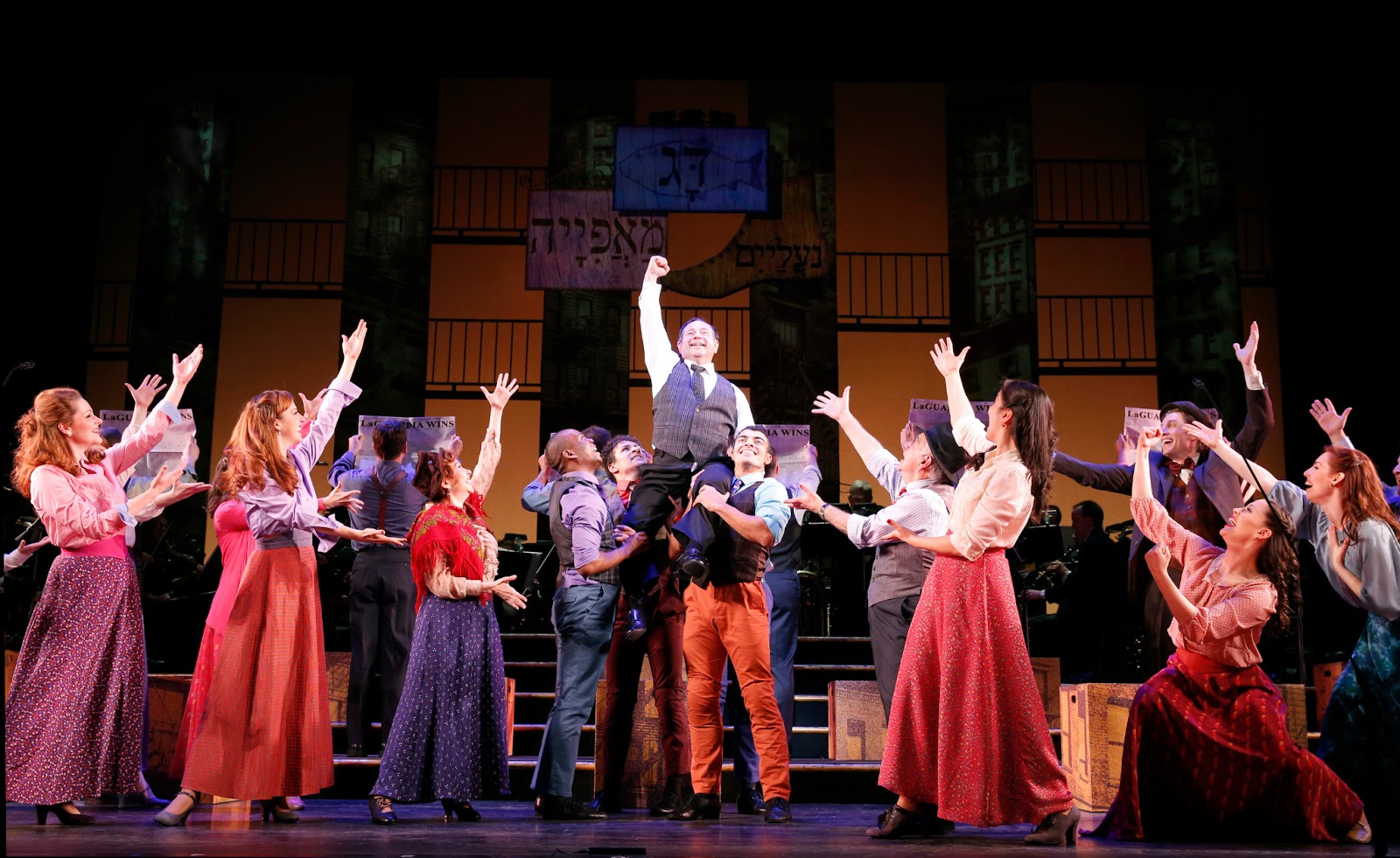
Rutigliano (center) as Fiorello! (photo: Joan Marcus)
When Encores! began in 1994, the first musical resuscitated was Jerry Bock and Sheldon Harnick’s Fiorello!, the immensely entertaining show about New York City’s legendary mayor Fiorello LaGuardia. Now, Encores! begins its 20th anniversary season with seven performances (through February 3) of that very same musical, starring Kate Baldwin, Shuler Hensley, Erin Dilly, Emily Skinner and, in the title role, Danny Rutigliano.

Between rehearsals, veteran Broadway performer Rutigliano recently discussed starring as Hizzoner in Fiorello! and how Encores! has changed over the past couple of decades.

Kevin Filipski: This is your fifth Encores! show. As a veteran, describe how different it is now from then: more performances and fancier stagings compared to concert versions with everyone flipping through their books.
Danny Rutigliano: I started back in the early days of Encores! I did One Touch of Venus with Melissa Errico, The New Moon directed by Fiorello! director Gary Griffin, Kismet with Brian Stokes Mitchell and Marin Mazzie, and Bells Are Ringing with Kelli O’Hara. It’s definitely gotten bigger each time. Back then it was so bare-boned: it was all about the music. So what we’re doing now is making it simple, not elaborate and exorbitant—it suggests the physical production but with fully staged blocking and musical numbers. It’s getting back to what we’re about—Encores! is a very unique treasure. Kismet was more elaborate—and in Bells, Kelli was so inspiring, she tackled the lead as if she’d been doing it 8 times a week for months. The bar has been set higher—the performances have a level of expectation.

KF: How does it feel bringing back this show?
DR: Fiorello! is a great show—it’s a Pulitzer Prize winner, let’s not forget that. The characters and the story are so rich: he was so fascinating, he was celebrated about being a great 3-term mayor, but the show ends when he is first elected. That’s how full his life and career were. The score is so terrific, it’s got many great tunes, so this is utter bliss for me, a role that I’ve wanted to play. It’s also timely about politics and how history repeats itself. And this is a terrific cast—Erin and Kate are fabulous. Encores! always puts together the best talent in town, it’s a little jewel that it isn’t so little—in the acting community everybody wants to do one of these shows.

Bostridge and Kirchschlager perform Wolf
When Angelika Kirchschlager and Ian Bostridge take the stage for their duo recital at Alice Tully Hall on Sunday, February 3, they will not be singing anything by such obvious candidates as Schubert or Schumann or Brahms, instead devoting their program exclusively to the exceptionally artful lieder of Austrian composer Hugo Wolf.

Specifically, the talented pair will perform 34 selections from Wolf’s voluminous and wide-ranging Spanisches leiderbuch (Spanish Songbook), with the stylish pianist Julius Drake accompanying them. Although he is considered one of the master songwriters (to my mind, he’s right up there with Gabriel Faure, with whom he shares the elegance and refinement that separate them from the pack), Wolf isn’t programmed as often as he should be.

Similarly, since the lovely Austrian mezzo and lanky British tenor don’t perform often enough in New York—Kirchschlager has especially been scarcely seen and heard on local stages, at least when compared to other top-flight female singers—this concert should be a must-attend for those who appreciate such musical artistry.

Encores! presents Fiorello!
http://nycitycenter.org

Angelika Kirchschlager and Ian Bostridge
http://lcgreatperformers.org