Showing posts with label opera interviews. Show all posts

Thursday, March 21, 2019

Leon Botstein Interview—Martinů’s Opera “Julietta” at Carnegie Hall

American Symphony Orchestra: The Key of Dreams
Leon Botstein, music director
March 22, 2019
Carnegie Hall
americansymphony.org
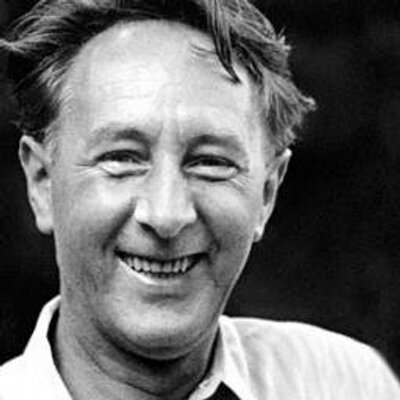
Czech composer Bohuslav Martinů

For decades, Leon Botstein and the American Symphony Orchestra have consistently put on the most innovative and exciting classical-music programming in New York. Usually thematic in nature—the ASO’s first concert this season in October, A Walt Whitman Sampler, featured a rare live performance of Vaughan Williams’ expansive A Sea Symphony—the annual slate also features an annual performance of an obscure opera, usually from the 20th century and often overdue to be heard by audiences.

Last season was Luigi Nono’s Intolleranza 1960, an unabashedly modernist and explicitly socialist work rarely presented in New York (or anywhere else, for that matter). On March 22 at Carnegie Hall, Botstein and the ASO present Czech composer Bohuslav Martinů’s Julietta, which many consider his operatic masterpiece. Botstein recently discussed Martinů, choosing operas to resurrect and what’s coming in a few months at his other job, running the annual Bard Music Festival, which looks at the musical world of a single composer each summer.

Kevin Filipski: With so many worthy but underheard 20th century composers from which to choose, how did you pick Martinů?
Leon Botstein: First of all, it’s the quality of the composer, the significance of the composer and the consistency of his music. Over the years, interest in Martinů has grown. There are the orchestral works, of course, and he was an avid opera composer. Two of his operas stand out: his last, The Greek Passion, and Julietta, which is considered his finest opera, a real masterpiece. The more you look into it, the more you see how unusual it is. I like to think of Julietta as a psychoanalytic opera, with extremely innovative use of speech and music, and melodrama and dialogue. It’s really a fantastic piece. I didn’t really know much of its performance history, and it’s never been done in the U.S.
Sara Jakubiak sings the title role of Julietta
(photo: Ashley Plante)

KF: Julietta was originally done in French. Why perform it in Martinů’s original language, Czech?
LB: This is a long back-and-forth. If I remember correctly, I retranslated it from French into Czech. The original story and novel are French. A Martinů scholar has done a new critical edition for the Czech version. Given its performance history and Martinů’s own relationship to the Czech language, he was quite like Janáček, who believed that the actual sound of the language was a crucial element. In Martinů’s case, it’s his own revision of the original version: if you will, an analogy might be made between Beethoven’s Fidelio and Leonore. Fidelio is what we play on the stage, but it’s Beethoven’s distillation of his complete work on this project. The Czech Julietta appears to have the same status. There’s a feeling that Czech is sonically more effective and that this version is the final statement by the composer.

KF: I know you have a list of many worthy operas you’d like to perform. Can you explain your process of choosing them?
LB: This opera was definitely on my list. There’s a whole fantastic repertoire of Czech opera, and two Smetana operas have always been on my list: Dalibor and Two Widows. In Martinů’s case, Julietta and The Greek Passion, as I said earlier, have been on the list of operas that need a fresh look and a fresh hearing. Julietta has been on my mind for awhile: in the 90s, I had the honor of working with Czech pianist Rudolf Firkusny, for whom Martinů wrote his piano concertos. He was a good friend of Martinů and lent me his own score of Martinů’s piano concertos and encouraged me to look into more of his music. For many of us, Martinů was a name but just in a general sense, not for any specific work. There was a tremendous output—he was tremendously prolific—but not anything that was so far in view that you could follow the trail, like Dukas’ The Sorcerer’s Apprentice, for example. When I was preparing for the Dvořák Bard Music Festival (1993), I stumbled on a whole bunch of names that I didn’t know anything about, including Suk and Martinů. Suddenly a whole Czech tradition opened up in the 19th and 20th century. My first encounter with Martinů was with the symphonic music: a few seasons ago I conducted his sixth symphony. 
Leon Botstein (photo: Ric Kallaher)

KF: Speaking of the Bard Music Festival, what’s on tap for this summer?
LB: This summer is Korngold, which will be fascinating, because he’s somebody who had 2-1/2 careers. He was an opera and chamber music composer before the mid-1930s, and he was also a phenomenal prodigy. Die Tote Stadt, which we’re doing a concert performance of, was one of the most highly performed operas in the early 1920s. He was a sensation, and his serious opera is Das Wunder der Heliane, which we will perform in a staged version. So we’ll look at Korngold’s career, and in the process, we’ll also hear how he was engaged in operetta along with his contemporaries. We’ll show how he took music he wrote for movies and turned it into concert music, because he really didn’t make a big distinction between them. And we’ll do a serious sampling of his orchestral and instrumental output. 

KF: In this fragmented culture, how does serious music stay relevant for audiences?
LB: There are essentially two pillars of our art forum that seem to do well. First, it’s the new: new work, new names on the scene and premieres; in that category I would put new artists like pianists, violinists and conductors. So in that sense it’s a new performer and new composer-based structure. Then there’s the standard repertory, what I would call a Ferris wheel, which goes around and around. We’ll see a lot of it in the Beethoven year (2020 is the 250th anniversary of his birth) and it changes almost not at all. What’s vanished completely is the third absolutely essential pillar, maintaining the vitality of the rich history of this art form, which is what we do with Bard and the ASO It’s the hardest thing to bring across. We’re in the business of engendering curiosity, not having an aesthetic war of, say, tonal vs. atonal. That kind of nonsense is no longer relevant. What is relevant is to get listeners to hear music with a sense of curiosity and not nervousness if they don’t recognize something. You have to build trust with the audience, which is what we are doing with Bard and the ASO.

Wednesday, July 21, 2010

Soprano Takesha Meshé Kizart


Donizetti’s Maria di Rohan
Bel Canto at Caramoor
Orchestra of St. Luke's
Caramoor Opera Chorus
Will Crutchfield, conductor

July 24, 2010
caramoor.org

Every summer, Will Crutchfield brings operatic masterpieces to Katonah—less than an hour north of Manhattan—for his adventurous “Bel Canto at Caramoor” series. This season, amidst several orchestral and chamber performances, the Caramoor Music Festival presents two operas, including a nearly unknown piece by Gaetano Donizetti, who penned such Met-worthy classics as Lucia di Lammermoor and Maria Stuarda.

Maria di Rohan, a romantic tragedy, premiered in 1843 but has barely been performed since. Of Donizetti’s 70-odd operas, it’s one of the least-heard. But Crutchfield has brushed off the score and will present it with the dazzlingly talented, up-and-coming soprano, Takesha Meshé Kizart, in the title role.

Kizart, originally from Chicago, has only been singing professionally for 2-1/2 years, but has already amassed an impressive resume, including a recent Madama Butterfly in Slovenia and Bluebeard’s Castle in Cologne. She debuted at Caramoor in 2008 in Verdi’s La Forza del Destino, and will surely be back for more roles in the future.

The constantly engaging singer sat down to discuss her love of music and her short but burgeoning career recently in Manhattan.

Q: How did you become interested in singing classical music, specifically opera?
A: I’ve been singing my entire life—I came out of the womb singing. I started singing classical music in high school. My music teacher noticed that I had a voice, and she wanted to support me in any way to showcase it. She found my first voice teacher for me. My focus on opera really came when I started at the Academy for Vocal Arts (in Philadelphia). There was something about the focus of the program, and the resources available to me as a young artist—it was a wonderful place to be.

Q: You’re singing an obscure opera by one of the great bel canto composers. How much do you enjoy singing this kind of music, with its florid vocal ornamentation?
A: I love singing bel canto. For me, this is a very natural and organic thing to do. I’ve only been singing full-fledged professionally since January 2008, so everything for me is brand-spanking new, everything is a debut. Making sure you have the style of the composer is the focus, and making sure you do everything you’re supposed to do as a responsible artist. I love the fact that I can get extra high notes in bel canto—that’s always fun. I love, love, love that! I also love the fact that it’s shaped around an individual’s voice: you can create something that’s not just written in the music. The more heroic bel canto operas have more drama and thrust, like early Verdi operas. Some parts of this opera remind me of Verdi’s Un Bello in Maschera and Don Carlo. You can tell that Verdi and Donizetti were friends. Somebody should be suing someone, I think!

Q: What’s the difference between preparing for an obscure role like Maria di Rohan and a famous one like Madama Butterfly?
A: It’s more difficult to prepare for this kind of role. It’s like you’re creating a new role, as I did with Respighi’s opera Maria Victoire—I did just the second production of that opera ever, in Berlin. You can sense that some notes are not written correctly—there are so many misprints in this score that it’s not even funny. It’s exciting but also a little frustrating. I love rehearsing, so the more we rehearse the better I feel about it.

Q: Will Crutchfield resurrects bel canto operas for Caramoor each summer. What’s it like to work with him?
A: Will is amazing—he knows every random detail about these operas known to man. It’s exciting to be with someone who really knows and can guide you—for a young artist striving to be excellent, to be surrounded by someone like him is a blessing. I just wish we had more time to work on it. I’ve been trying to sneak in a few extra high notes, but Will won’t let me do it! (laughs) I loved singing at Caramoor two years ago, and just the opportunity to work with Will again on something no one has heard before—I love doing things like that.

Q: You’re early in what will be a long career, but do you think about what roles and composers you’d like to tackle?
A: Oh my gosh, that’s the most complicated question ever. There are so many roles that are coming that I’ve yet to sing: I want to do the Italian heroines and, of course, sing Strauss. I love singing anything that feels good in my throat. I thank God that there are quite a few composers that do that for me. I’ve been offered Strauss’s Salome already a thousand times, but I still say, “Not yet—give me time!” I did Bluebeard’s Castle in Hungarian in Cologne, which was amazing. It was crazy to sing it in Hungarian, but luckily I’m quick at picking up languages. From the time I was little, I was a human jukebox, and I’ve always been quick at picking up melodies. Someone told me that it will help me with Alzheimer’s later in life, keep my brain power longer. (laughs) I hope so!

Tuesday, May 25, 2010

Macabre Ligeti

grandmacabreSoprano Barbara Hannigan, conductor Alan Gilbert in rehearsal

Le Grand Macabre

Composed by György Ligeti

Directed and designed by Doug Fitch

Conducted by Alan Gilbert

New York Philharmonic

May 27, 28, 29, 2010

Avery Fisher Hall, Lincoln Center

nyphil.org

It’s hard to believe that the New York premiere of one of the most acclaimed contemporary operas comes not from the Metropolitan Opera or New York City Opera but…the New York Philharmonic!?!

Yes, György Ligeti’s manic, absurdist masterwork Le Grand Macabre—which takes place in a surrealist landscape on the last day for mankind—will be performed at Avery Fisher Hall, with Philharmonic music director Alan Gilbert conducting and Doug Fitch, who heads Giants Are Small, will handle the staging and design chores.

The music is fiendishly difficult to perform and listen to, it must be admitted, but once you’ve entered Ligeti’s singular sound world—which includes a prelude for 12 car horns, an interlude for doorbells and alarm clocks, a gorgeous climactic passacaglia and enough vocal and instrumental pyrotechnics to explode over the East River on July Fourth—you won’t ever want to leave.

Soprano Barbara Hannigan, a Ligeti veteran who sings the small but pivotal part of chief of espionage Gepopo, and director Fitch both discussed entering the world of Le Grand Macabre.

Kevin Filipski: How have you become the “go-to” soprano to sing Ligeti’s music?

Barbara Hannigan: My part, Gepopo, is kind of a cameo: I come in, do a little acrobatics and fireworks, then leave. I’ve done this part 37 times, so it’s easy for me. And two weeks ago, I sang Ligeti’s Requiem. When you look at the score of a Ligeti piece, it looks difficult, then you realize that there are only a few places that are going to haunt you for the rest of your life. The entire part of Gepopo was made into a concert aria for soprano and orchestra, which is how I started singing it, and that’s why I’ve done it so many times. Every Ligeti piece is genius: he knows exactly how to write for the voice, it’s really hard to sing but—best of all—it’s all possible. He combines complex, intellectual stuff with absolutely emotional music all the time. That’s the kind of music I’m drawn to, whether old or new. I’m really open-minded, but I am really picky about what I do. Le Grand Macabre is stunning: you could stand there and just sing it and it would be incredible. I’m a huge Ligeti fan.

KF: Had you ever worked with Ligeti before his death in 2006?

BH: The first time I sang this role, I met him in Germany and in Holland: that was really nerve-wracking, because he’ll tell you if he doesn’t like you, and you’ll lose your job. But we got along great. I did Ligeti tours all over Europe in 2005, and he was always there, so I got to see him a fair amount. He was a fascinating man and an emotional, incredibly intelligent person.

KF: Why do you think we haven’t heard Le Grand Macabre yet in New York, and what do you think the response will be?

BH : It’s done fairly often in Europe, where it elicits varied responses from the audience: they can be offended or just wonder what’s going on. The last time I sang Ligeti in New York was with the Chamber Music Society. What I noticed about audiences here is that they have a great sense of humor: they pick up the wit and the humor and they’re not afraid to laugh. In Europe, they’re less sure: “should I laugh?” I expect that the audience will be quite engaged: New York audiences have more confidence than European audiences.

-------------------------------------------------------------

Kevin Filipski: How did you come to work with the Philharmonic on Ligeti’s opera?

Doug Fitch: I’ve worked with Alan a few times on operas. He wanted me to be part of his first season here. I suggested Le Grand Macabre and he said it was a great idea. He had other suggestions, we went through other ideas, but this was the most exciting to do. It’s been something I’ve wanted to do for a long time—it has a sensibility I feel akin to, which is that it’s powerfully absurdist at heart and it’s a weird and wonderful masterpiece. I’ve always liked contemporary music. These composers are inventors of a whole new musical language: you have to understand that language before you can speak it. That’s what all art really is: accessing a universal truth by surprising people in a new way.

KF: How do you approach doing this opera with an orchestra onstage?

DF: The first problem it entails is inventing a concept which includes the orchestra onstage and making sense out of it. It’s initiated from a certain kind of abstraction: you can’t pretend their not there, so you’re asking people to suspend disbelief in a particular way. It also draws your attention to the people physically making the music: you can forget about them when they’re down in the pit. And every lighting cue has to happen with extremely strict boundaries, with no lights in the musicians’ eyes. Singers don’t care but the players do.

KF: Unlike at an opera house, you only have a limited amount of rehearsal time. How does that affect the way you approach such a difficult work as this?

DF: We have to be really organized and ready for the few moments we have to spend with everyone. First of all, the only way this works is if you’re surrounded by extremely talented people who know what they’re doing, and I’m lucky to have this great cast. The most unusual thing about this show is the live animation I created. I discovered I’m making two productions at the same time: on the stage live are two atmosphericists’ stations: they are visual alchemists who create the scenery and the visual world in which the opera unfolds. It’s a sort of miniature theater with live-feed cameras attached, and everything that they do onstage is projected onto a screen over the orchestra. We’ve been working for the last three months building these miniature worlds that will be live onstage, which enables us to have a whole world onstage with an orchestra.

KF: How familiar are you with Ligeti’s music?

DF: In 1985, I did my first original show, a piece of theater in Cambridge, Massachusetts that I wrote, designed and created, called The Pot Luck Supper. I used Ligeti’s car-horn overture from this opera: I heard it and wanted it for my piece. So I’ve had that music in my head for years: it sets the ball rolling in such a wonderful, crazy, unusual way. The passacaglia at the end is so absolutely beautiful: it sounds baroque, then carefully and slowly de-forms and becomes a fabulously controlled chaos, and I love that. It’s very confusing as a storyteller: the whole story is crazy, but the music is like a traditional opera in many ways, with arias, duets and a chorus of 24 people. The more you listen, the more you realize it’s a regular opera!

originally posted on timessquare.com

Thursday, December 24, 2009

Mezzo-soprano Angelika Kirchschlager

Hansel and Gretel
Composed by Engelbert Humperdinck
Conducted by Andrew Davis
Starring Philip Langridge, Angelika Kirchschlager, Miah Persson
Performances December 14, 2009-January 2, 2010
metopera.org

Angelika-Kirchschlager
Kirchschlager-and-PerssonOne of the most glamorous singers in classical music, Austrian mezzo-soprano Angelika Kirchschlager has led a somewhat quiet career compared to superstars like Renee Fleming and Anna Netrebko—and she’s fine with that.

Currently starring as Hansel in the Metropolitan Opera’s holiday presentation of Hansel and Gretel, the 44-year-old Kirchschlager has made a point of working when she wants to work and singing what she wants to sing, whether it’s a Strauss opera or a recital of Kurt Weill songs. Living with her 14-year-old son in Vienna, Kirchschlager usually keeps close to home, but when it’s a special occasion like Hansel at the Met, she’ll make an exception—luckily for us.

Kirchschlager spoke recently about Hansel and Gretel, audience etiquette and spending the holidays in New York.

Kevin Filipski: You sing in many European opera houses, which are relatively small compared to the Met. Do you like working in such a large house?
Angelika Kirchschlager: When I started rehearsing here, it was interesting to think about how different all these opera houses are. Covent Garden (London) is so different…the Vienna State Opera is so small compared to the Met. It’s very difficult to describe because each opera house is different. I am very happy here at the Met, because we have a wonderful team for Hansel and Gretel. Every night there is an opera onstage. We’re doing our production, which makes us all happy, with no stress around us. But there’s also a very important new production of Carmen currently in rehearsals, and I realize that the people who put our wigs on our heads have already put other wigs on other heads earlier in the morning! It’s very special to be where there are so many operas going on at the same time.

KF: How do you like this production of Hansel and Gretel?

AK: This Hansel is special to me because I feel like I’m in Disneyland with all these huge cooks and the trees and the long table and the fish, all onstage. It’s incredibly colorful and exciting, and it’s very easy to feel like a child and to become really childish in the part of Hansel. The props people actually bake the cakes backstage and make the decorations for each performance, and I think that’s a special thing for this production. It’s also really dark in its mood, which I like very much. Grimm’s fairy tales are supposed to be dark—people always protest that children should not see this, well, Grimm’s fairy tales are not entirely for children. Apart from that, children like to be scared. Our children are not like the children 100 years ago, they’re not scared at all by being baked by a witch in an oven! Philip Langridge (the witch) is fantastic—to see him at work is wonderful. He’s a great actor, not only as the witch but whatever he does. Miah Persson (Gretel) and I have worked before—we did Rosenkavalier in Salzburg—and here we are a boy and girl again. I’m happy that the chemistry is there between us; especially for Hansel and Gretel, since we are always together onstage, so our connection really lifts up the entire production.

KF: In your recent recital at Alice Tully Hall, there was a moment between songs when many audience members coughed loudly, and you seemed momentarily taken aback. What’s your take on audience etiquette during concerts?
AK: In principle, after a while you get used to it and just accept it, as long as the noise is on an average level. At that Tully concert, they were very attentive and there was a very good connection between us, but at one point, there was this huge storm of coughing. It made me laugh, because I felt like it was impossible for everybody to have to cough at the same time—and so loudly! I find it very amusing to hear that between the songs. I had some mucus on my vocal cords, so I had to cough too, and I had to wait to do it after the song because everybody expects me to not do it. So sometimes I want the audience to know that I do hear and see what is going on—there’s no barrier between us. If I am making my art in the silence, it sounds very different than when there’s coughing and other noise. It’s like throwing dirt on my canvas.

KF: How do you like being in New York during the holidays?
AK: This is actually my first time that I am not at home for the holidays. I always want to stay home for Christmas, but I had the chance to do Hansel and Gretel at the Met! I might not go to Frankfurt or Houston for Christmas, but everybody says Christmas in New York is great. So I talked to my family about it and we decided, why not? And they are coming from Vienna to spend Christmas with me here. We will go see the tree at Rockefeller Center and maybe even go ice skating there. Well, maybe not—I don’t want to break a bone while I’m singing at the Met.

KF: We don’t see you performing enough in New York. Any future plans to return?
AK: I have no plans for the Met at the moment. Singing opera in America is a problem for me—I stopped doing it when my son started school eight years ago. Now I’m 44, and I’ve been doing this for 18 years, and opera is a crazy business that’s very demanding physically. To sing in a four-hour opera like Rosenkavalier, you need to be really fit and build your entire life around the opera for weeks. I worked a lot last year, and many things happened in my personal life, and I’d rather be nearer to home. I was very exhausted at the end of last season—nine months away from home is too much. How long do I want to do this? I’m well-known, I do not have to be famous as long as people want to hear me sing. I am completely happy as long as I can pay for my mortgage and food for my family. I do more recitals now, or short orchestral tours in Europe, which are easier than operas. But I’m looking for new roles to sing and things to do. I don’t know when I’ll come back here, but I would love to return some time.
originally posted on timessquare.com

Saturday, October 3, 2009

Bass-Baritone John Relyea

Le nozze di Figaro
Written by Wolfgang Amadeus Mozart
Directed by Jonathan Miller
Conducted by Dan Ettinger
Starring John Relyea, Danielle de Niese, Emma Bell, Isabel Leonard, Bo Skohvus

The Metropolitan Opera Performances September 22-October 9, 2009 (additional performances in November and December)

Bass-baritone John Relyea has got it made: singing the title role in the Metropolitan Opera’s production of Mozart’s Le nozze di Figaro, Relyea is co-starring with three of the best young actresses/singers in opera, Danielle de Niese (pictured with Relyea), Emma Bell and Isabelle Leonard. And he also was featured in two of the Met’s most high-profile new productions in the past couple seasons: Adrian Noble’s Macbeth and Robert Lapage’s La Damnation de Faust.

Although raised in Canada, Relyea was born in the U.S. and currently lives in Rhode Island with his wife and six-year-old son (whom he visits frequently by jumping on the train from New York whenever he has a few days off). That commute will continue for the foreseeable future, as Relyea will be featured in Bizet’s Carmen and Gounod’s Faust (as Mephisto) in future seasons.

Relyea recently spoke about his co-stars, Mozart, performing in new productions and his rock’n’roll background.

Kevin Filipski: How often have you sung Figaro at the Met, and is there anything new that you are encountering this time?
John Relyea: It’s my fourth time with this production, which I did first in the 2001-2 season. It’s a great production, I hope they keep it because it’s done the way you want it to look and feel. I’m only sorry I never got to do it with the original director (Jonathan Miller). I’ve actually done Figaro with our conductor, Dan Ettinger, at Munich Opera; he understands Mozart and brings a lot of life to the opera. I believe you get much out of the character and energy of the music by being loyal to the rhythms of the melodies and accompaniments. (Ettinger) has really good tempi that brings it all to life. He’s a few years younger than me, so he’s got fresh perspective.

KF: You are also working with a trio of fiery actress-singers, Danielle DeNiese, Emma bell and Isabel Leonard.
JR: Figaro is my most-performed role: I have 70 performances of it under my belt, but when you get this cast with this chemistry, it never feels routine. Danielle has got a lot of fire, and it’s all natural when you see her, it’s just her being herself: her whole personality comes out. I just did Figaro in Munich with Isabel, whose wonderful, and about a year ago, I worked with Emma Bell, so I was happy to work with her again. I’ve even sung with Bo Skohvus in two Figaro productions before! So everyone’s familiar with each other, a great feeling to have since we’re already a cohesive ensemble and that transfers into the relationships in the opera. You get a much larger level of trust among the singers, which automatically helps you onstage and you’re generous with each other and with Mozart: we get that feeling of spontaneity and keep it rolling.

KF: What is the quality of Mozart’s music that keeps you coming back to it?
JR: His music is so alive that it’s really got a life of its own. That’s the best way I could put it—there’s nothing pompous about it. It’s honest, straightforward and natural. Mozart is always leading your character in a natural direction, so true as he to the mood and the feeling and what’s being sung. There’s just joy in it—you can sing or listen 100 times and something new jumps out at you every time.

KF: Your last few appearances at the Met have been in new stagings: last season in La Damnation de Faust and Macbeth, for example. How do you like working on new productions?
JR: It’s always great to be in a new production because you get to work one-on-one with the director and work with their new concept: it’s as close as you can get to reinventing the role and have a new perspective on the story perhaps. Doing Macbeth was incredible—it gave a new look to the story, and (Adrian Noble) had very deep ideas about these characters from doing Shakespeare so often. And in Faust, Robert Lapage does very modern things, but I found them true to the characters and the story, and he makes the most of it all, both theater and video. I think it’s an exciting time with these types of new productions.

KF: You have a very unusual musical background—can you describe it?
JR: I was in a very rare situation where I grew up in a family of opera singers who both perform and teach. My father was trained as a concert pianist before becoming a singer. I grew up surrounded by music all the time, but never really gave much thought to opera—I just lived and breathed it growing up. Instead, I played guitar for many years in rock bands, and I still play when I get the chance. However, I realized one day that I was a singer, and I was living a Dr. Jekyll & Mr. Hyde existence, with one day singing opera and another day playing guitar in really loud bands. Well, Dr. Jekyll ending up winning, and I started to sing regularly: I also enjoyed acting onstage, since I was able to become the actual instrument and not just strap it on and play it.
originally posted on timessquare.com

Tuesday, November 11, 2008

Resurrection Project

Trilogy: Three One-Act Portraits of Marriage
Conducted and conceived by James Conlon
Realized by Darko Tresnjak and James Marvel
Directed by James Marvel
Singers from the Juilliard Opera Center and the Juilliard Orchestra

November 12, 14, 16, 2008
Peter Jay Sharp Theater, The Juilliard School
155 West 65th Street
juilliard.edu

Image
Conductor Conlon (photo: Ravinia Festival)
Image
Mussorgsky's The Marriage, part of Trilogy
(photo: Nan Melville)
A world-class conductor like James Conlon–who is the music director of the Los Angeles Opera, Ravinia Festival and Cincinnati May Festival and a sought-after guest conductor with ensembles like the New York Philharmonic, Chicago Symphony Orchestra and Philadelphia Orchestra–might seem too busy to involve himself with less high-profile side projects. Yet Conlon has made it his mission to unearth important works variously suppressed by the Nazis through his “Recovered Voices” series, in which he leads concerts and operas by these forgotten composers.

In addition, Maestro Conlon is in the midst of a two-year Juilliard School residency in which he’s working with students on several cross-genre projects, including Trilogy, which he conceived and is conducting. A trio of one-act operas by Modest Mussorgsky, Ernest Krenek and Benjamin Fleischmann about various stages in married life, Trilogy is a fully-staged production with Juilliard singers and musicians.

In the midst of rehearsals at Juilliard, Conlon discussed Trilogy and its relation to his mission to keep alive music that, for one reason or another, has been rarely heard.

Kevin Filipski: Combining three obscure one-acts written nearly a century apart into a 90-minute performance isn’t the most obvious operatic idea, so how did Trilogy come about?
James Conlon: It all started with Mussorgsky’s The Marriage, which has been germinating for at least 30 years as something for me to both conduct and have staged—ever since I first heard it as a teenager. I see Trilogy is a theatrical-musical experiment, because in general we have not been very imaginative in the opera world to try and bring diverse works together that would set each other off and illuminate the whole.

KF: Are you performing the entire two-act Marriage, which was finished by Alexander Tcherepnin, or just the first act, which was all Mussorgsky finished?
JC: We’re definitely doing the Mussorgsky version, which interests me more than what Tcherepnin did. To be honest, I wanted to make my own orchestration, but time got away from me, so I tried to find the oldest orchestrations available. There was one done before the Russian Revolution by (Alexander) Galk, then another one later by (Mikhail) Ippolitov-Ivanov. But when I went to Moscow to conduct and spend time trying to track down that orchestration, even the Ivanov Society could not find it! So Tcherepnin was the only choice. Mussorgsky was one of the most extraordinary geniuses who ever lived, and consider how influential he is, even with as little music as he left us. Most 20th century European music has taken Mussorgsky into account: from Debussy to Messiaen to Poulenc, the French were greatly influenced by him, the Germans a little less, and the Russians profoundly, of course. Doing The Marriage is all about Mussorgsky, not Tcherepnin.

KF: You have been at the forefront of performing music by composers displaced or murdered by the Nazis, and on this bill, both Ernst Krenek (who fled to the United States) and Benjamin Fleischmann (who was killed fighting in the Russian army) fit that description.
JC: My mission is to restore the music of a specific time period that has been suppressed, and every story is different. The real damage was the total shattering of the German musical tradition of the 1920s and ‘30s, which includes Krenek. Fleischmann is on the periphery of that, since he was a Russian, a student of Shostakovich, and doesn’t belong to the community of composers that the Nazi suppression deeply affected, like Zemlinsky, Schreker and Ullmann, and those who escaped, like Weill, Hindemith and Krenek. Trilogy is not conceived in any way about Nazism or about those recovered voices–the musical commonalities are between Mussorgsky and Fleischmann, and historically, the tie is between Krenek and Fleischmann. Part of the Trilogy concept is that this non-stop 90-minute performance generates an atmosphere where the sharp and brutal juxtaposition of periods and styles allows us no time to recover or take in its juxtaposition of such different music. My experience of doing operas like Salome, Elektra and The Dwarf–an hour and half of music packed into one act–is a much more intense experience that builds up the energy.

KF: You have been working a lot recently with the Juilliard Orchestra, with whom you gave the world premiere of Ellen Zwilich’s superb Fifth Symphony at Carnegie Hall last month, and now you are performing Trilogy. Describe working with these student musicians.
JC: Part of the fun is conducting very gifted and talented young people. With established musicians, you gain in experience, but there’s a freshness, an absolute enthusiasm and a high level of instrumentality in these students. That’s part of the joy of being–I guess I would call myself middle-aged–and the fun is in teaching them. Preparing them to perform Trilogy is a very different experience from their Carnegie Hall concert (playing Zwilich’s and Mahler’s Fifth Symphonies). That was a thoroughly joyful encounter for all of us—Ellen Zwilich and I went to school together, so we know each other from way back.

KF: As music director of Los Angeles Opera, you’re performing operas each season from these “recovered voices.” How is that initiative going, and why did you decide on doing The Birds by Walter Braunfels, which is scheduled for April 2009?
JC: Well, The Birds is a beautiful work, an extraordinary opera which was a fantastic success originally, then inexplicably fell into obscurity. We have plans for these operas, we just hope that we also have money. Our next big project is the first production in America of Franz Schreker’s Die Gezeichneten. It’s very important that we can keep this series going because a lot of people are very devoted to it. This is not tokenism, nor tipping a hat, it’s our determination that these works return to the repertoire. Last year’s staging (of Zemlinsky The Dwarf and Ullmann’s The Jar) was absolute pandemonium and was a stunning success. I always say that our problem is to get people to come, because once they hear this music, they always react to these powerful works.

originally posted on timessquare.com

Thursday, November 6, 2008

Scintillating Susan

La Damnation de Faust
Music by Hector Berlioz
Conducted by James Levine
Directed by Robert Lepage
Starring Susan Graham, Marcello Giordani, John Relyea
Performances November 7, 10, 14, 18, 22, 25, 29, December 4, 2008
The Metropolitan Opera
metopera.org

Un frission français: A Century of French Song
Onyx Classics CD
onyxclassics.com

Image
Graham in the Met's La Damnation de Faust (photo: Ken Howard/Metropolitan Opera)
Image
Graham's new CD,
Un frisson francais
New Mexico native Susan Graham might well call the Metropolitan Opera her second home: not only has she sung the famed Mozart and Strauss roles there, but also two world premieres by American composers, Tobias Picker’s An American Tragedy and John Harbison’s The Great Gatsby. This month, the mezzo-soprano sings Marguerite in a new staging of Hector Berlioz’s great La Damnation de Faust by French-Canadian theatrical wizard Robert Lepage.

Graham took time out from her busy rehearsal schedule at the Met to discuss Faust, her love for Berlioz’s music, her new CD of French songs and a new side job–hosting opera telecasts, including the Met’s live HD transmission of Doctor Atomic on November 8.

Kevin Filipski: You’ve sung a lot of Berlioz, but this is your first time singing his Faust. Does Robert Lepage’s production overcome the fact that it wasn’t originally written to be staged?
Susan Graham: Even though it wasn’t written to be staged, this is the fourth staged production I’ve done! I think Robert’s staging is just brilliant–it’s tied together with such magic, such theatricality. He’s done such a marvelous job of imagining what could be and then making it happen. He says that the performers are sort of sandwiched into a cinematic world, which means that we have interactive technology. It’s really incredible–the visual images aid in the kind of otherworldly storytelling of this piece. The set is a vertical grid which becomes a giant screen at times–for instance, sometimes there’s a video overlay of a large house or a church. It doesn’t affect my performance at all, since I’m actually unaware of (all the technology). I’m giving the same performance of Marguerite that I would give anywhere, since 90 percent of what’s going on around me, I can’t see anyway.

KF: What’s so appealing about Berlioz’s music?
SG: His music has a great sense of drama, he was a master of orchestration and he was inventing new ways of using instruments that also gave us new storytelling tools. In Faust, when the devil appears, the horns of the orchestra make a kind of ghastly shriek–there’s always a forward momentum in his dramatic writing. He brings a beautiful lyric quality to my big heartbreak aria in the second act of Faust, as an English horn–which is the most plaintive-sounding instrument–first sings out the melody which I then sing.

KF: What does James Levine bring to Faust as conductor, and how is it working with your Faust (Marcello Giordani) and Mephistopheles (John Relyea)?
SG: James Levine knows every single note of the score inside and out. We spoke earlier about my part in my dressing room–and boy, it is obvious he loves this music! He treats it as music from the Classical period, not the big gestures from the Romantic era. There’s a correlation between Berlioz and Gluck, which is perfect for me since I just sang (Gluck’s opera) Iphigenia en tauride for a year throughout the world. It’s the first time that I’ve sung with John and Marcello, who is one of the greatest tenors of our time, and his voice is perfectly suited for Berlioz, who makes a lot of demands on a tenor, with his arching lines and very high ranges. And Marcello does all that beautifully. The way Berlioz has written Mephistopheles, he’s a devil with a lot of class, not a rough, gravelly kind of devil. Of course, John is very suave and seductive, with a lot of elegance and charm.

KF: You’ve started a second “career” as announcer and host, first during a Live from Lincoln Center broadcast from New York City Opera, then more recently during the Met’s Opening Night Gala and live HD broadcasts on Saturday afternoons. How is that going?
SG: I love it–I’m having the best time. It’s funny, because in the past when you picked up the mike and become an interviewer, people always associated it with Beverly Sills and other former, retired divas. But now there’s so much media around and they need somebody to host different events, so (Met Opera General Manager) Peter Gelb has done a great thing by asking those of us who are still active as singers to step out of that role and into another one, to interview our colleagues.

KF: After Faust at the Met, you’re returning for a New Year’s Eve concert with Lorin Maazel and the New York Philharmonic. Any ideas on what you’ll be singing yet?
SG: Right now, we’re definitely in discussions for it–we’re still trying to nail down the repertoire and find a program that will really ring in the New Year in a very festive way. I know we’ll be performing arias from some operettas, which will be fun, along with other surprises.

KF: Your new recording, Un frisson francais, has just been released. It’s subtitled A Century of French Song–how do you compress 100 years of incredible composing into one CD?
SG: Yes, well, it is 24 songs by 22 French composers. (Piano accompanist) Malcolm Martineau called it a “tasting menu,” which was the idea, because it’s hard to pick just one songs by these composers. Also, we wanted to pick one of their lesser-known jewels–they’re all wonderful composers in their own right. When we having our original discussions about it, he’s such a genius with repertoire: “these songs will be a good group, those will be a good group.” I would tell him, “I love this song, let’s put this one in.” People think the pianist is just there to play while you sing, but he’s the driver of this bus. I’m there to push along his genius. When he suggested that we do Poulenc’s “La dame de Monte Carlo” as the big finale, I couldn’t believe it: “A seven-minute Poulenc song to end the program? I’ll never learn that!” But it’s such a great song that I just couldn’t say no.

KF: Out of 22 French composers on the CD, there’s no Berlioz. Was that intentional?
SG: The world has heard me sing so much Berlioz: maybe we need to hear me sing something else!

originally posted on timessquare.com

Monday, September 10, 2007

Composer Richard Danielpour


Morrison and Danielpour

Margaret Garner
composed by Richard Danielpour
libretto by Toni Morrison
starring Tracie Luck, Lisa Daltirus, Maureen McKay, Joel Sorensen, Christopher Jackson, Timothy Mix, Gregg Baker
conducted by George Manahan
directed by Tazewell Thompson
New York State Theater
Performances through September 29, 2007
nycopera.com

It may only be a coincidence that New York City Opera opens its fall season on September 11th with the local premiere of a new American opera, Richard Danielpour’s Margaret Garner, with a libretto by Pulitzer Prize-winner Toni Morrison, from the true story of a runaway slave which was the original inspiration for Morrison’s novel Beloved.

This is the first opera by the 52-year-old Danielpour, who has written several award-winning orchestral and chamber music compositions, including works commissioned by the New York Philharmonic, Chamber Music Society of Lincoln Center and the San Francisco Symphony. In between intensive rehearsal sessions for this production of the opera–which had its world premiere in Detroit, followed by performances in Cincinnati, Philadelphia and Charlotte, all with superstar Denyce Graves in the title role–Danielpour discussed the genesis of Margaret Garner.

Kevin Filipski: You’ve watched your first opera get its premiere in 2005 and play in four different cities. Now, in 2007, City Opera is mounting another new production, directed by Tazewell Thompson, who was the set designer for that premiere staging. Are you surprised at how quickly that’s happened?
Richard Danielpour: It is strange for a new-ish opera that’s only 2-1/2 years old to get a new production, but I’m so taken with what I’m hearing and seeing in rehearsals. Tazewell Thompson is an extraordinary director whose greatest gift is to understand how to create what’s inherently in the score: a commensurate and balanced sense of drama, emotion and right down to synchronizing certain images and movements with certain musical chords from the score. Why is this worthy of mention? Because there are a lot of directors who would rather use the music to further their own theory of what the drama should be instead of furthering the score to maximize the drama.

KF: How easy it is to work with the people responsible for putting this onstage, from the director and conductor to the singers?
RD: It took me a few years to compose the opera, but I’ve been able to let go – it feels like being a grandfather, where you get all of the love and none of the responsibility. At the same time, I worked with some of the cast at the beginning of rehearsals, and I have confidence that this is a team that will find the way to work out great solutions for dramatizing this work. I’m also very impressed with (conductor and City Opera music director) George Manahan, who has a wonderful way of keeping the music going dramatically – I love fast tempos, and a lot of my music is rhythmically driven, and George has a real sense in his leanness of approach in bringing out the inherent architecture of the entire work. He gets a maximum amount of results with a minimum amount of fuss.

KF: Talk about working with Toni Morrison.
RD: It was a great collaboration. I had set two sets of her poems to music–one in 1996 and the other in 1998–and they both were for (soprano) Jessye Norman: they got a great response as a test run for us. We had our initial discussion about Margaret Garner at lunch in the summer of ‘96, but it wasn’t until more than two years later that we started talking about it in earnest. We finally got opera companies seriously interested, but in the late summer/fall of 2000, she was very reticent. She said, “I’m not sure I can do this,” and I said, “There’s nobody else–you’ve got to.” Then the libretto gradually started to appear.

What I found remarkable about her in this role is that she’s someone whose novels are very thickly layered, and here she had to do the exact opposite: but she knew that immediately. For her to have written her first and only libretto at the age of 72 is extraordinary. What I knew would emerge was her extremely appealing sense of using the language, and I wanted a librettist who doesn’t write either poetry or prose but a hybrid of the two–which is how she write her novels. There was a lot of editing and rewriting by both of us, but the main thing I remember is how extraordinarily flexible she was even though she had never done this before.


KF: Did you research any period music from the America of the 1800s?
RD: No–if you’re a composer and your eyes and ears are open and you eat, sleep and read music, then your life is your research. To research music and period songs in a scholarly way would take the spontaneity away. There are songs in the opera that sound like spirituals that are not taken from any real spirituals, but from my experience and memory of spirituals. Composers somehow reprocess and refilter what they’ve heard and remembered. Many people think that opera composers just set a text to music – that’s not how it works. The composer is a dramatist because the music is what drives the work. Whether it’s Puccini, Verdi or Mozart or Berg, the composer is at least as much the dramatist.

KF: How did soprano Tracie Luck get the lead role for this production?
RD: Tracie covered Denyce for performances of this opera when it was done in Detroit, Cincinnati, Philadelphia and Charlotte. What most people don’t realize is that Tracie also sang Margaret in the two workshops we did before the premiere. So while it can be said that I wrote the role for Denyce, I also wrote it for Tracie because she sang in the workshops as I was writing, rewriting and trying out things. What’s remarkable about Tracie is that she has developed in a parallel way to how this work has evolved. It’s lovely to see someone grow over a period of five years.

KF: Is this a finished work, or have you gone back to it since the premiere?
RD: There has been tons of tweaking: in 2004, during the second workshop, I cut 25 minutes, and there was other rewriting and tightening done. I learned an enormous amount (during that workshop) yet, after the premiere, I made five more smaller cuts – a few measures here and there. After that, changes were very small, mostly to do with tempi and dynamics. It was a very subtle sort of tweaking. But it’s also a real evolution in that way.

KF: How did composing your first opera compare to the instrumental, chamber and vocal works you’ve written?
RD: I never understood what novelists went through, living for three or four years with one work, until I wrote this opera. There’s a mental and physical stamina issue, because you have to write two opera scores–a piano/vocal score and an orchestral score, and I did both by hand, which is almost 5000 bars of music. I have a bone spur on my thumb! I’m told that doing it all in 33 months was fast, but for me it seemed interminable.

I wrote some completely different works to air myself out while doing the opera. I wrote my 5th string quartet between acts one and two for the Guaneri Quartet. I feel that I’ve been an opera composer in disguise because my orchestral works have been big–the equivalent of secret operas, with a hidden–or maybe not so hidden–dramatic schema. That personal dramatic trajectory took me through this work, so writing my first opera was returning to my natural habitat, so to speak. What took some getting used to was how long it took to write.


KF: What did you learn from this experience?
RD: One thing I can say is that there is no formula for how this works. I don’t know at all how it works, but I’m glad that it does.

originally posted on timessquare.com