Monday, December 28, 2015

Theater Reviews—Broadway Musical “The Color Purple”; Off-Broadway Play “Steve”

The Color Purple
Music & lyrics by Brenda Russell, Allee Willis & Stephen Bray; book by Marsha Norman
Directed by John Doyle
Opened December 10, 2015
Jacobs Theatre, 242 West 45th Street, New York, NY
colorpurple.com

Steve
Written by Mark Gerrard; Directed by Cynthia Nixon
Closes January 3, 2016
Pershing Square Signature Center, 480 West 42nd Street, New York, NY
thenewgroup.org

The cast of The Color Purple (photo by Matthew Murphy)

There didn't seem to be any compelling reason to revive the musical The Color Purple—especially in John Doyle's typically sterile staging—at least until British actress Cynthia Erivo, as Celie, the downtrodden but resourceful heroine of Alice Walker's tough but poetic novel and Steven Spielberg's more sentimental movie adaptation, holds forth for her 11 o'clock number, “I’m Here.”

Erivo—who gives a poignant portrayal of a woman who has been impregnated by her father, had her babies taken away from her, has been beaten and dehumanized by her abusive husband Mister and has had her beloved sister Nettie banned from ever seeing her again—slowly builds Celie's declaration of independence until she belts out the liberating words the audience has wanted to hear for more than two hours. Erivo delivers the goods, bringing the dramatically bumpy show to a rousing, and cathartic, climax.

Thanks mainly to Erivo, The Color Purple works as well onstage as onscreen. Although Marsha Norman's book adroitly streamlines events in Walker's novel—primarily written in Celie’s voice as letters to God, obviously tough to recreate in the film or in the theater—the story as shown never entirely escapes its soap opera-ish leanings. The songs of Brenda Russell, Allee Willis and Stephen Bray skillfully range across a variety of genres, from gospel to blues to jazz to romantic balladry, with occasional moments of heartfelt power. 

Director John Doyle came to prominence through gimmicky Sondheim revivals with performers playing their own instruments onstage; shrewdly, he then changed to productions set against foreboding, often massive backdrops, from the ugly wall overwhelming his disastrous Metropolitan Opera Peter Grimes to the grey, decaying city of Broadway’s The Visit last spring. For Purple, Doyle has designed an imposing wall made of wooden planks, with several chairs jutting out from it at different heights. Other chairs are the only furniture available for the characters to sit on; what this has to do with Celie’s drama is anyone's guess: and, although it quickly gets tiresome, for a few moments the set does have a pleasing look.

In an accomplished cast—of the men, Kyle Scatliffe stands out as a sympathetic Harpo, Mister's grown son—the spectacular voices make the music and drama soar. As Harpo's wife Sofia (Oprah Winfrey’s role in the movie), Danielle Brooks is over the top but never gratuitously so, with a powerhouse voice to match; as famed singer Shug Avery, who bewitches Mister and Celie and everyone in between, Jennifer Hudson shows off her amazingly controlled vocals, even if her ability to act like a sex symbol leaves something to be desired. And, as mentioned before, Erivo is a flat-out unstoppable Celie, equaling LaChanze and Fantasia’s turns in the initial Broadway production.

The cast of Steve (photo by Monique Carboni)

Steve—Mark Gerrard's comedy and the second play this fall to track gay fathers through the minefields of contemporary Manhattan (after the wiser and less wisecracking Dada Woof Papa Hot)—is simply too clever for its own good.

The main couple, Stephen and Steven, have a young kleptomaniac son, whose theft of Stephen's cell phone allows Steven to discover that Stephen has been sexting with one of their closest friends, Brian, long-time lover of another close friend, Matt; this causes Steven to have a dalliance with a younger, gorgeous dancer/waiter Esteban. In addition, the main quartet's lesbian BFF, the endlessly snarky Carrie, is dying of cancer. All of this allows Gerrard the chance to display gallows humor, which at times is funny but is mostly gratuitous. And the play must also set some kind of record for how many inside theater jokes and insults can be flung in 90 minutes. Again, some of these sting amusingly while others simply wither and die.

As schizophrenic as Gerrard's script is (there are actually four characters named some variation of Steve, including an unseen—but hot—trainer at the local gym with whom Brian and Matt end up cohabitating), director Cynthia Nixon shows a remarkable ability to orchestrate the madness into a semblance of coherence; when she can't, there are bouncy theater tunes that the cast performs with aplomb, even at the curtain call. Nixon’s harmonious cast—Matt McGrath (Steven), Malcolm Gets (Stephen), Mario Cantone (Matt), Jerry Dixon (Brian), Ashley Atkinson (Carrie)—goes above and beyond to make Steve broadly entertaining, if rarely insightful

Wednesday, December 23, 2015

December '15 Digital Week IV

Blu-rays of the Week
Blood Rage 
(Arrow)
Opening with a 10-year-old fatally stabbing a fornicating man at a drive-in, John Grissmer's 1987 slasher flick doesn't blink from the get-go, especially when the kid is released 10 years later: but was it he or his twin brother who's the real killer? Gleefully gore-filled—Ed French's inventively cheesy effects culminate with a head split in two—Blood stars Louise Lasser, TV's Mary Hartman, as the boys' deranged mother, and features the usual sex leading to death, as it always does in these movies. An R-rated version, Nightmares at Shadow Woods, and a version comprising both cuts are included; the hi-def transfers look terrific, and extras include Grissmer’s commentary and interviews with Lasser, other actors and makeup artist French. 

Pan 
(Warner Bros)
This noisy, messy contraption purports to tell how Peter Pan met Captain Hook and took on Bluebeard before J.M. Barrie's original story begins. Although young Levi Miller makes an ingratiating Peter, Hugh Jackman is a hammy Bluebeard and Rooney Mara is as dull as ever as Tiger Lily. Then there's director Joe Wright, whose tone wavers so that his movie uncomfortably swings between loud, lumbering set pieces and quiet moments that barely register. Too bad: in the right hands Pan could have been charming rather than something to be panned. On Blu-ray, it all looks incredible; extras include Wright’s commentary and featurettes.

Time Out of Mind 
(IFC)
Oren Moverman's earnest homeless drama has its heart in the right place but ends up a feel-good film about a middle-aged man forced to wandering New York's streets and finding some hope in the form of his estranged daughter. Richard Gere does his best to seem mentally and physically run-down, but he looks more like a man who simply hasn't shaved for a few days: in support, Ben Vereen and Kyra Sedgwick are far more persuasively homeless. The movie has a fine hi-def transfer; extras are a featurette and Gere PSA.

DVDs of the Week
Queen of Earth 
(IFC)
As a woman devastated by her father's death and boyfriend's unexpected betrayal, Elisabeth Moss is alternately exasperated and angry or docile and distant, but she can't turn such disparate elements into a coherent whole in Alex Ross Perry’s slender study content to display petty outbursts sans any psychological complexity. Katharine Waterston is sensational as the best friend discovering how difficult it is to help our heroine recover, but despite both actresses, Perry relies too heavily on Keegan DeWitt's derivative score, uncomfortably reminiscent of Penderecki’s eerie Shining music, which fails to transform Queen into a horror movie of the soul. Extras are a commentary by Perry and Moss and a making-of featurette.

Xmas Without China 
(Icarus)
Can an American family celebrate Christmas without having anything in their house that was made in China? That question hangs over director Alicia Dwyer's lively, incisive documentary about how much cheap products are part of our daily lives: after awhile, the family talked into becoming part of this experiment openly questions why they are doing it, since it's basically ruining their holiday—and their lives. Tom Xia, who came up with this challenge, also introduces his Chinese family, whose dual allegiances provide more sets of eyes open to the cultural clash of identity and consumerism.

CD of the Week
The Wiz—Live! 
(Masterworks/Broadway)
For its third live musical telecast, NBC resurrected the hip 1975 Wizard of Oz update that was a Broadway hit with Stephanie Mills as Dorothy and a bomb onscreen in 1978 with Diana Ross and Michael Jackson, despite director Sidney Lumet’s inventive use of familiar New York locations. The latest version, populated by an eclectic but very able cast, has a cameo by Mills and the good sense not to give a disastrous Common any more screen time than he deserves. Happily, the singing is often on-target (Queen Latifah, Ne-Yo, Uzo Aduba) and sometimes more than that, especially from the powerhouse 19-year-old newcomer Shanice Williams. 

Tuesday, December 22, 2015

Christmas Music--New York Pops Concert and CDs

Brian d'Arcy James and Stephanie J. Block with conductor Steven Reineke and The New York Pops (photo: Richard Termine)

This month's uncommonly mild weather has made it seem more like late spring rather than the holiday season, so the New York Pops’ annual Christmas concerts at Carnegie Hall (December 18 and 19) were a needed antidote. It’s Christmas Time in the City was a wonderfully festive display of great singing and music-making led by Pops music director Steven Reineke, featuring the orchestra, Broadway veterans Stephanie J. Block and Brian d’Arcy James and the chorus Essential Voices USA.

Although Block’s effusive personality threatened to overwhelm the show, happily she hammed it up only during the “Holiday Hits Medley” when she out-Mariahed Mariah Carey on “All I Want for Christmas Is You.” Her emotional rendition of Wesley Wheatley and Bill Schermerhorn’s affecting “Yes, Virginia” (in which she mentioned her own newborn daughter) was a highlight, as was her easy rapport with d’Arcy James on their duets “Let It Snow! Let It Snow! Let It Snow!” and “Baby, It’s Cold Outside.” 

D'Arcy James also brought his A game, with engagingly unadorned renditions of “The Christmas Song” and “Silver Bells,” but his best moment came with a song he wrote about his hometown of Saginaw, “Michigan Christmas,” which was heartfelt without being the least bit sentimental.

Essential Voices USA dominated from the opening, a rousing “Deck the Halls.” The evening's lone quibble was monstrously over-orchestrated versions of “Angels We Have Heard on High” and “O Holy Night,” whose orchestral swellings all but buried the chorus’ excellent work (and in the latter, Block’s ringing high notes). But orchestra and singers came together beautifully for a final singalong of sacred carols that sent the satisfied audience out into the uncharacteristically cold night humming, happy and ready for December 25.

Holiday CDs
Ann Hampton Callaway—The Hope of Christmas 
(MCG Jazz)
Putting together a disc of all-new Christmas songs is a daring endeavor, so this collaboration of singer Ann Hampton Callaway and lyricist William Schermerhorn scores right off the bat. Schermerhorn's lyrics, spirited or wistful or amusing or romantic in turn, are the perfect complement to Callaway's warm singing on these 12 new tunes. Callaway herself wrote the music for the hopeful title track and the personal final song, "Fly with the Angels." The whipsmart jazz arrangements, performed by an exemplary ensemble, give this recording a pleasing seasonal vibe.

December Celebration 
(Pentatone)
This collection of new Christmas carols by seven American composers spans generations from William Bolcom, John Corigliano and Gordon Getty to Mark Adamo and Jake Heggie, whose song cycle On the Road to Christmas delightfully resurrects old tunes next to new ones that work well within the seasonal tradition. Also memorable and likely to last are David Garner's Three Carols and Luna Pearl Woolf's How Bright the Darkness; soprano Lisa Delan and baritone Lester Lynch, conductor Dawn Harms and pianist Steven Bailey are the impeccable musicians. 

Paul Hindemith—The Long Christmas Dinner 
(Bridge)
In his melodious musicalization of Thornton Wilder's one-act drama of Americana, German composer Paul Hindemith created a miniature masterpiece that would turn out to be his last opera (he died in 1963, two years after its premiere), and its musical subtleties mirror those of Wilder's insightful play about one family over a period of nearly a century. In this, astonishingly the opera's first English-language recording, conductor Leon Botstein leads an ideal reading that captures the work's emotions with gentle understatement.

Ottorino Respighi—Lauda per la Nativita del Signore 
(Carus)
Although there are motets for unaccompanied choir on this disc—including the four Francis Poulenc motets that are justly famous seasonal works—this recording's highlight is Ottorino Respighi's Lauda, a rarely-heard Christmas cantata of real substance and heightened dramatic power. It was Respighi's lone sacred composition in a long and distinguished career. 

Patty Smyth—Come on December
(Parallel 22)
For her first holiday album (actually more of an EP, since it's only eight songs), Scandal singer Patty Smyth confidently makes her way through five familiar classics and three new tunes, none of which will enter the canon of Christmas classics. Smyth—a magnificently controlled singer who has never received the respect and admiration she deserves (compare that to the out-of-control panegyrics that greeted Adele's new album)—makes even the less memorable songs like "Walk with Me" and the title track shine, and she makes standards like "Have Yourself a Merry Little Christmas" and "The Christmas Song" her own.

Sunday, December 20, 2015

New Rock Shows—Broadway's 'School of Rock,' Off-Broadway's 'These Paper Bullets!'

School of Rock
Music by Andrew Lloyd Webber; lyrics by Glenn Slater; book by Julien Fellowes
Directed by Laurence Connor
Opened December 6, 2015
Winter Garden Theatre, 50th Street and Broadway, New York, NY
schoolofrockthemusical.com

These Paper Bullets!
Songs by Billie Joe Armstrong; written by Rolin Jones
Directed by Jackson Gay
Closes January 10, 2016
Atlantic Theater Company, 336 West 20th Street, New York, NY
atlantictheater.org

Alex Brightman and Brandon Neiderauer trade guitar licks in School of Rock (photo: Matthew Murphy)
Like the amusing if innocuous Jack Black movie on which it's based, Andrew Lloyd Webber's new musical School of Rock is a low-brow but rousing crowd-pleaser of the type not usually associated with the Cats and Evita composer. The 2003 movie had a typically eccentric and lively Black as a failed musician who nabs a substitute teacher job intended for  his married roommate, teaching what he assumes are stuck-up young brats the virtues of rock (don't ask how he gets the job and keeps it for so long without anyone noticing). The classroom full of precocious and talented kids helped make Black's usual shenanigans less annoying.

The musical mostly follows that blueprint, and why not? Unlike the movie, our hero Dewey (an inspired Alex Brightman, who resembles Black without slavishly imitating him) now has straight-laced principal Rosalie (the impeccable Sierra Boggess, who has quietly become one of our best musical actresses, killing it whether belting out the show's big ballad, "Where Did the Rock Go," or attacking the terrifyingly stratospheric notes of Mozart's Queen of the Night aria) as a love interest, whereas in the movie she was more his comic antagonist. The show also fleshes out the kids' equally difficult relationships with their uncomprehending parents.

Brightman and Boggess are brightly appealing together and apart, Webber's songs and Glenn Slater's lyrics are not particularly original but loudly get the job done—even if the big number, "Stick It to the Man," sounds like an outtake from another schoolkids' musical, Matilda—and Laurence Connor's slickly busy staging gives the whole thing a credibly ramshackle quality. 

But it's all nothing without the tremendously talented and professional kids, especially those in the band like standouts Brandon Neiderauer, who plays guitar like a young Hendrix, and Evie Dolan, who plays bass like a young McCartney. Whenever the kids trade zingers with Dewey or talk back to their parents or sing along and joyously jump around in JoAnn M. Hunter's delightful choreography, School of Rock resembles a real musical of rock.

The Quartos in These Paper Bullets! (photo: Ahron R. Foster)
Since Shakespeare and the Beatles are Britain's greatest cultural exports, why not mash them together and see what happens? That's the lame idea behind These Paper Bullets!, a paper-thin parody of Much Ado About Nothing set in London's swinging '60s as a band called the Quartos makes it big.

Rolin Jones' rollicking but juvenile adaptation of the Bard turns the leads Beatrice and Benedick into Bea—a sweet but sardonic London designer—and Ben—the Quartos' frontman—whose verbal jousting (some lines are adapted or wholly lifted from the original play, sacrilegiously) belies the fact that they're bound to end up together. But Jones hedges his bets by enlarging silly subplots of Scotland Yard investigators infiltrating the band's inner sanctum (Dogberry, etc., in the play) and the bumpy relationship between the Quartos' co-leader Claude and girlfriend Higgy (Claudio and Hero in the play), to the detriment of the entire dreary show.

Even Shakespeare occasionally had trouble making it all cohere, so a far lesser writer like Jones can't hope to cope with such fractious changes of style and tone, and hence his overlong (more than 2-1/2 hours!) attempt at farce falls flat on its face again and again, reduced to snarky asides, audience participation and desperate Fab Four in-jokes (villain Don John becomes Don Best, a nod to pre-Ringo drummer Pete Best). Billie Joe Armstrong's tunes—much like his power-pop efforts on Green Day's recent albums—are energetic in the early Beatles mold but lack the smarts, savvy, staying power and (most of all) originality.

Justin Kirk and Nicole Parker might have made a droll couple as Ben and Bea with more pointedly funny material; at least Kirk and his band mates—James Barry (Pedro), Lucas Papaelias (Balth) and the best of the bunch, Bryan Fenkart (Claude)—play the faux-Beatles songs with infectious enthusiasm. In fact, everyone onstage in Jackson Gay's colorful but repetitive staging (on Michael Yeargan's clever turntable set) is equally animated, but little of that good cheer infects the audience. These Paper Bullets! ends up shooting blanks. 

Thursday, December 17, 2015

December '15 Digital Week III

Blu-rays of the Week
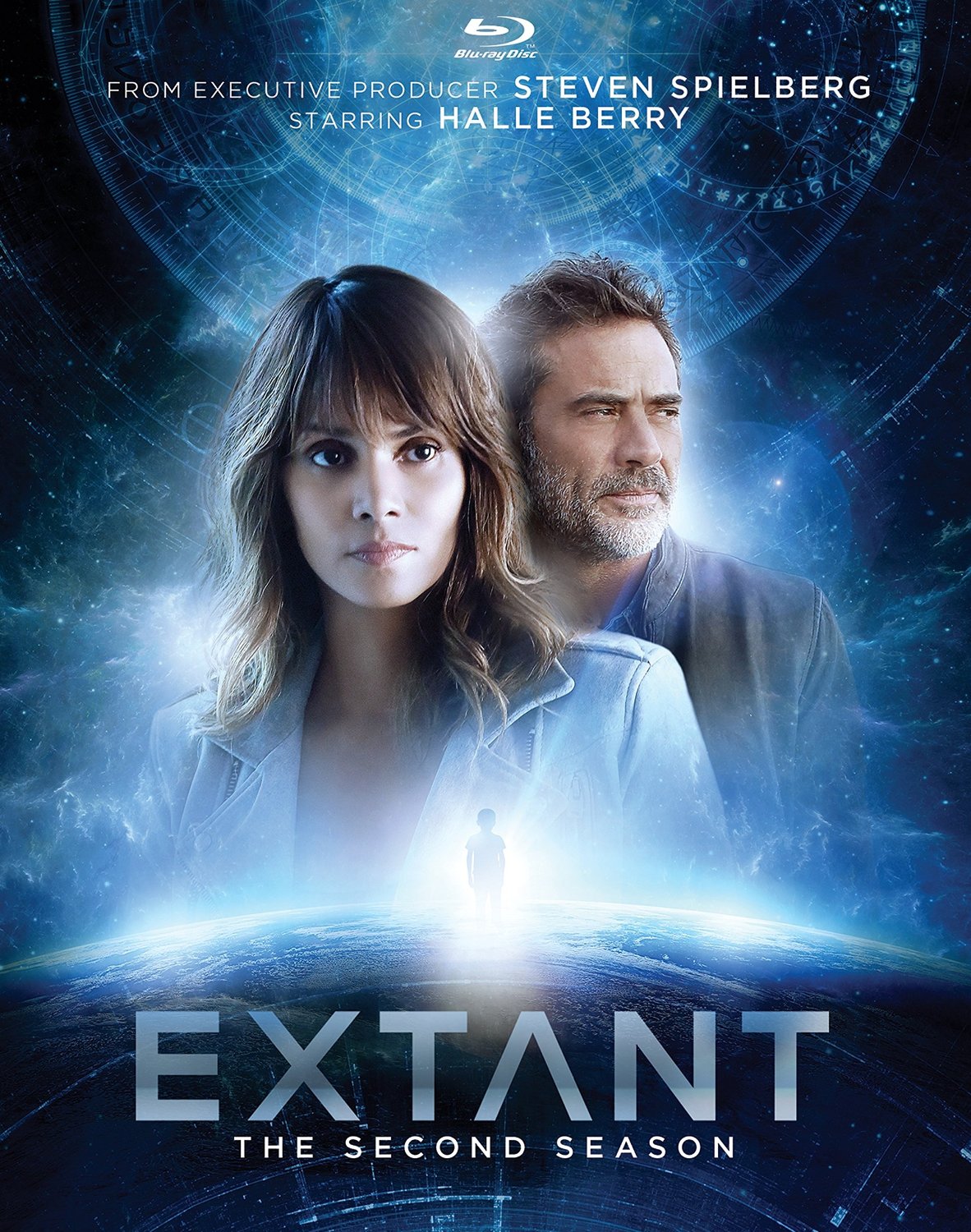
Extant—Complete 2nd Season 
(Paramount/CBS)
The second season of this sci-fi series about humans, aliens and humaniches (human-like robots), filled with an unholy mix of intrigue and sentimentality, remains distant, respectable, occasionally exciting if rarely gripping. Even though Halle Berry's star presence gives it a glossy sheen, the rest of the cast—led by Jeffrey Dean Morgan and Grace Gummer, Meryl Streep's even less talented actress daughter—is only passable which, along with convoluted storylines,  leads to diminishing dramatic returns by series' end. It all looks pretty spectacular in hi-def; extras include featurettes and a gag reel.

Henryk Gorecki—Symphony of Sorrowful Songs 
(Arthaus Musik)
Two decades ago, Polish composer Henryk Gorecki's Symphony of Sorrowful Songs surprisingly caught on with the public to become one of the best-selling classical CDs ever: its languid and slow music, coupled with Dawn Upshaw's emotive singing, made it resonate even with those who don't listen to serious music. Too bad, then, that Tony Palmer's 1993 documentary isn't up to his usual standard; there's an illuminating Gorecki interview and a vivid performance of the symphony by Upshaw, London Sinfonietta and conductor David Zinman, but Palmer crassly rubs our noses in what inspired the work by showing superfluous footage of piles of dead Holocaust victims and equally emaciated starving Africans. The early '90s video looks merely adequate, as is the stereo sound.

Jaco 
(MVD/Iron Horse)
One of the most influential bass players of his time, Jaco Pastorius had a meteoric rise and troubling fall that are the focus of this wrenching documentary by Paul Marchand and Stephen Kijak, who tell the musical story of the man who reinvented the bass guitar in the fusion band Weather Report among other collaborations before his untimely death in 1986 at age 35. We hear from Jaco's friends and colleagues, all admirers and many of them bassists (Bootsy Collins, Sting, Flea, Geddy Lee, Metallica's Robert Trujillo, the film's co-producer), while others like Joni Mitchell talk of how his musicianship affected their own performances. A sad story of a father, husband and artist who burned out instead of fading away gives Jaco its extra emotional kick. The film looks decent on Blu; a full disc of extras features many additional interviews.

Marco Polo—Complete 1st Season 
(Weinstein Co/Anchor Bay)
In this entertaining dramatization of the adventures of one of the first European explorers to reach the East, the 13th century Italian finds himself amidst clashes of the political, personal, cultural and even sexual kind during his stay in China. Whether much of the drama, out in the open or behind closed doors, is based on fact is problematic, but it's done with as much fidelity to the characters and their era as is possible. The 10-episode first season looks ravishing on Blu-ray; extras are a documentary, featurettes, deleted scenes and a gag reel.

Speedy
(Criterion)
Not as well-known, Harold Lloyd nevertheless equaled Buster Keaton with brilliantly orchestrated, high-flying stunt work that made his films something special; even if 1928's Speedy isn't up to Keaton's Sherlock Jr. or Lloyd's own romps Safety Last and The Freshman, it still has his characteristic physical comedy in hilarious abundance. The latest in the Criterion Collection's excellent Lloyd releases has another luminous hi-def restoration and transfer, while  extras include composer Carl Davis' musical score, commentary, featurette, archival footage of Babe Ruth, video essay, Lloyd's home movies and short Bumping into Broadway.

CDs of the Week
Georges Enescu—Complete Works for Solo Piano 
(Hanssler Classic)
Romanian composer Georges Enescu was a prodigy rather like Mozart, and his large-scale orchestral works—namely his symphonies and his lone opera Oedipe—are the best examples of his heroic but in many ways tragic style. His solo piano works are not as well known (he actually made his name as a virtuoso violinist), which makes this three-CD set of the complete extant works a godsend. Fellow Romanian Raluca Stirbat's affinity for Enescu's highly original music is obvious on these substantial works, especially in the two sonatas, which alternate between intimacy and muscularity, all while making the case for Enescu as a composer of genius in whatever genre he worked.

Carl Nielsen—Maskarade 
(Dacapo)
Denmark's Carl Nielsen is, thanks to his powerful symphonies, thought of as a rather dour Scandinavian composer (his best-known opera, the dramatic if erratic Saul and David, also makes that point). But Maskarade is an amusing but darkly comic romp with a lot of memorable music to go with it, right from its delectable Overture, one of Nielsen's most popular concert pieces. This excellent recording, by the stalwart Danish National Symphony Orchestra and Choir under Michael Schonwandt's baton, makes a great impression and brings up the question: why won't anyone put it on a New York stage? (The Bronx Opera Company performed it back in 1983.).

Alfred Schnittke—Film Music Edition 
(Capriccio)
One of the great Russian composers, Alfred Schnittke’s eclecticism served him well when writing scores for some of the renowned directors of his time: his ease at moving from classical pastiche to dissonant modernism enabled him to create music that worked perfectly for films as disparate as the satirical Adventures of a Dentist, the animated Rikki-Tikki-Tavi and the hauntingly tragic The Ascent. The four discs that make up this first-rate boxed set amount to excerpts from 10 different scores, which doesn't include everything he did for the cinema (he composed 17 scores in all), but conductor Fran Strobel, who ably leads the Berlin Radio Symphony Orchestra, has chosen well, and the music stands on its own, unaccompanied by visual images.

Will Todd—Alice's Adventures in Wonderland
(Signum Classics)
Creating a successful opera aimed at children can't be the easiest thing in the world, but composer Will Todd (and librettist Maggie Gottlieb) has managed it with his streamlined but effective adaptation of Lewis Carroll’s classic fantasy books. Tunefully engaging, Todd’s work combines wit and charm in equal measure, even finding sonic equivalents for Carroll’s lyrical flights of literary fancy, along with beguiling melodies, all played soaringly by an ensemble of 11 players under conductor Matthew Waldren, and sung beautifully by a first-rate cast, led by Fflur Wyn as Alice.

Tuesday, December 15, 2015

Off-Broadway Roundup—'Dada Woof Papa Hot,' 'Hir,' 'Night Is a Room'

Dada Woof Papa Hot
Written by Peter Parnell; directed by Scott Ellis
Performances through January 3, 2016
Mitzi Newhouse Theatre, 150 West 65th Street, New York, NY
lct.org

Hir
Written by Taylor Mac; directed by Niegel Smith
Performances through January 3, 2016
Playwrights Horizons, 416 West 42nd Street, New York, NY
playwrightshorizons.org

Night Is a Room
Written by Naomi Wallace; directed by Bill Rauch
Performances through December 20, 2015
Pershing Square Signature Center, 480 West 42nd Street, New York, NY
signaturetheatre.org

John Benjamin Hickey and Patrick Breen in Dada Woof Papa Hot (photo: Joan Marcus)
Peter Parnell's Dada Woof Papa Hot, which takes a snapshot of gay and straight couples in today’s Manhattan, doesn’t try to provide a comprehensive canvas (what snapshot could?), but it does engagingly work its way through laughs, tears and the occasional insight.

A longtime couple, therapist Rob and journalist Alan have a young daughter who favors the former over the latter, which exacerbates Alan's own feelings of inadequacy, especially when the men befriend a younger, more successful couple, nerdy Scott and hunky Jason, the latter of whom Alan finds himself attracted to. Meanwhile, the men’s straight friend, TV producer Michael, admits to cheating on his own wife Serena by having an affair with Julia, a married actress.

Adultery is not exclusive to gays or straights, Parnell not surprisingly notes, and although the play’s situations, conversations, arguments, power plays, etc., are nothing if not familiar, Parnell’s lively dialogue keeps things crackling, and Scott Ellis provides his usual sensitive direction on John Lee Beatty's terrific set, which unfolds its various locations playfully and with a real sense of these very specific New York people. 

The very good cast inhabits its characters fully, especially Patrick Breen (Rob), John Pankow (Michael), Kellie Overbey (Serena) and Tammy Blanchard (Julia), but special mention must be made of John Benjamin Hickey, whose Alan is a forcefully realized bundle of flaws and damaged feelings. Hickey powerfully invests the play’s final scene—Alan speaking to his beloved daughter on the phone, finally secure in the knowledge she loves him as much as she does Rob—with the most emotional moments in the entire 100 minutes. It's worth the wait.

Cameron Scoggins and Kristine Nielsen in Hir (photo: Joan Marcus)
There's a thin line between absurdism and absurdity that Taylor Mac's Hir crosses repeatedly and haphazardly while taking on gender identity, patriarchy and whatever else deemed worthy of this spirited but confused farrago. When soldier Isaac returns home "from the wars," he finds house and home in staggering disarray: his beloved teenage sister is now brother Max, his macho father Arnold has been reduced post-stroke to a gurgling, dress-wearing infant, and his mother Paige has usurped the throne, establishing her own matriarchy. 

Although Mac has energy and invention to spare, his critical portrait of the ultimate dysfunctional family wallows needlessly in an almost casual crudeness: at varying moments, Mom bleeds, Isaac barfs and Dad wets himself, a trifecta of bodily fluids and excretions that happily precludes further discharges. The characters are so superficially drawn as to be mere symbols: of what, it's not entirely clear. Because Mac wants them to be so many things, however contrarily and implausibly, only sporadically does his satirical targeting hit a bull's-eye.

Niegel Smith's brisk direction can't harness the disparate (and desperate) strands of Mac's agenda, and the cast, while accomplished—Cameron Scoggins makes a sympathetic Isaac and the always hammy Kristine Nielsen manages to find the kernel of an unwelcome truth in Paige—is painted into a corner by Mac’s forcefully told but preachy script.

Bill Heck and Dagmara Dominczyk in Night Is a Room (photo: T. Charles Erickson)
In her banal Night Is a Room, Naomi Wallace explores how a seemingly strong relationship falls apart: Liana, a happily married woman with a college-age daughter, decides to bring together her husband Marcus and his birth mother Doré, who gave him up for adoption when she was 15. For Liana, the reunion is disastrous: she and Marcus soon divorce. Act II is another reunion of sorts, with the two women meeting after several years and discussing what happened in everyone’s lives since they last saw one another.

Without giving anything away about the relationship of Marcus and Doré which causes his marriage to dissolve, I must report that Wallace avoids dealing head-on with a monster of her own making. The crucial mother-son reunion scene, necessary to give this story any shred of psychological and emotional credibility, is never shown; instead we get after effects that are far less affecting.

Wallace does provide coarse, explicit sex talk and activity—at one point, Marcus fingers Liana to orgasm in a matter of seconds—and bodily fluids a la Hir, as Doré pees in her pants and Liana wipes herself dry post-orgasm, throwing the damp towel at her husband. Instead of exploring a serious (if taboo) subject, Wallace keeps her distance by putting into her characters’ mouths pseudo-poetic dialogue, which sounds particularly ridiculous coming from the working-class Doré.

Bill Heck (Marcus) and Ann Dowd (Doré) are persuasive, but elegant Dagmara Dominczyk is something else entirely: her Liana is riveting, even thrilling as she thrashes about in a personal tragedy of her own making. It’s too bad such compelling acting is at the service of another platitudinous Naomi Wallace play that borrows its title from someone else’s superior art; this time William Carlos Williams' poem Complaint gets the gilding by association treatment. It doesn't help.

Saturday, December 12, 2015

Music Review—New York Festival of Song's "Schubert/Beatles"

New York Festival of Song
December 8, 2015
Merkin Concert Hall, New York, NY
nyfos.org

Charles Yang, Theo Hoffman and Sari Gruber perform "While My Guitar Gently Weeps" (photo: Cherylynn Tsushima)  
The enduring greatness of the Beatles has many contributing factors, including their being in the right place at the right time or their pairing with producer George Martin in the studio to create their profoundly influential recordings. 

But the main reason is the songwriting genius of John Lennon and Paul McCartney (and, to a lesser extent, George Harrison). No less an authority than Tony Palmer, then critic of The Observer, in his review of the "White Album" in 1968 called John and Paul the best songwriters since Schubert. Steven Blier, artistic director of New York Festival of Song, appeared to take Palmer at his word for his latest program, pairing the Beatles with Franz Schubert for a performance on December 8th, the 35th anniversary of John Lennon's murder.

I wouldn't envy Blier sifting through so many songs by such prolific composers: Schubert wrote 613 (the current agreed-upon number) before he died at age 31, while the Beatles wrote and recorded 212 or so. For Schubert/Beatles, Blier programmed nine Schubert lieder and twelve Lennon-McCartney (or Harrison) songs, pairing them by a—sometimes arcane or tenuous—link, like the opening salvo of the Beatles' "The Word" and Schubert's "Licht und Liebe" ("Light and Love"). These songs about love were an amusing way to begin, especially when the evening's four singers launched into a joyous singalong of Lennon's final line, "Say the word: love."

Onstage were soprano Sari Gruber, tenor Paul Appleby, baritones Andrew Garland and Theo Hoffman, virtuoso violinist Charles Yang and pianists Blier and partner Michael Barrett, all performing tunes by an early 19th century genius and mid/late 20th century geniuses, the latter heard in Blier’s inventive arrangements for piano and occasional violin or guitar. 

Creative juxtapositions—which Blier engagingly discussed onstage between numbers—included Schubert’s “Im Walde” (“In the Forest”) with the Beatles’ “Norwegian Wood,” and the final pairing of Schubert's last song “Dien Taubenpost” ("The Pigeon-post") and Lennon’s own summing-up (at age 25!), “In My Life.”

Musical highlights were many. Appleby found the tender longing in Lennon’s “Julia” as Yang alternated between plucking his violin like a guitar and traditional bowing; Appleby did the same on McCartney’s exquisitely sad “For No One” as Yang tastefully fiddled the famous French horn solo. Gruber made “Norwegian Wood” her own as a classic torch song, although switching the genders in Lennon’s original lyrics killed his punning line, “this bird had flown." 

Appleby and Garland ended their elegantly harmonized duet on “If I Fell”—nearly equaling John and Paul on the original recording—with a cute holding of hands to signal a hidden attraction between singers, while Gruber and Garland alternated verses on “She’s Leaving Home” to expertly convey the simultaneous yearning and generation-gap chiding of the Beatles’ original. Mention must also be made of Yang’s solo tour-de-force, an instrumental “Blackbird” consisting entirely of his own multi-tracked electric violin with heavy use of pedals,  sometimes obscuring McCartney’s gorgeous melody and other times enhancing it.

The concert's ultimate highlight juxtaposed Schubert’s “Du bist die Ruh” (“You Are Repose”), played haltingly and achingly by Theo Hoffman with only his plaintive acoustic guitar, and a stark version of George Harrison’s “While My Guitar Gently Weeps,” emotionally sung by Hoffman and Gruber, with Hoffman’s guitar, Blier’s piano and Yang’s plucked violin making it sound remarkably like Harrison’s own demo on The Beatles' Anthology 3.

I don’t want to slight the other Schubert songs, all beautifully sung and featuring Barrett’s sensitive piano accompaniment. But this was a Beatles night—the very date marked it as such—and it showed that Blier could program a Schubert/Beatles night every season and not run out of material for years. There aren't many other master composers one can say that about.

Tuesday, December 8, 2015

December '15 Digital Week II

Blu-rays of the Week
Jerusalem 
(Filmbuff)
In this 45-minute IMAX film about the Holy Land’s most sacred city—which lays claim to being the origin point of the world's three most popular religions—hi-def cameras display the natural and man-made wonders awaiting anyone who visits or lives there, from the Great Mosque to the Wailing Wall to the great city's breathtaking surroundings, along with introducing a trio of teenagers (Christian, Jew and Muslim) calling it home. Benedict Cumberbatch narrates this focused, visually sumptuous portrait whose imagery, in both 2D and 3D on Blu-ray, is sublime; extras comprise two commentaries, deleted scenes, featurettes and interviews.

Mississippi Grind 
(Lionsgate)
Gamblers befriending each other and joining up together has been a movie staple for decades—Robert Altman’s 1974 California Split was a memorable example—and directors-writers Anna Boden and Ryan Fleck’s own drama is, while hardly original, a quality entry in the genre, aided by complementarily satisfying portrayals by Ben Mendelssohn and Ryan Reynolds. If the movie meanders for too long (its last act is contrived sentimentality of the worst sort), its engaging leads and stellar support from Sienna Miller (who's taken to playing American women in her last several appearances) make this highly recommended. The Blu-ray has a sharp transfer; lone extra is a making-of featurette.

Mistress America 
(Fox)
The pairing of director Noah Baumbach and his paramour, actress Great Gerwig, reaches its artistic nadir with this labored chronicle—which both wrote—of two young women in Manhattan who are future stepsisters: the older (Gerwig) has the younger (Lola Kirke) under her sway: or does she? Baumbach's directorial crudeness is equaled only by his inability to have anything interesting to say, and Gerwig is not gifted enough to plausibly bring off her character’s ridiculously arbitrary behavioral swings. The film looks fine in hi-def; extras are short featurettes.

Momentum 
(Anchor Bay)
She was a Bond girl in Quantum of Solace, but Ukrainian-French babe Olga Kurylenko now gets her own starring vehicle as a criminal who avenges the demise of her gang at the hands of a criminal mastermind and his henchmen (and woman) in this fast-paced if astonishingly illogical thriller by first-time director Stephen Campanelli. While the script does itself no favors by giving us the dumbest five-year-old in movie history among other inanities, the violent endings of everyone else at the hands of Kurylenko (who's photographed lasciviously while wearing little, which shows that pulchritude in movies is alive and well) make this worth it for some 007 fans out there. There’s a solid hi-def transfer; lone extra is making-of featurette.  

The Passenger 
(Arthaus Musik)
Polish-Russian composer Mieczyslaw Weinberg’s shattering 1968 opera about the Holocaust’s devastating emotional fallout among survivors received an excellent 2010 production at Austria’s Bregenz Festival, as Weinberg’s rawly dramatic music exposes the post-war wounds of precisely rendered characters taken from Zofia Posmysz’s novella (also the basis of Polish director Andrzej Munk’s last film, which he left incomplete upon his death in 1961). David Poutney’s stealthy staging intercuts camp flashbacks with the present; video director Felix Breisach cleverly renders the visuals for Blu-ray, while the playing and singing are equally top-notch. Included is a half-hour documentary, In der Fremde, about Weinberg and his opera. 

Sinatra—All or Nothing at All 
(Eagle Rock)
This two-part, four-hour documentary about the most famous singer to come from Hoboken, New Jersey celebrates the legendary singer's 100th birthday (he died in 1998 at age 82) by adroitly marrying voluminous biographical details—many heard in Frank’s own voice—with vintage footage of him both onstage singing and on screen acting, along with a plethora of talking heads, admirers, contemporaries, colleagues, showbiz friends and showbiz historians, all of whom give him pride of place in 20th century America's cultural firmament. The hi-def transfer looks great; extras include additional interviews.

Under the Dome—Complete 3rd Season 
(CBS/Paramount)
I never thought this cheesy adaptation of a less than original Stephen King story idea (which showed up in The Simpsons Movie first, for what it's worth) would ever be a television hit, let alone make it through three seasons' worth of episodes, but here we are. This show may be the ultimate in guilty pleasures, or even in hate-watching, but it's admittedly entertaining in a car-wreck kind of way, at least for a few episodes anyway. There's an excellent Blu-ray transfer; extras include featurettes, deleted scenes and a gag reel.

DVDs of the Week
Blind 
(Kimstim)
In screenwriter Eskil Vogt's gutsy directorial debut, a blind young woman is shown in all her emotional and physical nakedness, from her dismal relationships to her increasingly fertile fantasy life, smartly blended so that there’s often a question about what’s real and what’s imagined. Although Vogt doesn't keep up his precarious balancing act for the entire film, he raises interesting questions about perception, privacy and—well—blindness, and actress Ellen Dorrit Pettersen's fearless performance keeps it watchable whenever it threatens to become risible. 

An En Vogue Christmas
(Lionsgate)
Here's a holiday movie no one ever thought they needed: a reunion of the ‘90s soul group, En Vogue, in a contrived piece of holiday baggage about a club about to be shuttered until the gals get together to keep it alive. It's fluff, to be sure, but the spunky trio—only two of the original four, Terry Ellis and Cindy Herron, remain, and newcomer Rhona Bennett fills in nicely—does a few hits, while David Alan Grier is properly cranky as the semi-villain of the piece. It's not that Christmassy when all is said and done, but it's harmless enough.

The Girl King
(Wolfe Video)
We haven't heard much from Mika Kaurismaki, brother of Finnish wunderkind director Aki Kaurismaki, in awhile, but here he is with a new biographical epic about Queen Kristina, Sweden's 17th century monarch who assumed the throne at age six and reigned for 22 years (she died at age 63 while still a virgin). It's crammed with the usual biopic clichés, especially the sin of cramming far too much into a two-hour running time, which gives short shrift to a game multilingual cast: there are fine performances by Malin Buska as Kristina, Michael Nykvist as her duplicitous right-hand man and Sarah Gadon as the surprising object of the Queen’s affection, and even if Kaurismaki's direction is heavyhanded, this is a commendable attempt to resurrect the costume drama. 

CDs of the Week
Henri Dutilleux—Tout un monde lontain 
(Harmonia Mundi)
Dutilleux—Metaboles, etc.
(Seattle Symphony Media) 
One of the great composers of the 20th—and 21st—century, Frenchman Henri Dutilleux (who died in 2013 at age 97) had a style of emotionally refined modernism, and these two discs feature some of his most characteristic works. First, cellist Emmanuelle Bertrand torridly plays the spare Trois Strophes for solo cello and the amazing cello concerto, a work whose rigor is richly underscored by conductor James Gaffigan and the Lucerne Symphony Orchestra. (Debussy's Cello Sonata, with pianist Pascal Amoyel, admirably rounds out this valuable disc.) On the second disc, the Seattle Symphony, under the steady baton of Ludovic Morlot, performs a trio of Dutilleux's most flavorful and dazzling large-scale works—Metaboles; the Violin Concerto, L'abre des songes (with sensational soloist Augustin Hadelich); and the exceptional Second Symphony, entitled Le double, and one of the great post-war symphonic statements—on the ensemble’s second formidable foray into a composer whose music exudes its own kind of beauty and poetry.

Krzysztof Penderecki—Magnificat
Penderecki—A sea of dreams did breathe on me 
(Naxos)
For an avant-garde composer, Krzysztof Penderecki composes a lot of religious music, but that’s not too surprising, considering he's a Polish Catholic: these two Naxos discs are thick with his often brilliant, occasionally banal (and utterly unorthodox) vocal writing, especially the first disc's juxtaposition of the strikingly guttural voices on the 1973-4 Magnificat and the more recent (2009), more romantic-era Kadisz. The second disc, comprising the hour-long 2010 vocal and orchestral work, A sea of dreams..., set to Polish poetry, is in Penderecki's gentler mode; despite arid patches, it excitingly moves from fierceness to gentle serenity. Antoni Wit ably conducts the Warsaw Philharmonic Choir and Orchestra and the singers are excellent across the board.

Tuesday, December 1, 2015

December '15 Digital Week I

Blu-rays of the Week
American Ultra 
(Lionsgate)
This fast-paced spy movie spoof—in which mild-mannered stoner-convenience store clerk Jesse Eisenberg discovers he's a sleeper CIA agent, to the shock of girlfriend Kristen Stewart, who has secrets of her own—fails to hide the strained goofiness at its center, with excessive cartoon violence that palls quickly, while the plot itself is so exaggeratedly silly that it immediately falls apart. Still, Stewart and Eisenberg are good sports in the lead roles, and Connie Britton is ferocious and funny as an ass-kicking CIA boss. The movie has a good Blu-ray transfer; extras are a commentary, featurettes and a gag reel.

Amy 
(Lionsgate)
Asif Kapadia's documentary about Amy Winehouse—the singer whose hit "Rehab" became an ironic commentary after her 2011 drug-overdose death—recounts her brief but meteoric rise in the music biz and even faster tragic fall with access to video footage, home movies and audio interviews with family, friends and colleagues. The movie is a despairing cautionary tale that would have been stronger had it been shorter—two-hours plus equals unneeded repetition that slows it down. The film looks fine on Blu; extras include unaired performances, deleted scenes, additional interviews and a commentary.

Ikiru 
(Criterion)
Possibly Akira Kurosawa's most emotionally charged film—at least until the touchingly sentimental finale of his penultimate feature Rhapsody in August—this profound 1952 dissection of one man's discovery that he has terminal cancer is among the profoundest cinematic statements on mortality without the preachiness that marred August. Takashi Shimura is exquisitely stoic and, finally, heartstoppingly moving in the lead, while Kurosawa himself reaches heights of humane expression rarely shown onscreen. The Criterion Blu-ray transfer is typically excellent; extras include audio commentary, documentaries and interviews.

Katy Perry—Prismatic World Tour 
(Eagle Rock)
I'm no Katy Perry fan, and the supposed charms of "Roar" and "Firework"—her two biggest hits and, not coincidentally, the first and last songs she performs in concert—continue to elude me: but I can see why millions of non-discerning fans adore her, since her concerts pump out those interchangeable hits and more. Her high-energy performance keeps fans' eyes filled with everything—dancers and lighting and acrobats and other tricks—throughout what's a far more successful visual than aural experience. The Blu-ray follows suit, with top-notch image and sound; extras include behind the scenes material.

Martha Davis and the Motels—Live at the Whisky a Go-Go 
(Vesuvio)
It's been 30 years since I saw Martha Davis and the Motels in concert, so this concert at the L.A. club Whisky a Go-Go in honor of its 50th anniversary is my own celebratory return to hearing one of the most original female voices in rock music. Davis' own return with her band's current lineup finds her piercing, clear and emotive voice still ringing through on songs like "Take the L," "Suddenly Last Summer: and "Only the Lonely," which sound as immediate as ever. Too bad there's nothing from the underrated 1985 album Shock, but that's a small quibble. Both film and music are presented in first-rate hi-def; extras include interviews.

Quay Brothers—Collected Short Films 
(Zeitgeist)
The identical twin American brothers who have been creating short films—and two features so far—in the past three decades show off their playfulness, visual inventiveness and mordant sense of humor in the 15 electrifying shorts in this collection. The best of these mixtures of stop-motion and puppetry are the early The Cabinet of Jan Svankmajer and Street of Crocodiles and the recent Maska, which co-opts the same startling Penderecki composition, Da Natura Sonoris No. 1, that Stanley Kubrick used so brilliantly in The Shining. The hi-def transfers of the Quay films—and Christopher Nolan's own short, Quay, eight minutes of the brothers at work—are for the most part mesmerizing, and six films include Quays' commentaries.

Queen—A Night at the Odeon 
(Universal/Eagle Rock)
Very slowly, we are finally getting legit releases of Queen's legendary 1970s performances, and this hour-long London concert on Christmas Eve in 1975 (shown on TV's The Old Grey Whistle Test), is one of the most sought-after, capturing Queen at its musical and theatrical best. Freddie Mercury stalks the stage with more confidence than ever and guitarist Brian May, drummer Roger Taylor and bassist John Deacon sound tight, taut and terrific: check out the pummeling "Ogre Battle," just one of many highlights, for proof. The video is nothing special, even on Blu-ray, but the sound is explosive. Extras are three songs from a 1975 Tokyo concert and new interviews with May and Taylor.

Roger Waters The Wall 
(Universal)
Roger Waters has ingeniously morphed his Pink Floyd magnum opus from an anti-war, anti-audience rant in the group's 1979-80 concerts to political symbolism in 1990 Berlin to the current multi-media extravaganza: state-of-the-art sound and visuals allow Waters to turn The Wall into an arena rock spectacle without parallel. But even with the incredible hi-def sound and video, this release has equally necessary extras for real fans: there's a collection of brief Facebook films (nearly an hour's worth) about the tour, as well as extracts from the 2011 London concert when David Gilmour joined Waters onstage for his incendiary and emotional "Comfortably Numb" guitar solos, followed by a reunion of Waters, Gilmour and Nick Mason, joining Waters' current band for the record's finale, "Outside the Wall." 

DVDs of the Week
Captivated—The Trials of Pamela Smart 
(Icarus)
The star of the first gavel-to-gavel TV coverage of a murder trial, the infamous Pamela Smart was convicted in 1991 of coercing several teens (including the 15-year-old with whom she was having sex) into killing her husband: the blonde, photogenic 20ish wife became the devil incarnate, and the entire trial led to a foregone conclusion, at least according to Jeremiah Zagar's documentary. Zagar brings up questions about what happened in and out of that courtroom a quarter-century ago, raising a few doubts about whether she was convicted in the media even before the trial began. The lone extra is a director Q&A.

The Dinner 
(Film Movement)
Whenever Giovanna Mezzogiorno is in a movie, make sure to watch: her exceptional, true, lived-in performances show off as natural an actress around today, from her breakthrough in The Last Kiss to her brilliant turn as Mussolini's mistress in Marco Bellocchio’s great Vincere. She does it again in a film that becomes melodramatic at every turn despite a central subject so unsettling—did the spoiled teenage children of brothers (a respected doctor and infamous defense attorney) really commit a horrific crime?—that it compels continued viewing. Despite his missteps, director Ivano de Matteo has assembled an accomplished cast, with Mezzogiorno's portrayal of a mother who tries to comprehend what her son may have done indelibly filled with pain, heartache and even humor. Lone extra is an on-set featurette.

Grace of Monaco 
(Weinstein Co./Anchor Bay)
This biopic about Princess Grace, concerning a few months in 1962 when her marriage and adopted country of Monaco were in fraught peril, was slickly directed by Olivier Dahan, who does what he can with Arash Amiel's script, which only skims the surface of Grace's personal and public lives. Although Nicole Kidman isn't embarrassing, her sort of Hollywood glamor is light years from Grace Kelly's natural beauty both on and offscreen, while Paz Vega—horribly miscast as Maria Callas—is far too beautiful to be a plausible stand-in for the famous singer.

Latin Lovers
The Merry Widow
(Warner Archive)
Lana Turner, one of the grandest of Hollywood leading ladies in the 1950s, oozed sex appeal effortlessly; Latin Lovers, Mervyn Leroy's decent 1953 romantic comedy, stars Turner as a successful corporate woman who has trouble finding and keeping men, until she finds Ricardo Montalban while vacationing in Brazil. More entertaining is the third cinematic go-round (made in 1952) of The Merry Widow, Franz Lehar's classic operetta, with Turner as the irresistible title character who finds romance with the Count, played by Fernando Lamas. Both movies have spectacular color, which would look far better on Blu-ray instead of these MOD (manufactured on demand) discs.

CDs of the Week
Magnard—Piano Trio & Violin Sonata
Weinberg—Violin Concertino, Rhapsody, Symphony No. 10 
(CPO)
French composer Alberic Magnard's music is barely remembered; he's known—if at all—for how he died: foolishly if bravely defending his home from German soldiers at the start of  World War I. But his meager musical output (some 20 or so surviving works) is impressive: his four symphonies are as sturdy and memorable as Brahms' or Schumann's, while his heroic opera Guercoeur has many passages of unsurpassed beauty. Happily, enterprising musicians and labels make occasional recordings, and the latest, comprising two substantial chamber works, is worth seeking out. Both of these monumental pieces, a 37-minute piano trio and 41-minute violin sonata, receive vigorous workouts, and their originality, somewhere between the French tradition and Wagner, makes one lament that Magnard labored so long over his works, taking a year or more to finish one, robbing us of even more.

Another composer affected by war, Mieczyslaw Weinberg—whose Jewish family was destroyed by Nazis during World War II—died in 1996; afterward his music finally began catching a foothold. He also wrote a powerful opera—The Passenger, about a concentration camp survivor—and raging, ironical and exasperated music in several genres, reminiscent of one of his biggest influences, Dmitri Shostakovich. This recording comprises three intense orchestral works, all given magnificent performances: Ewelina Nowicka plays the lyrical solo part of the haunting Violin Concertino along with arranging and playing on the attractive Rhapsody on Moldavian Themes; and Anna Duczmal-Mroz conducts the Amadeus Chamber Orchestra of Polish Radio in the shattering Symphony No. 10 for string orchestra.